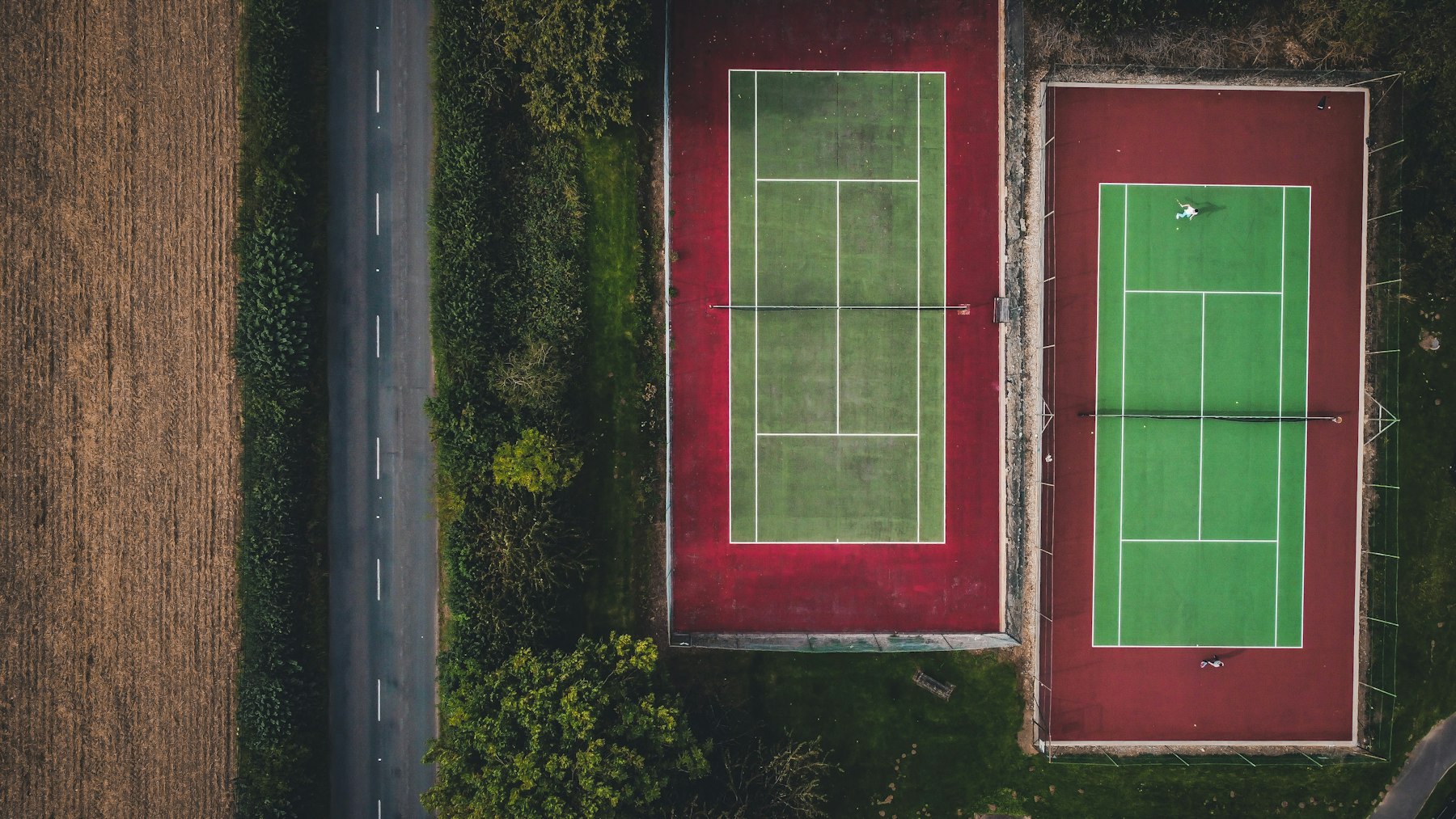
Sport Court Surface Types for New Jersey
Asphalt, concrete, post-tension, and modular tiles compared for cost, lifespan, and how each holds up in NJ's freeze-thaw climate.
Get a Surface Recommendation →For most New Jersey courts, post-tension concrete with a cushioned acrylic surface is the best-performing choice — it resists freeze-thaw cracking better than any other base and needs resurfacing least often. It also costs the most up front. Which surface is actually right for your project depends on budget, how long you want it to last, and whether it needs to meet competitive tennis standards. Here's how each option holds up in NJ conditions. (For a deeper look at just the base layer underneath any of these surfaces, see our concrete vs. asphalt base comparison. For the acrylic color system that goes on top of any of them, see our court color coating options guide. And for the manufacturer spec sheet and real premium behind the cushioned acrylic option, see our cushioned court surfacing cost guide.)
Quick Comparison for NJ Courts
Surface Types Explained
Asphalt Base + Acrylic Surface Coating
Pros
- ✓ Lower initial cost than concrete
- ✓ Fast to install
- ✓ Widely available contractors in NJ
Cons
- ✗ Freeze-thaw cracking — more frequent resurfacing in NJ
- ✗ Surface temperature higher in direct sun
- ✗ Base repair costs accumulate over time
NJ Verdict: Best for lower-budget courts or situations where a short-term solution is acceptable. Plan for more frequent resurfacing in northern NJ.
Concrete Base + Acrylic Surface Coating
Pros
- ✓ More crack-resistant than asphalt in NJ climate
- ✓ Harder surface gives consistent ball bounce
- ✓ Longer base lifespan
Cons
- ✗ Higher initial cost
- ✗ Harder on joints than cushioned systems
- ✗ Cracks still occur — just less frequently
NJ Verdict: A solid middle option — better longevity than asphalt in NJ conditions without the premium of post-tension.
Post-Tension Concrete + Cushioned Acrylic
Pros
- ✓ Best crack resistance for NJ freeze-thaw conditions
- ✓ Cushioned surface reduces joint impact
- ✓ Longest lifespan — lowest lifetime maintenance cost
- ✓ USTA-approved surface for competitive play
Cons
- ✗ Highest initial cost
- ✗ Requires experienced contractor for post-tensioning
- ✗ Lead time for permitting and cure time
NJ Verdict: The recommended specification for NJ courts intended to last 20+ years with minimal base maintenance.
Modular Tiles (Sport Court, VersaCourt, etc.)
Pros
- ✓ No freeze-thaw cracking — tiles are flexible
- ✓ Can be installed over existing concrete or asphalt
- ✓ Multi-sport versatility (basketball, pickleball, volleyball)
- ✓ DIY-installable in some configurations
Cons
- ✗ Not recommended for competitive tennis (surface characteristics differ)
- ✗ Higher cost per square foot than acrylic
- ✗ Tile replacement when individual tiles crack or fade
NJ Verdict: Best choice for recreational multi-sport courts, especially where freeze-thaw cracking of asphalt bases has been a problem.
The modular tile row above is the short version — for the full cost, lifespan, and repair trade-off between interlocking tile and acrylic-coated asphalt or concrete, see our modular tile vs. poured court surface guide. Not every court sport uses one of the hard surfaces above. A backyard volleyball court is typically built on sand over a drainage layer instead of asphalt or concrete, and a padel court uses sand-infilled synthetic turf inside its glass-and-mesh enclosure rather than acrylic. Tennis has its own outlier, too: a Har-Tru or true clay court replaces the acrylic-on-slab system entirely with a permeable, multi-layer stone base built to let water drain through rather than off — a fundamentally different (and pricier) construction method than anything on this list. Real grass is the outlier beyond even clay, and we cover why we rarely recommend it for New Jersey in our grass tennis court guide — the mowing and rolling schedule alone rules it out for most homeowners before the climate even factors in. Squash and racquetball go further still, replacing the surface question entirely with an athletic wood floor inside four impact-rated walls — none of the asphalt-vs-concrete-vs-tile comparison above applies once you're building a fully enclosed court.
A Fifth Option: Synthetic Turf for Multi-Sport Pads
Turf doesn't appear in the four-way comparison above because it isn't really the same category of decision — asphalt, concrete, and modular tile are all rigid or semi-rigid systems built for a hard-court ball bounce, while turf is a permeable carpet-and-infill system over a lighter aggregate base. That makes it a poor substitute for competitive tennis or regulation pickleball, where bounce consistency matters, but a genuinely good option for a family court built around basketball, casual play, and general recreation — no freeze-thaw cracking to plan around, and a base that's less expensive to build than a full concrete slab. Infill choice (sand, rubber, or a blend) is the main variable that changes cushioning and heat underfoot. Our artificial turf multi-sport court guide covers infill types, installed cost, and where turf makes more sense than the surfaces compared above.
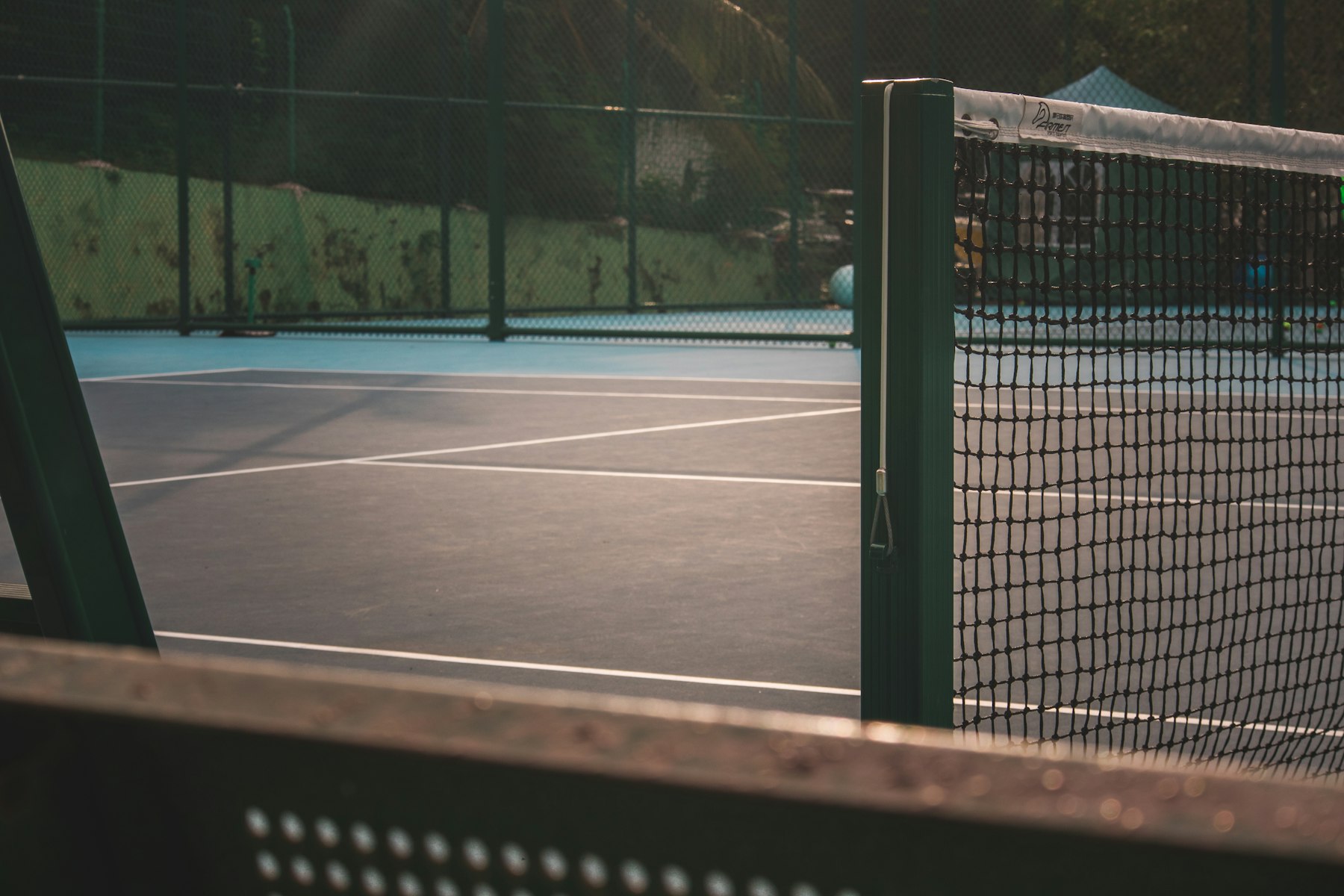
Post-Tension Holds Up Best
Post-tension concrete with a cushioned acrylic system resists freeze-thaw cracking better than any other base and needs resurfacing least often — the reason it's our default recommendation for courts meant to last.
- ✓ Best crack resistance for NJ freeze-thaw
- ✓ Cushioned acrylic eases joint impact
- ✓ Lowest lifetime maintenance cost
We Install & Resurface Every Surface Type Across New Jersey
Bergen County
Post-tension concrete, standard concrete, and modular tile builds throughout North Jersey.
Essex County
Surface installation and resurfacing for Montclair, the Oranges, and surrounding towns.
Monmouth County
Shore-area builds where drainage and salt exposure factor into surface choice.
Morris County
Court surfacing for Morristown, Madison, Chatham, and nearby communities.
Related Guides
Pickleball Court Installation Cost in NJ
How base and surface choice roll up into a full new-build price.
Pickleball Court Resurfacing in New Jersey
When to recoat instead of rebuild, and what resurfacing costs.
How to Choose a Court Installation Contractor
What warranty terms to expect for whichever surface you choose.
Court Drainage Systems in New Jersey
Why drainage design matters as much as the surface itself for longevity.
Court Maintenance Schedule & Cost in NJ
Upkeep tasks that differ by surface type, and what routine care costs per year.
Concrete vs. Asphalt Court Base in NJ
A closer look at the base decision underneath whichever surface you choose.
Modular Tile vs. Poured Court Surfaces
The full cost, lifespan, and repair trade-off between interlocking tile and acrylic coatings.
Court Color Coating Options in NJ
Single, two-tone, and three-tone acrylic color layouts and what each costs to add.
Court Surface Texture & Ball Speed in NJ
How the texture built into these same acrylic coats controls grip and ball speed.
Backyard Basketball Court Dimensions & Layout
Key width, rim height, and footing depth for a basketball build on top of these surface options.
Artificial Turf Multi-Sport Court Cost in NJ
A fifth surface option for family multi-sport pads — infill types and installed cost.
Rooftop & Deck Court Installation in NJ
Why modular tile is usually the surface choice once a structural engineer sets the load limit.
Frequently Asked Questions
What is the best court surface for New Jersey's climate?+
Post-tension concrete with an acrylic cushioned surface system is the most durable and climate-appropriate base for New Jersey courts. Unlike standard asphalt, which expands and contracts with freeze-thaw cycles and cracks over time, post-tension concrete resists cracking significantly better. Asphalt is a viable and less expensive option for courts with smaller budgets, but it requires more frequent resurfacing in NJ's climate. Modular Sport Court-style tiles are not affected by freeze-thaw at all and are a good option for smaller multi-sport courts.
What is the difference between asphalt and concrete for a sport court?+
Asphalt is less expensive to install initially and is forgiving for slight grade irregularities, but it moves with freeze-thaw cycles and tends to crack within 5–15 years in northern NJ climates. Concrete is more expensive upfront but lasts 20–40 years with minimal maintenance, and cracks far less in cold climates. The lifetime cost of asphalt (including more frequent resurfacing) often approaches or exceeds concrete for courts expected to be used for more than 15 years.
What is a cushioned court surface?+
A cushioned court surface adds rubber-modified acrylic layers beneath the final color coat, providing shock absorption that reduces joint impact on knees, ankles, and hips during play. Cushioned systems are specified in levels from light (1–2 rubber layers) to heavy (4+ layers). Most club-level and private residential courts in NJ use a 4–6 layer cushioned system for player comfort. Cushioned surfaces cost more than standard acrylic on the same court, and the premium grows with the number of cushion layers.
What are modular Sport Court tiles?+
Modular sport court tiles — products like Sport Court, VersaCourt, or similar — are interlocking polypropylene tiles that sit on top of an existing concrete or asphalt surface. They don't require adhesive, drain through the tile structure, and can be installed as a DIY or professional project. They perform well for basketball, pickleball, and multi-sport use. They're not commonly used for competitive tennis because the surface characteristics don't match the USTA standards many tennis players prefer, but for recreational multi-sport courts they're an excellent option.
How much does a new sport court surface installation cost in New Jersey?+
Surface cost depends on the system and the court size. Standard acrylic on an existing base is usually the lowest-cost option; cushioned acrylic costs more because of the added rubber layers; modular sport court tiles are priced by square footage. Those are surface costs only — if you're building from scratch, base construction (excavation, grading, concrete or asphalt) is a separate and larger line item that depends on site conditions. We quote surface and base together after a site visit.
Which surface requires the least maintenance over time?+
Modular tiles need the least ongoing attention — no recoating cycle, just occasional cleaning and the rare tile swap. Post-tension concrete with cushioned acrylic is close behind since it resists cracking best; it still needs resurfacing on the usual 8–12 year cycle, just less urgently than asphalt. Asphalt is the highest-maintenance choice in NJ specifically because freeze-thaw cracking accelerates the resurfacing schedule to every 4–8 years.
Is artificial turf an option for a New Jersey court?+
Yes, for the right use case — turf isn't on the four-surface comparison above because it's a different category of build entirely: a lighter, permeable base instead of a rigid sloped slab, no freeze-thaw cracking to plan around, and no fit for competitive tennis or regulation pickleball bounce. It's a strong option for a family multi-sport pad built for basketball, casual play, and backyard recreation. See our dedicated guide to artificial turf multi-sport courts in New Jersey for infill types, cost, and where it fits against the surfaces above.
Get a Surface Installation Quote in NJ
NJ Court Pros installs and resurfaces all court surface types across New Jersey — free site assessment and fixed-price quote.
Get a Free Quote →