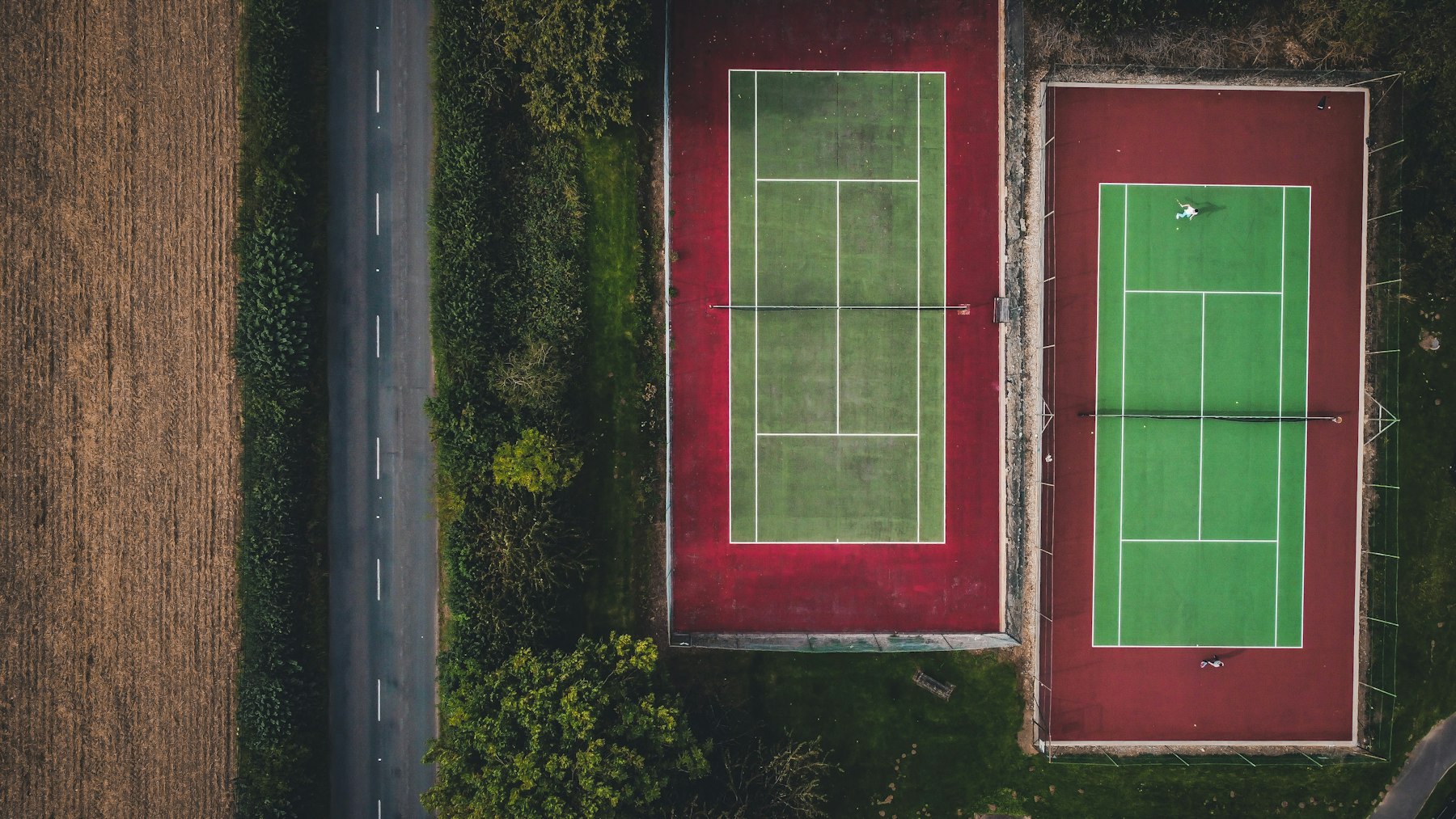
Court Surface Texture & Ball Speed
Texture is what turns a coat of acrylic into a fast court or a grippy one. Here's how it's built, how it's measured, and how to choose the right finish for your court.
Talk Through Surface Options →Acrylic court coatings get their speed and grip from graded aggregate mixed into the texture coats — coarser aggregate slows the ball and adds grip, finer aggregate speeds it up. Tennis has a formal system for this, the ITF's Court Pace Rating, which classifies surfaces from Slow to Fast based on lab-tested friction and energy restitution. Most New Jersey backyard courts land on a medium texture as the practical choice for mixed tennis and pickleball use.
What Controls a Court's Pace
Aggregate Grain Size
Graded silica sand mixed into the acrylic top coats. Coarser grain = more friction and a slower, higher-bouncing court. Finer grain = less friction and a faster, lower-skidding court.
Coating Thickness & Coats
How many texture coats go down, and how thick each one is, both shift the final pace slightly beyond what the aggregate size alone determines.
ITF Court Pace Rating
The tennis world's official five-tier scale — Slow, Medium-Slow, Medium, Medium-Fast, Fast — based on lab-measured friction and energy restitution.
Cushioned vs. Standard Systems
Cushioning changes the give underfoot more than it changes ball speed directly, since the texture coat on top still does most of the work on pace.
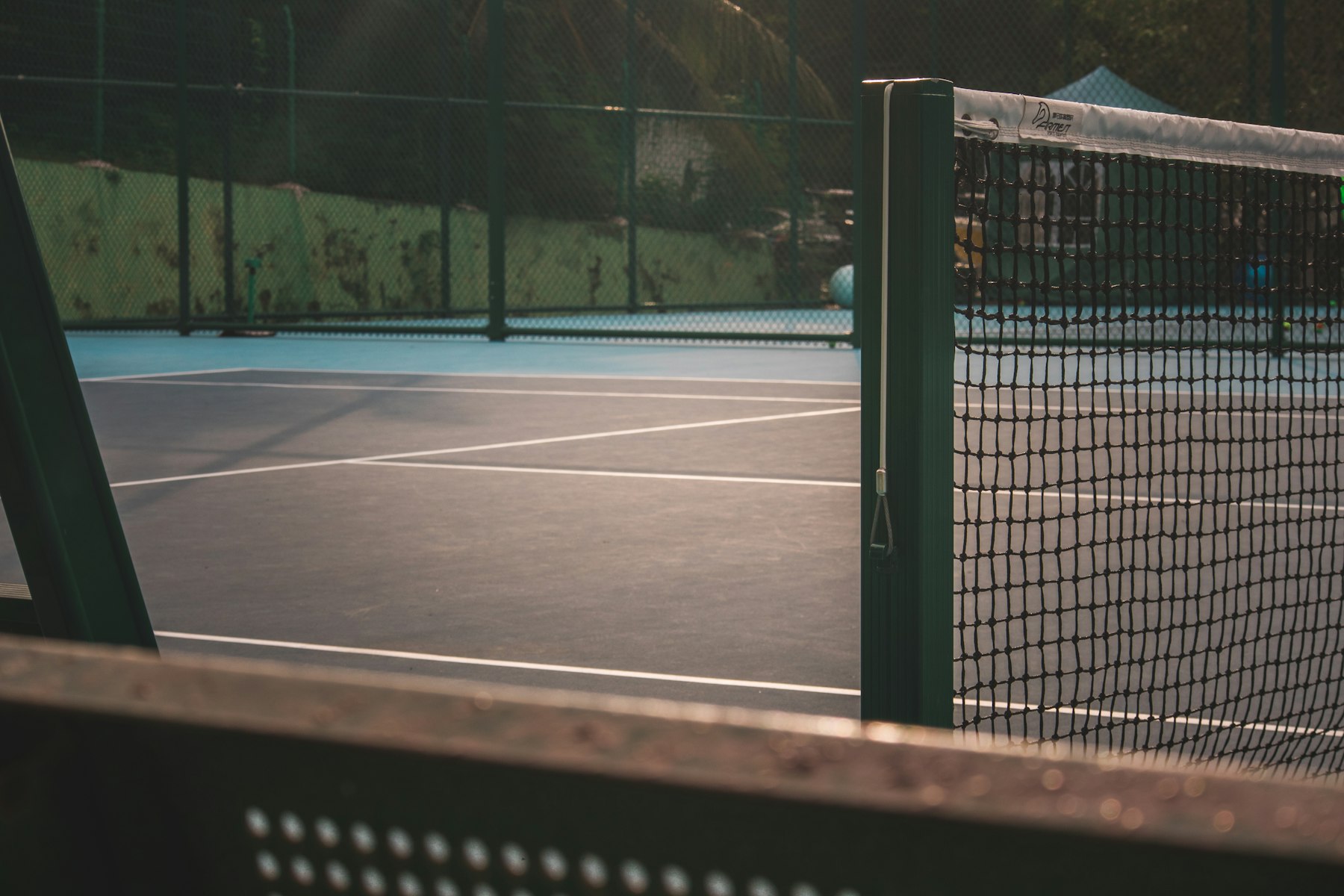
Texture Is Engineered, Not Guesswork
The ITF classifies tennis surfaces into five pace categories by testing friction, energy restitution, and surface consistency in a lab — including firing balls onto sample surfaces and measuring how they come off. Manufacturers can have specific acrylic products formally certified against that scale.
- ✓ Five ITF pace categories: Slow to Fast
- ✓ Friction and energy restitution are tested, not eyeballed
- ✓ Color layers and coating thickness also factor in
Choosing a Texture for Your Court
Fine / Smooth Texture
Less friction, faster ball speed, lower bounce. Favored on faster tournament-style tennis surfaces where quick points and low, skidding bounces are the point.
Medium Texture
The common choice for New Jersey backyard courts that see mixed tennis and pickleball use — balances grip and speed rather than optimizing hard for one sport.
Coarse Texture
More friction, slower ball speed, higher bounce, and more underfoot grip. Common on courts prioritizing traction and control over outright pace.
There's no universal "correct" texture — it's a trade-off between speed, grip, and who's actually going to be playing on the court.
Talk Through Your Surface Options
New build, resurface, or just deciding on a texture — tell us how you use your court and we'll help you pick a finish that fits.
Request a Quote →Why Texture Deserves Its Own Decision
Most homeowners planning a build think about surface type — asphalt versus concrete versus modular tile — and stop there, treating the acrylic top coat as an afterthought once the base decision is made. But the texture built into that top coat is what your feet and your paddle or racquet actually interact with on every single shot, and it's a separate decision from the base underneath it. Two courts built on identical post-tension concrete bases can play completely differently depending on the aggregate grain size and coating thickness chosen for the texture coats, which is why we talk through texture separately from base and color during a coating consultation rather than bundling it into a single "pick a color" conversation.
The physics behind it is straightforward: friction between the ball and the surface is what slows the ball down and controls how high it bounces. A coarse, gritty texture — built with larger-grain silica sand mixed into the acrylic — creates more friction, which grabs the ball on contact and produces a slower, higher-bouncing court. A finer, smoother texture does the opposite, letting the ball skid through contact with less resistance for a faster, lower court. Neither is objectively better; it's a trade-off suited to how the court gets used. Tournament-oriented tennis players often want a faster surface that rewards aggressive, first-strike play, while pickleball — a game built around quick reactions at the net — tends to favor a bit more texture so the ball's behavior stays predictable rather than skidding unpredictably at close range.
Tennis has formalized this with the ITF's Court Pace Rating system, which tests friction, energy restitution, and surface consistency in a lab and sorts surfaces into five categories from Slow to Fast. It's the same kind of rigor that governs professional tournament surfaces, and while a backyard court in New Jersey obviously isn't chasing ITF certification, understanding the scale is useful context for how much texture actually moves the needle on how a court plays. Pickleball doesn't have an equivalent formal certification system, but the underlying physics — friction and grip driven by texture — apply the same way.
Texture also has a practical connection to maintenance. As an acrylic coating wears down over years of play and weather exposure, the texture coat is often the first layer to visibly thin, which is part of why courts gradually feel faster and less grippy as they age even before cracking becomes a problem. That's one more reason resurfacing on a normal cycle matters — see our pickleball court resurfacing guide or tennis court resurfacing guide for how we assess when a court's texture and coating have worn past the point of just needing a touch-up. And because texture sits in the top coats rather than the base, it's independent of whether your court is built on concrete or asphalt — you can dial in a faster or grippier finish on either base without changing the underlying construction.
Related Guides
Court Color Coating Options in NJ
How color layers and coating systems work alongside texture in an acrylic finish.
Sport Court Surface Types in New Jersey
Asphalt, concrete, post-tension, and modular tile compared for cost and lifespan.
Tennis Court Resurfacing in New Jersey
When a worn texture coat means it's time to resurface rather than touch up.
Concrete vs. Asphalt Court Base in NJ
The base decision that texture and color coating both sit on top of.
Court Surface Texture FAQs
Does the texture of a court surface actually change how the ball plays?+
Yes. Texture controls friction, and friction is a major factor in how much a ball grips and slows down on contact with the surface. A coarser, grittier texture creates more friction and a slower, higher-bouncing court; a smoother, finer texture creates less friction and a faster, lower-skidding court. This is true for both tennis and pickleball, though tennis has a formal system for measuring and certifying it and pickleball does not.
What is the ITF Court Pace Rating?+
The Court Pace Rating (CPR) is the International Tennis Federation's official system for classifying how fast or slow a tennis surface plays. It sorts surfaces into five categories — Slow, Medium-Slow, Medium, Medium-Fast, and Fast — based on lab testing of friction, energy restitution (how much of the ball's energy comes back after impact), and surface consistency, including firing balls onto sample surfaces and measuring how they come off. Acrylic coating manufacturers can send samples to an ITF-approved lab to have a specific product formally rated and certified.
How is texture actually built into an acrylic court coating?+
Acrylic surfacing systems build texture into the top coats using graded aggregate — typically silica sand — mixed into the acrylic material at a chosen grain size. Coarser aggregate produces a rougher, higher-friction texture; finer aggregate produces a smoother, faster surface. Coating thickness and the number of texture coats applied also factor into the final pace, alongside the base color coats underneath.
What texture is best for a backyard court that gets used for both tennis and pickleball?+
A medium texture is the common choice for courts that see mixed use, since it balances grip and speed reasonably well for both sports rather than optimizing hard for one. Pickleball players in particular tend to prefer a bit more texture than a fast tournament tennis court would use, since the smaller court and faster reaction times reward a surface that doesn't skid unpredictably.
Does a cushioned acrylic system play differently than a standard hard-textured acrylic surface?+
A cushioned system changes the feel underfoot — more give, less impact stress on joints — more than it changes ball speed directly, since the texture coat on top is still what controls friction. That said, the extra give can make ball bounce feel slightly softer in practice. If comfort is the priority over pure pace, a cushioned system with a medium texture is a common combination for backyard courts.
Get Your Surfacing Questions Answered
Whether you're planning a new build or picking a resurfacing finish, tell us how you play and we'll help you choose the right texture.
Request a Quote →