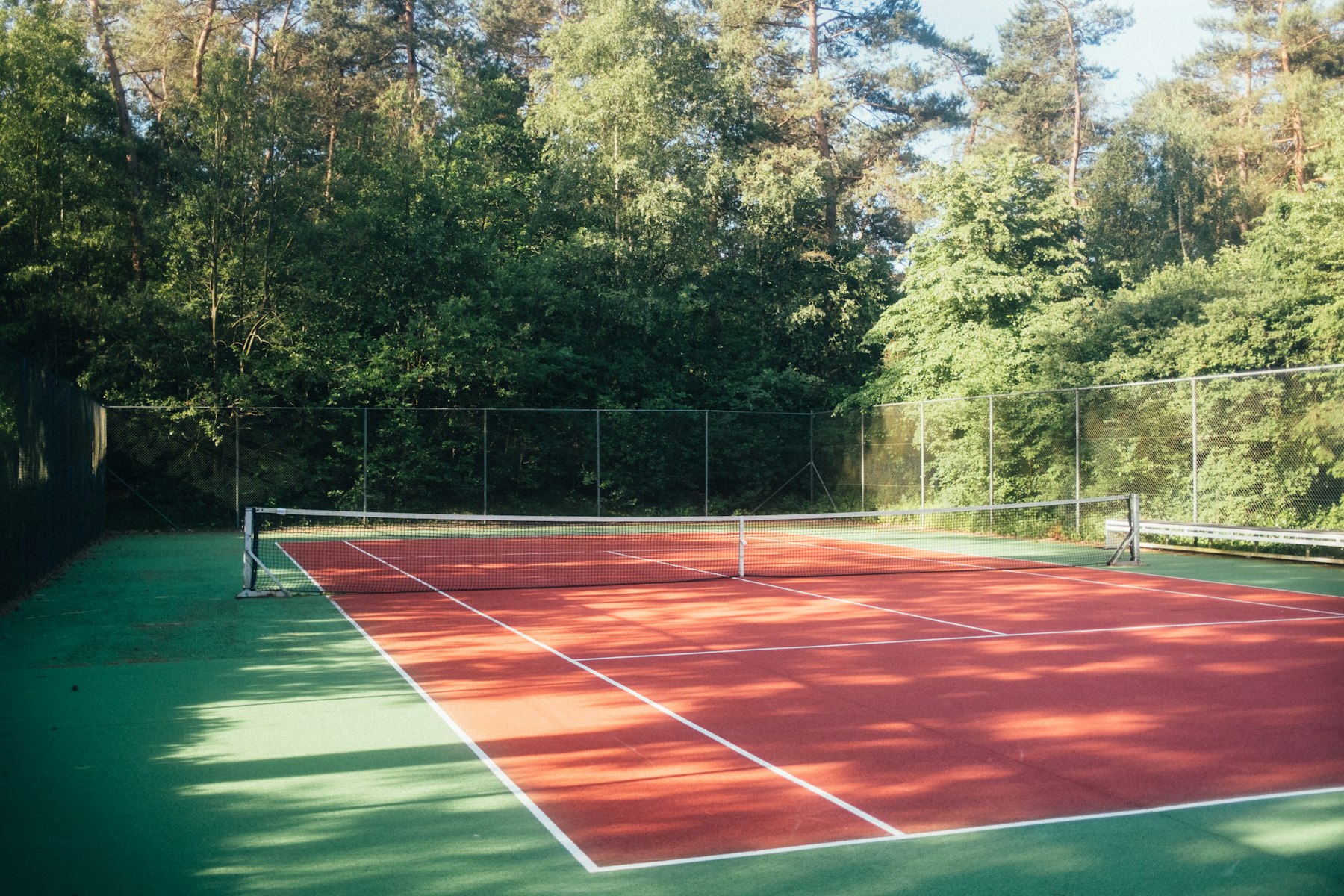
Clay Tennis Court Installation Cost in New Jersey
What a Har-Tru or true clay court actually costs to build in NJ — and why the sub-surface, not the top layer, is what you're really paying for.
Get a Clay Court Quote →A new Har-Tru (American clay) tennis court in New Jersey typically costs $90,000–$160,000 fully installed — noticeably more than the $60,000–$120,000 range for a standard hard court. The difference is almost entirely underground: a clay court needs a multi-layer stone drainage base and below-grade irrigation piping that a post-tension concrete or asphalt court simply doesn't.
What Goes Into the Cost
Layered Stone Base
Coarse stone, then finer aggregate, engineered so water drains down through the court instead of running off a sealed slab. This is the single biggest cost difference versus a hard court.
Below-Grade Irrigation
Most Har-Tru courts run a sprinkler or sub-surface watering line built into the base to keep the surface moist and playable through the season.
Har-Tru Surface Material
Crushed metabasalt (green clay) laid and compacted over the base, then lined. Costs more per square foot than acrylic-coated asphalt or concrete.
Seasonal Shutdown & Reopening
Not a one-time build cost, but budget for it: draining irrigation lines, covering for winter, and a spring resurfacing pass before the first match.
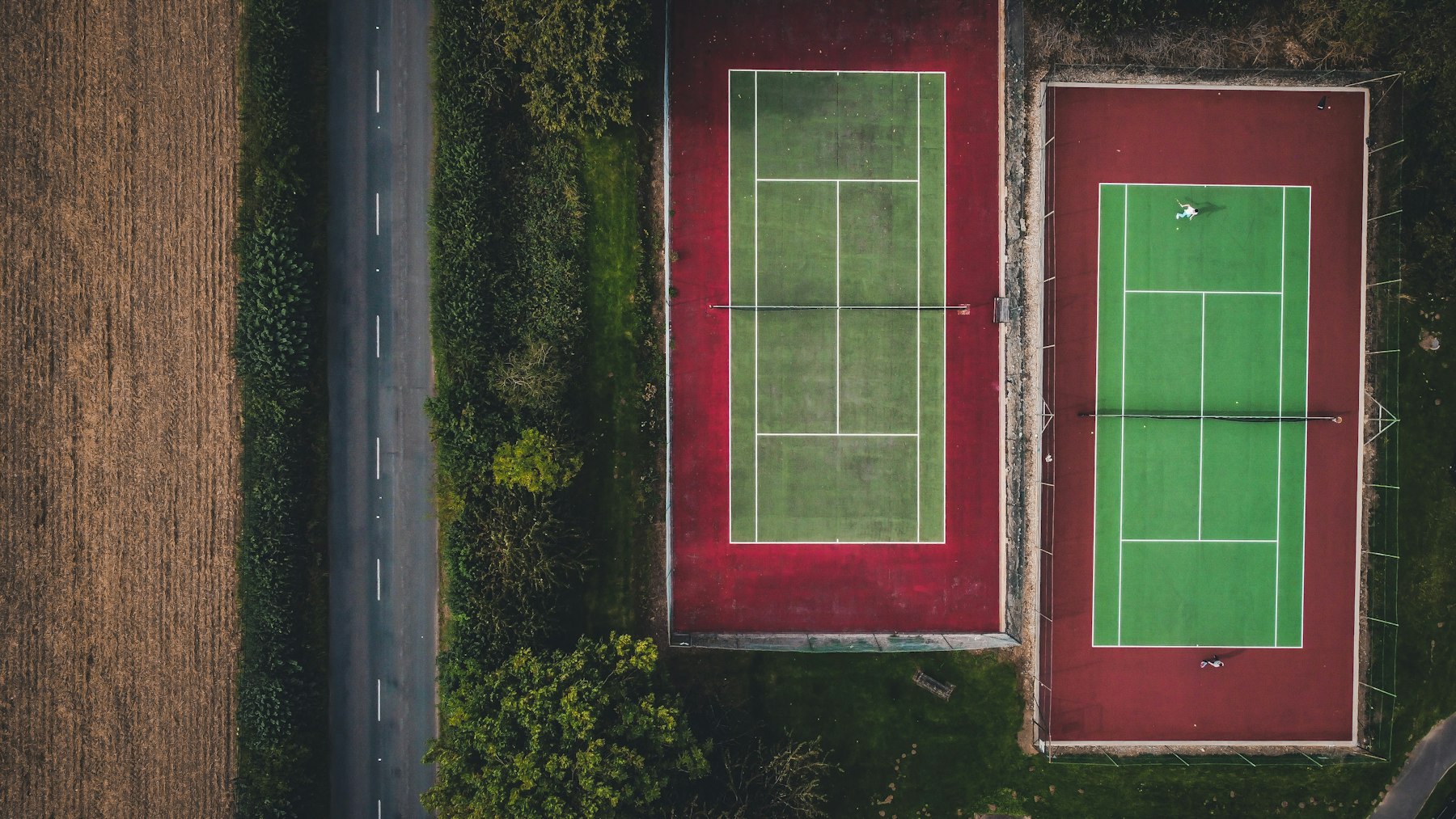
You're Paying for What's Underground
A hard court base sheds water off a sealed, sloped slab. A clay or Har-Tru base is the opposite — a layered stone system built to let water pass through it, plus irrigation piping most systems rely on. That's the real reason clay costs more, not the top layer of material.
- ✓ New Har-Tru court: $90,000–$160,000 installed
- ✓ Standard hard court for comparison: $60,000–$120,000
- ✓ Annual upkeep: $2,000–$5,000 vs. occasional hard-court touch-ups
True Clay vs. Har-Tru
True European Red Clay
Crushed brick surface, the kind used at the French Open. Needs near-constant watering and rolling and struggles with New Jersey freeze-thaw cycles without heavy seasonal maintenance. Rarely what we recommend for a residential NJ build.
Har-Tru (American / Green Clay)
Crushed metabasalt over an engineered stone base. Plays similarly to true clay, drains better, and holds up to NJ conditions with proper seasonal shutdown and reopening. Nearly every clay court built in New Jersey is Har-Tru.
When a client asks for "a clay court" in New Jersey, we're almost always talking about Har-Tru — true red clay is a specialty build we discuss case by case, not a standard offering.
Get a Clay Court Construction Quote
Tell us your lot and we'll walk through Har-Tru vs. a hard court for your goals — playability, upkeep, and real installed cost.
Request a Quote →Is Clay Worth It Over a Hard Court?
Clay plays slower and softer than a hard court — the ball sits up more, points last longer, and it's noticeably easier on knees and joints, which is why a lot of our clay-court inquiries come from players who've moved away from hard courts for health reasons or grew up playing on clay. That playing experience is the entire case for spending more; nobody builds a residential clay court for the resale value or the lower maintenance, because on both counts a hard court wins. See our sport court surface types guide for how clay compares to acrylic, cushioned, and modular options across the board. If it's the grass-court look you actually want, read our guide to grass tennis courts in New Jersey first — clay gets you close to that same slow, soft game without the several-times-a-week mowing and rolling schedule real turf demands.
If the appeal is mainly slower ball speed and less joint impact without the seasonal shutdown and irrigation upkeep, cushioned acrylic over a standard post-tension base gets you most of the way there for a fraction of the cost — see our tennis court installation cost guide for how that compares.
New Jersey's freeze-thaw winters are the other real consideration. A hard court built with a proper post-tension base handles freeze-thaw with periodic resurfacing; a clay court has to be drained, covered, and reopened every single year, and skipping that routine is how a clay court degrades fast. Our best court surfaces for New Jersey winters guide covers how different surfaces hold up to our climate specifically.
Related Guides
Tennis Court Installation Cost in NJ
Base options, surface types, fencing, and lighting for a standard hard court build.
Sport Court Surface Types
Asphalt, concrete, cushioned acrylic, and modular tile compared for New Jersey conditions.
Best Court Surfaces for New Jersey's Winters
Which surfaces survive freeze-thaw and how to pick one that lasts.
Tennis Court Covers in New Jersey
Retractable, fixed, and seasonal covers for off-season court protection.
Clay Tennis Court FAQs
How much does a clay tennis court cost to install in New Jersey?+
A new Har-Tru (American clay) court in NJ typically runs $90,000–$160,000 fully installed, well above the $60,000–$120,000 range for a standard post-tension concrete or asphalt hard court. The gap is almost entirely the sub-surface: a clay court needs a multi-layer stone base built for capillary drainage plus a below-grade irrigation line, neither of which a hard court requires.
What's the difference between true clay and Har-Tru?+
True European red clay (the kind used at the French Open) is a crushed brick surface that needs near-constant watering and rolling to stay playable, and it does not hold up to New Jersey freeze-thaw cycles without heavy seasonal maintenance and covering. Har-Tru, sometimes called American clay or green clay, is crushed metabasalt over an engineered stone base — it plays similarly, drains better, and is what nearly every clay court built in NJ actually is. When someone asks us for "a clay court" in New Jersey, Har-Tru is almost always the right answer.
Why does a clay court need a different base than a hard court?+
A hard court base is built to shed water off a sloped, sealed slab. A clay or Har-Tru base does the opposite — it's a layered system of coarse stone, then finer aggregate, then a permeable top layer, engineered so water drains down through the court rather than running off the surface. That layered stone base, plus the below-grade irrigation piping most systems use to keep the surface moist, is the main reason clay courts cost more to build than an equivalent hard court.
How much watering and rolling does a clay court need in NJ?+
During the playing season, a Har-Tru court typically needs light watering most days it's used and rolling every week or two to keep the surface true and prevent low spots from forming. Budget $2,000–$5,000 a year for routine upkeep — water, rolling, line tape, and periodic top-dressing with fresh material — noticeably more than the occasional pressure-wash and recoat a hard court needs between resurfacing cycles.
Does clay work with New Jersey winters, or does it need to be covered?+
A Har-Tru court needs to be shut down and covered for winter — the surface can heave and rut if it freezes and thaws while wet, and the irrigation lines need to be drained to avoid cracking. Most NJ clay court owners close the court in late fall and reopen with a resurfacing pass — rolling, top-dressing, and line re-taping — in spring. That seasonal shutdown-and-reopen routine is worth budgeting for; it's not optional the way an occasional hard-court touch-up is. Our tennis court covers guide has more on off-season protection.
Get a Clay Tennis Court Quote
Tell us your lot and goals, and we'll help you decide between Har-Tru and a hard court, then give you a fixed price to build it.
Request a Quote →