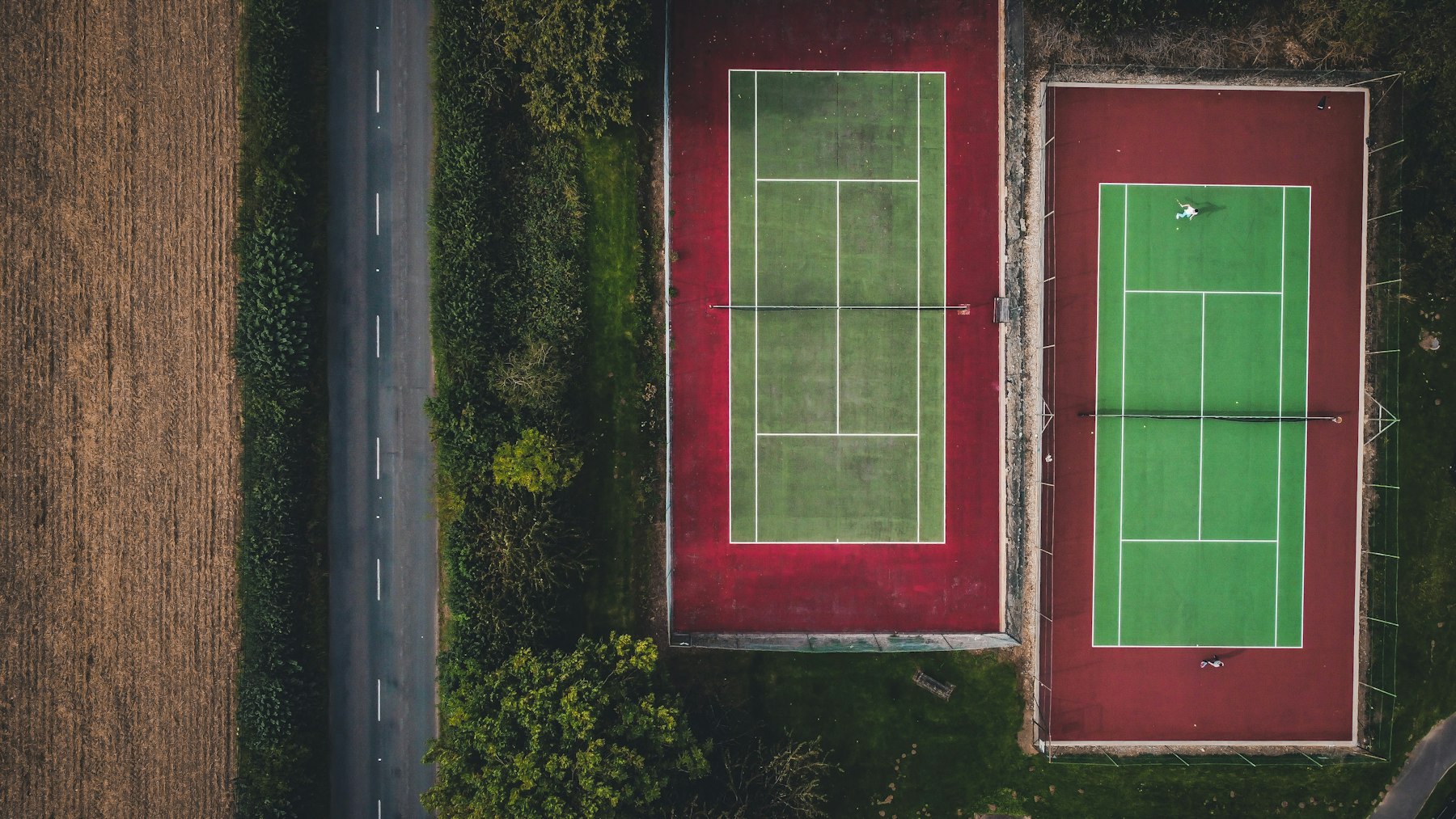
Artificial Turf for Multi-Sport Courts in New Jersey
Synthetic turf as a surface option for backyard multi-sport pads — where it beats acrylic and modular tile, where it doesn't, and what drives the cost.
Get a Turf Court Quote →Turf isn't on our list for a dedicated pickleball or tennis build — see our full surface comparison guide for why acrylic and post-tension concrete win there. It earns its place for a different job: a backyard pad meant for basketball, casual pickleball, backyard soccer, and general family recreation, where its lighter base, freeze-thaw immunity, and lower per-project cost outweigh not meeting competitive-tennis standards.
Turf vs. the Alternatives for a Multi-Sport Pad
What Goes Into a Turf Court Build
A turf system is three layers, not one product. Underneath is a compacted aggregate base with a drainage layer built in — lighter and cheaper to build than the rigid, precisely sloped concrete or asphalt slab an acrylic court needs, because turf and its base let water pass through rather than requiring a slope for water to sheet off. On top of that base goes the turf carpet itself, then infill worked down into the fibers to keep them standing upright and add cushioning underfoot.
Installed turf is priced per square foot, and smaller residential courts cost more per square foot since mobilization and equipment costs don't scale down proportionally with a smaller footprint. Infill is a separate line: rubber granule infill, which gives the most cushioning, costs more; sand infill runs cheaper and stays cooler underfoot in direct sun but cushions less. Many multi-sport builds use a combination — a sand base layer topped with a thinner rubber layer — to balance cost, heat, and cushioning.
None of that includes what's under the base if your site needs significant grading or drainage correction first — see our base preparation and grading cost guide for what that work runs separately from the surface itself.
No Slab, No Cracking
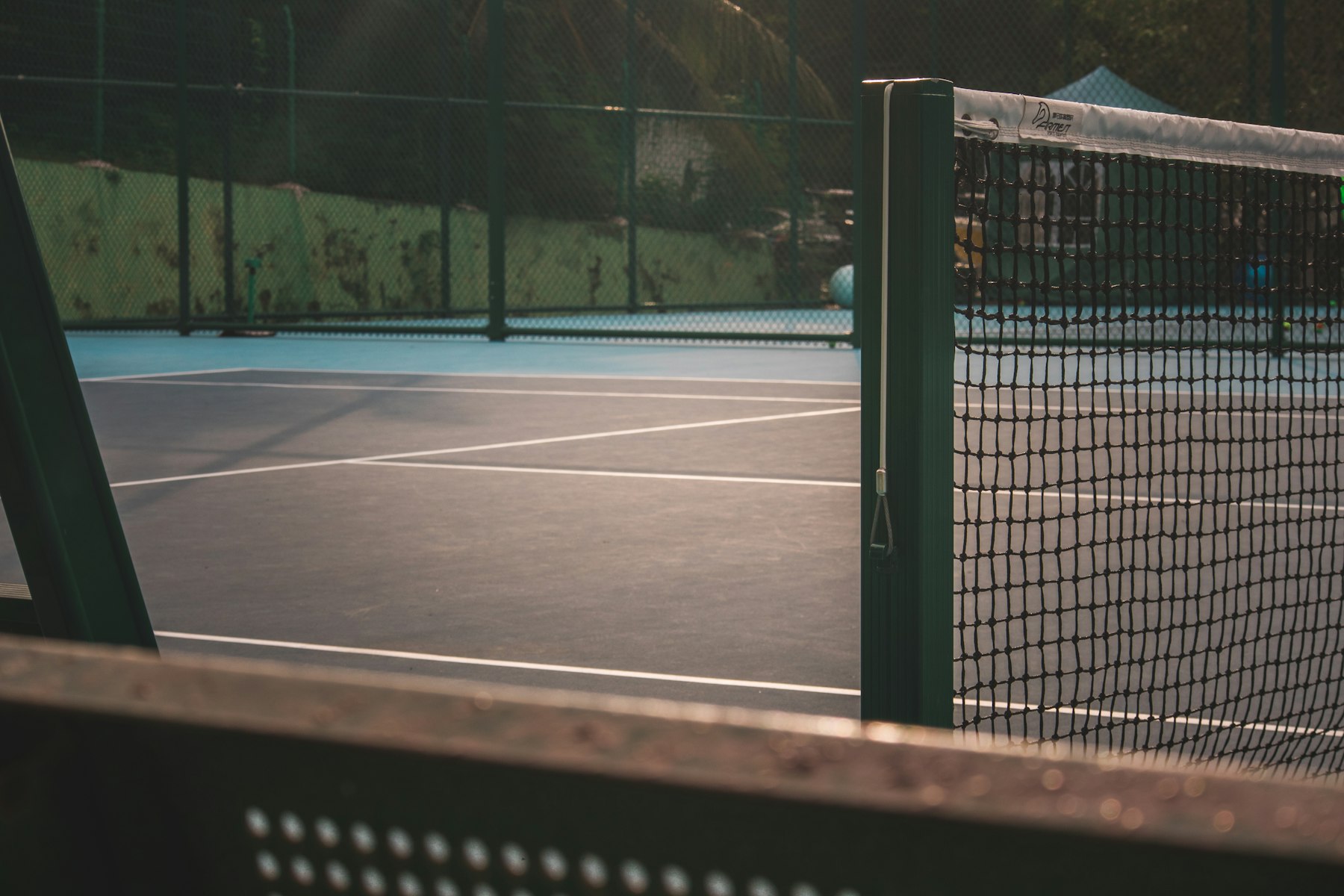
Turf skips the rigid slab that acrylic courts depend on. That means no freeze-thaw cracking to plan around, and a lighter, less expensive base — a real advantage on a multi-sport pad that doesn't need tennis-grade ball bounce.
- ✓ Compacted aggregate base with built-in drainage
- ✓ No resurfacing cycle — carpet is replaced when worn, typically 8–12 years
- ✓ Combination sand/rubber infill balances cushioning and heat
Where Turf Wins, and Where It Doesn't
The honest case for turf is narrower than a lot of marketing suggests. It's a strong choice when the court's actual job is mixed family recreation — basketball, backyard soccer, casual pickleball, general play — rather than competitive tennis or tournament-level pickleball where ball bounce has to match a specific standard. It's also a strong choice on a site where a full concrete slab is a budget stretch or where the lot's drainage already makes a sloped hard surface a harder engineering problem than a permeable turf base would be.
It loses ground fast for anyone serious about tennis. Ball bounce and foot slide on turf don't match acrylic, and no amount of infill tuning closes that gap enough for competitive play. It's also not the standard surface for regulation pickleball, where a consistent, predictable bounce off a hard acrylic coat is part of the sport's design. If your household has a player who competes or takes the sport seriously, start with our pickleball court installation cost guide or tennis court installation cost guide instead — this page is for the family that wants one flexible pad, not a dedicated competitive surface.
A related option worth knowing about: modular interlocking tiles (Sport Court, VersaCourt, and similar products) share turf's freeze-thaw immunity and can also sit over an existing slab, but play harder underfoot and are more common for basketball-forward multi-sport pads. Both are covered as options in our full surface comparison if you want to see them weighed against turf and acrylic side by side. And if your multi-sport pad is more about combining pickleball and another racquet sport specifically, our multi-sport combo court cost guide covers that layout question directly.
Weighing Turf Against Acrylic or Tile?
Tell us how you'll actually use the court — sports, frequency, ages — and we'll recommend the surface that fits, not just the one with the biggest margin.
Get a Surface Recommendation →We Install Turf Courts Across New Jersey
Bergen County
Multi-sport turf and hard-surface builds throughout North Jersey.
Essex County
Family recreation courts for Montclair, the Oranges, and surrounding towns.
Monmouth County
Shore-area builds where turf's lighter base fits sandy or challenging soil.
Morris County
Turf and multi-sport court installation for Morristown, Madison, Chatham, and nearby towns.
Related Guides
Sport Court Surface Types in New Jersey
Full comparison of asphalt, concrete, cushioned acrylic, and modular tile alongside turf.
Multi-Sport Combo Court Cost in NJ
Layout and cost for a court built to serve more than one sport.
Basketball Court Installation Cost in New Jersey
Cost benchmarks for a dedicated or driveway-adjacent basketball build.
Court Base Preparation & Grading Cost in NJ
What excavation and drainage work costs before any surface goes down.
Sources
- SitePrep — How Much Does Artificial Grass Cost: 2026 Pricing Guide
- Angi — 2026 Artificial Grass Installation Cost Guide
- The Motz Group — How Much Does a Synthetic Turf Sports Field Cost?
- FieldTurf — Frequently Asked Questions (infill types, system lifespan)
Frequently Asked Questions
Is artificial turf a good surface for a backyard multi-sport court in New Jersey?+
It depends on which sports you're mixing. Turf works well for basketball shooting/dribbling, volleyball, general recreation, and low-impact multi-sport play, and it doesn't crack in freeze-thaw the way asphalt does. It's a poor fit for competitive tennis, where ball bounce and foot slide need to match a hard acrylic surface, and it's not the standard for regulation pickleball either. For a family court used for basketball, backyard soccer, cornhole-style games, and casual pickleball, turf is a legitimate option worth pricing against acrylic and modular tile.
How much does synthetic turf cost per square foot installed?+
National cost guides such as Angi publish per-square-foot estimates for installed artificial turf, but those are national averages, not our price. What moves the number is pile height, backing quality, and infill, and smaller residential jobs cost more per square foot because mobilization costs don't scale down with square footage. A backyard multi-sport pad is typically smaller than a full turf lawn replacement, so per-square-foot pricing tends to run higher than a large-yard turf installation would. Your actual number depends on base condition, drainage design, and infill choice — a site visit gets you a real figure.
What is infill and why does a turf court need it?+
Infill is the granular material worked down into the turf fibers that keeps the blades upright, adds cushioning, and improves traction underfoot. Rubber granule infill costs more and adds the most shock absorption, which matters for a court where people are running and pivoting. Sand infill runs cheaper and stays cooler in direct sun but offers less cushioning. Combination infills — sand as the base layer with a rubber top layer — split the difference and are common on multi-sport courts specifically because they hold up under mixed foot traffic better than either material alone.
How long does turf last on a multi-sport court before it needs replacing?+
Quality synthetic turf systems are commonly rated for 8 to 12 years of service, with the actual number depending heavily on how much use the court sees, our climate, infill depth, and how consistently it's maintained. A court used daily by an active family will wear the fiber pile faster than one used a few times a week. Unlike an acrylic surface, turf doesn't get resurfaced — when it's worn out, the carpet is replaced, though the base underneath it typically doesn't need to be rebuilt if it was constructed correctly the first time.
Does turf need the same base as an acrylic or concrete court?+
No — and that's one of turf's real advantages. Acrylic surfacing needs a rigid, precisely sloped concrete or asphalt slab underneath it. Turf is installed over a compacted aggregate base with a built-in drainage layer, which is a lighter, less expensive build than a full concrete pad. That makes turf a practical option on a site where a full post-tension slab would be a stretch on budget or where drainage is already a challenge, since water passes through turf and its base rather than sheeting off a slope the way it has to on a hard-surface court.
Can turf be installed over an existing driveway, patio, or old sport court slab?+
Sometimes, but it needs to be evaluated case by case. Turf can be installed directly over a sound, well-draining hard surface using a shock pad underlayment for cushioning, which skips the excavation and base-building step entirely. It's a poor idea over a cracked or poorly draining slab, since water that used to sheet off the surface will instead sit under the turf and cause odor, mold, or premature backing failure. We check the existing surface's condition and drainage before recommending an overlay install versus a full tear-out and rebuild.
Get a Turf Multi-Sport Court Quote
Tell us the sports you want the court to handle and we'll tell you honestly whether turf, tile, or acrylic is the right call for your yard.
Get a Free Quote →