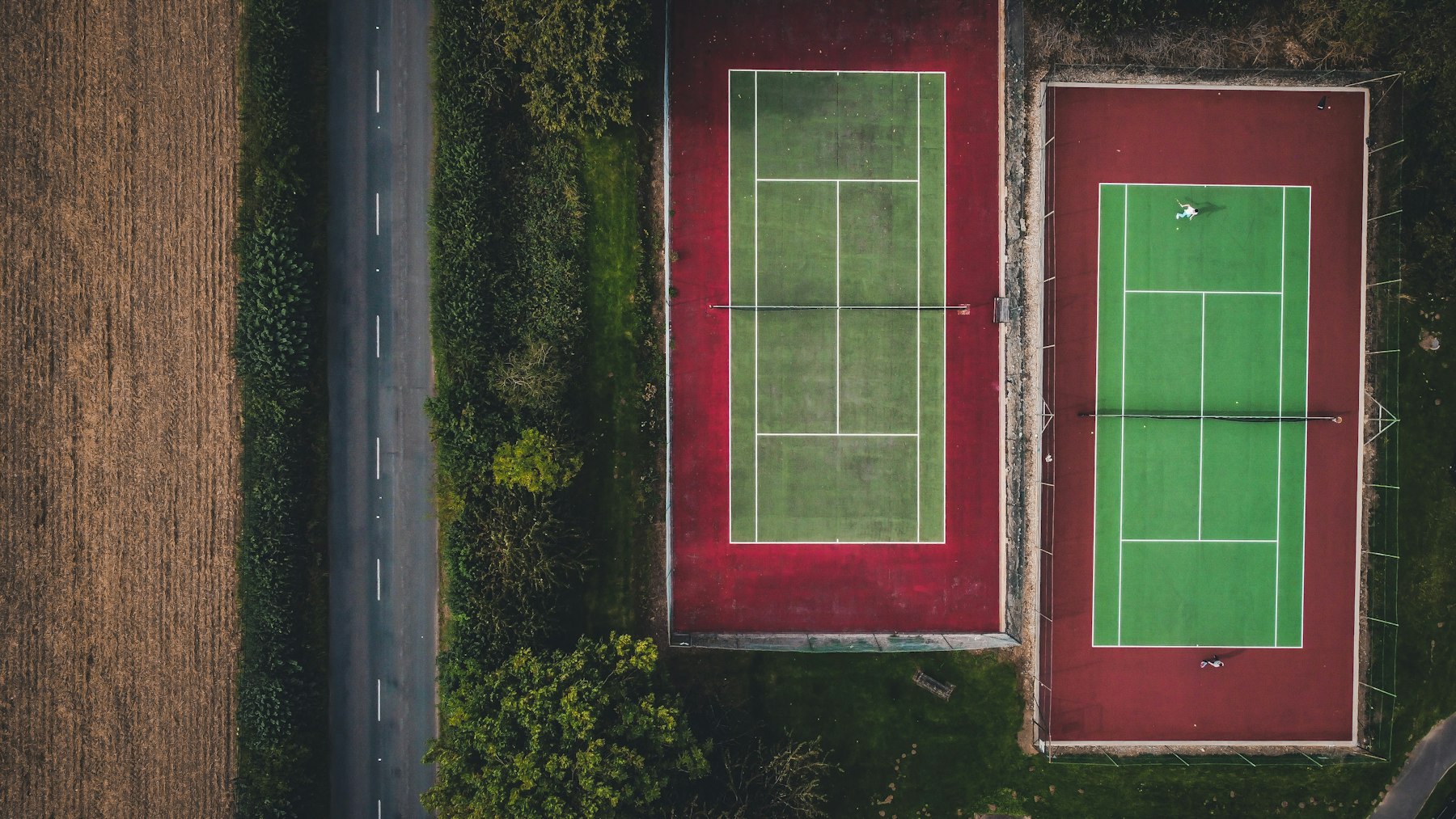
Multi-Sport Combo Court Cost in New Jersey
One slab, two or three sports' worth of permanent lines. Here's what it actually adds to a build, what sizing rule decides the footprint, and when it's not worth doing.
Get a Combo Court Quote →A combo court costs roughly what the largest single sport on it already costs, plus striping for the second layout. Blended pickleball-on-tennis lines run $1,500–$4,000; adding basketball lines runs $400–$1,200 more. The base, surface, fencing, and lighting don't change — a combo court is sized to whichever sport needs the biggest footprint, most often a full tennis court, so smaller sports simply fit inside it.
What a Combo Layout Actually Adds
Sizing Rule
The footprint is set by the largest sport, not an average of all of them. Pickleball and basketball lines fit inside a tennis court's geometry with room to spare — a tennis-sized combo court is the common baseline.
Contrasting Line Colors
Each sport's lines get painted in a different color so players can tell them apart at a glance. This is a paint and layout decision, not an extra construction step.
Net System Trade-Off
A fixed net can't be correct height for both tennis and pickleball. Most combo courts keep tennis posts permanent and add a portable or strap-adjustable net for pickleball sessions.
Hoop Placement
Adding a basketball hoop to a tennis or pickleball combo court means positioning it clear of both sports' baselines — usually a single portable or corner-mounted in-ground hoop rather than a full basketball layout.
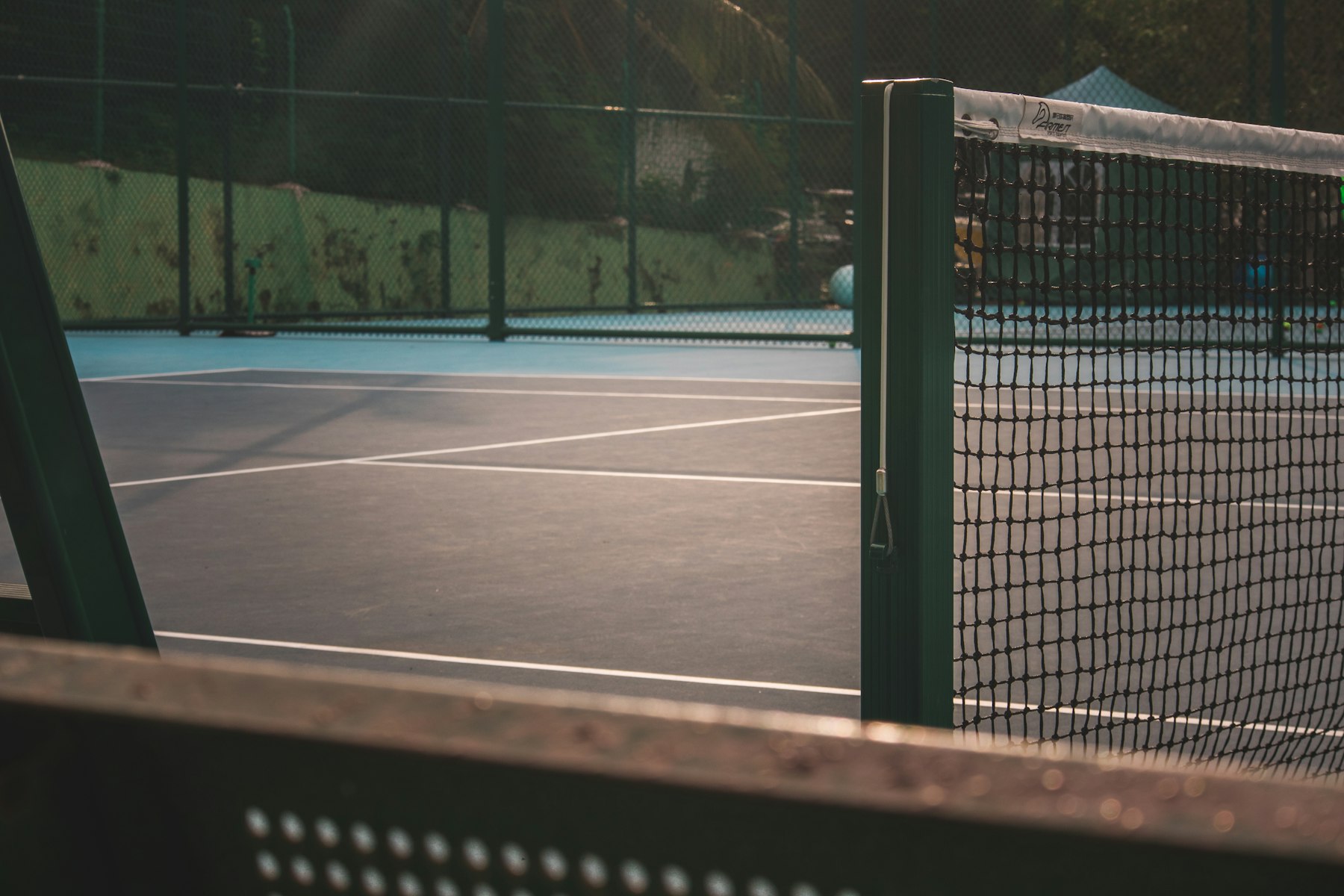
Striping Is the Real Line Item
The slab, base, and surfacing cost the same as a single-sport court sized the same way. What a combo layout actually adds is the second (or third) set of lines, painted in a contrasting color so the court reads clearly for whichever sport is being played.
- ✓ Blended pickleball-on-tennis lines: $1,500–$4,000
- ✓ Basketball key and arc lines: $400–$1,200
- ✓ No change to base, fencing, or lighting cost
Combo Cost by Scenario
New Build, Combo from Day One
$60,000–$120,000 — a full tennis-sized base and surface with pickleball (and optionally basketball) lines striped in during the same job. The added cost over a tennis-only build is the extra striping pass, roughly $1,500–$5,200 depending on how many sports.
Add Lines to an Existing Sound Court
$1,500–$4,000 — no base work, no color recoat. Tape and paint a new layout in a contrasting color directly over an existing tennis or pickleball surface that's still in good condition.
Combo Lines with a Resurface
Included in the resurfacing job — new lines go down as part of the same color-coat pass. See our pickleball ($4,000–$10,000) and tennis ($8,000–$20,000) resurfacing guides for that baseline.
Ranges are typical for New Jersey and vary with court size, surface condition, and how many sports\' lines you\'re adding. A site visit gives you an exact number.
Get a Combo Court Quote
New build or adding lines to an existing court — tell us which sports and we'll scope the layout and give you a fixed number.
Request a Quote →When a Combo Court Is Worth It — and When It Isn't
A combo layout earns its keep when the sports involved actually share a compatible hard surface and your household or guests genuinely play more than one of them. Tennis and pickleball are the natural pair — same acrylic-on-slab construction, same general geometry, and a tennis footprint has plenty of room to spare for pickleball lines. Adding a basketball hoop to the mix is a smaller add-on again, since it only needs clearance, not its own dedicated surface area. A badminton court is another cheap addition on the same logic — its compact footprint fits inside almost any tennis or pickleball layout with room left over, so the lines and portable net posts cost far less than a standalone build.
It stops making sense when the sports need genuinely different construction, not just different paint. A true clay or Har-Tru court can't double as anything else — the permeable stone base that makes clay play the way it does is the wrong surface for basketball or a hard-court pickleball game entirely. And on a lot too small for a full tennis footprint, painting tennis lines onto a pickleball-sized court is a waste of paint; the geometry has to fit before the lines matter. Our tennis and pickleball dimensions guides lay out exactly how much room each sport needs before you plan a layout around one.
If you already own a tennis court and are deciding between converting it fully to pickleball versus keeping both sports permanently, that's a slightly different decision than a combo build from scratch — our tennis-to-pickleball conversion guide covers that specific fork, including how many pickleball courts fit inside one tennis footprint. And whatever combination you land on, the net and windscreen guide covers the hardware side of running two sports off one set of posts.
All of the above assumes an acrylic hard-court surface, which is the right call once tennis or regulation pickleball is in the mix. If the combo you actually want is more casual — basketball, backyard soccer, and recreational pickleball rather than competitive play — artificial turf is worth pricing as an alternative base for that specific mix, since it skips the rigid slab entirely and handles a wider range of casual sports without needing tennis-grade bounce.
Related Guides
Tennis Court Installation Cost in New Jersey
Full cost breakdown for the base build a combo court is usually sized around.
Convert a Tennis Court to Pickleball in NJ
Full conversion vs. keeping both sports permanently on one court.
Court Striping & Line Painting Cost in NJ
What it costs to touch up lines or add a brand-new layout.
Court Fencing & Lighting Installation in NJ
How fencing and lighting fit into a combo court budget.
Multi-Sport Combo Court FAQs
How much more does a combo court cost than a single-sport court?+
The base and slab cost the same either way — a combo layout is sized to whichever sport needs the most room, usually a full tennis court, so the construction cost is close to what that single-sport build already costs. What's added is striping: a blended layout with a second sport's lines in a contrasting color runs $1,500–$4,000 for a full court, on top of the base build or a resurfacing job. Adding basketball lines (key, arc) runs $400–$1,200 more. That's a small addition against a $60,000–$120,000 tennis build.
Can I add pickleball lines to my existing tennis court instead of building new?+
Yes, and it's the cheapest way to get a combo court. If the existing surface is sound and not due for resurfacing, pickleball lines get taped and painted in a contrasting color directly over it for $1,500–$4,000, no base work or color recoat required. Our tennis-to-pickleball conversion guide covers this exact scenario in more depth, including how many pickleball courts fit inside one tennis court footprint.
What net setup actually works for a tennis and pickleball combo court?+
A permanent tennis net at 42/36 in plays too high for pickleball's 36/34 in spec, and there's no single fixed net correct for both. Most combo courts keep the tennis posts permanent and use a separate portable net rolled out for pickleball sessions, or a strap-adjustable system that drops the net's effective height. Neither is a full net-post rebuild, which keeps this option cheap relative to everything else on the court.
Does a combo court affect resale value the same way a dedicated court does?+
It generally reads as more valuable to more buyers, not less, because it isn't limited to one sport's audience. A dedicated pickleball or tennis court appeals to players of that sport specifically; a combo layout appeals to a wider range of a future buyer's household or guests. The tradeoff is a slightly busier-looking surface, which some owners find distracting during play — worth seeing in person before committing to a layout.
When does a combo layout not make sense?+
When the sports involved need genuinely different surfaces or standards, not just different lines. A true clay court, for example, can't double as a basketball court — the surface itself is wrong for the second sport, not just the striping. And on a smaller lot where you can only fit a pickleball-sized footprint, adding tennis lines is pointless since the full tennis geometry won't fit regardless of paint. Combo layouts work when the sports share a compatible hard surface and the footprint is sized for the largest one.
Scope Your Combo Court
Tell us which sports you want on one court and we'll confirm the layout, sizing, and a fixed price to build or stripe it.
Request a Quote →