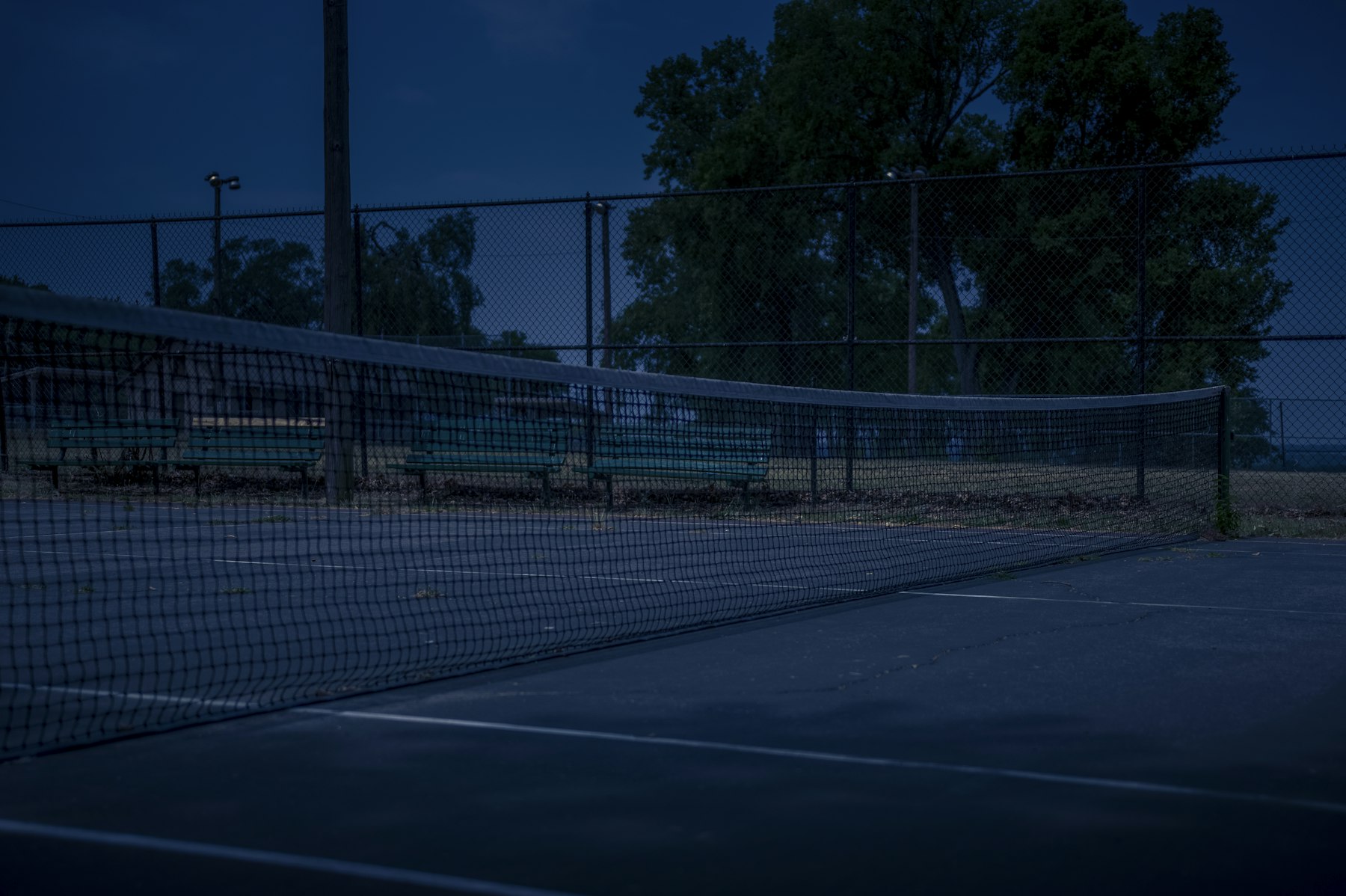
Net Post & Windscreen Installation in New Jersey
A net that holds tension and a windscreen that doesn't take your fence down in a storm — two small-looking jobs that get done wrong more often than the surface itself.
Get a Net & Screen Quote →A properly installed court has net posts cored into the slab (not just bolted to the surface) with a tensioned cable and center strap set to regulation height — 34 in for pickleball, 36 in for tennis — and, if you're adding one, a windscreen sized to the fence that's actually holding it up. The posts rarely fail. The tension and the fence load do, usually within the first year or two, because nobody planned for either.
Permanent Sleeves, Surface Mounts, or Portable — Which Post Do You Need?
Cored Sleeve System
A steel sleeve is set into the slab during construction; the post drops in and locks. Holds tension best, comes out clean for winter storage or resurfacing, and is what we install on every dedicated new build.
Surface-Bolted Post
Anchored to the top of an existing slab rather than cored into it. The retrofit option when you're adding a permanent net to a court that already exists and coring isn't practical.
Portable / Weighted Base
Rolls or lifts off the court entirely. The right call for a driveway, a multi-use pad, or anywhere the net needs to disappear between sessions — but it never holds tension quite as well as a sleeve.
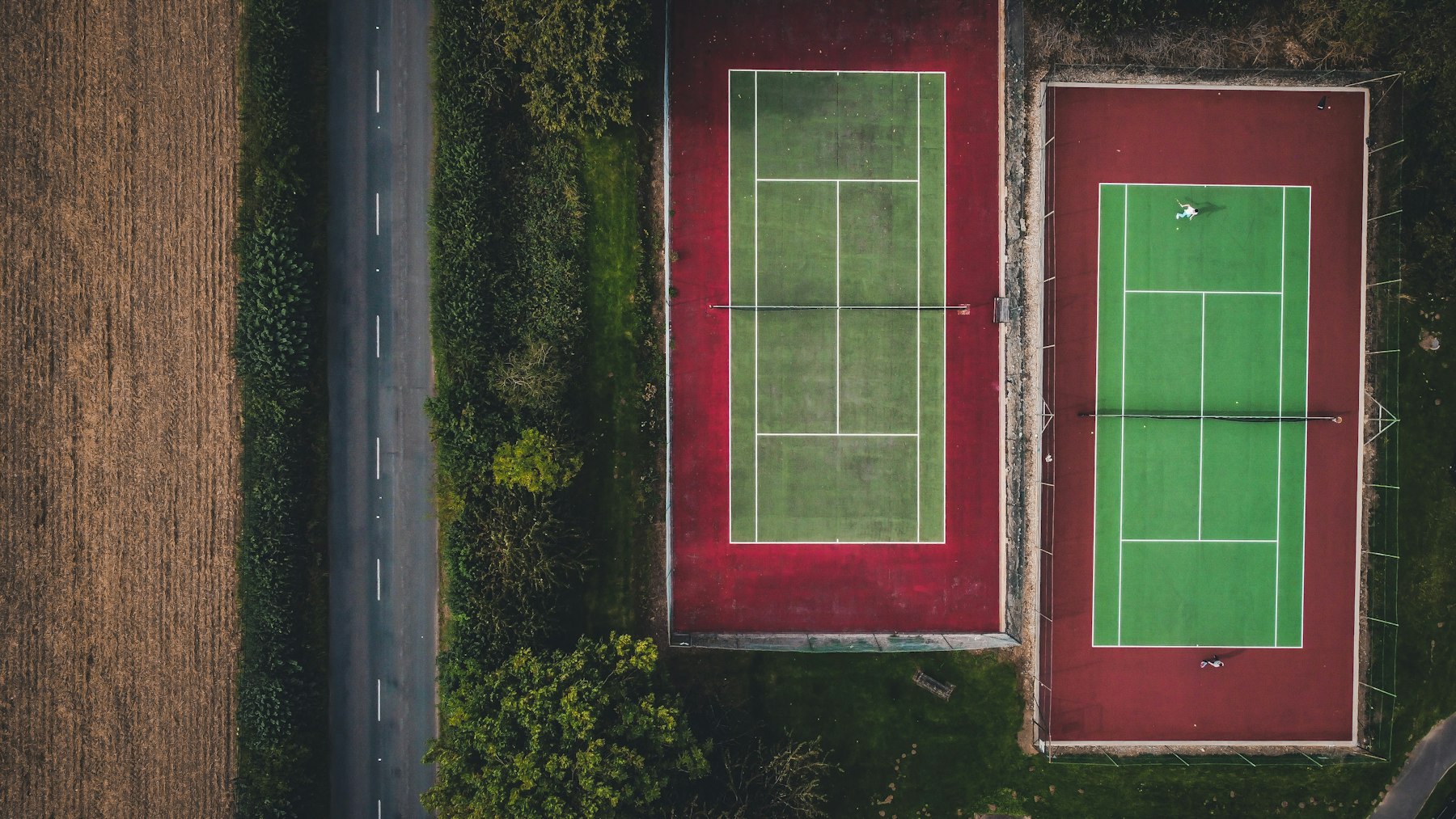
Nets That Stay True
A net is a cable in a fabric sleeve, and that cable stretches with use and heat — a net set to spec in April reads low by August. The center strap, not the end posts, controls the regulation sag.
- ✓ Cored sleeves that hold tension for years
- ✓ Center strap set to 34 in pickleball / 36 in tennis
- ✓ Windscreens sized to the fence carrying them
Why Nets Sag, and What "Properly Tensioned" Actually Means
Every net is a cable running through a fabric sleeve, cranked tight at one post with a ratchet or cleat. The cable stretches under repeated use, and heat makes it worse — a net cranked to spec on a cool April morning reads noticeably lower by a hot August afternoon. That's not a defective net; it's just physics that nobody checks after the first setup.
The numbers to hold: a pickleball net sits 36 in at the sidelines and sags to 34 in at the center strap. A tennis net runs higher — 42 in at the posts, 36 in at center — which is also why a tennis net doesn't work for pickleball without adjustment; it plays high across the middle of the court. On a court that sees regular use, we recommend checking center height every few weeks through the season, not just once when the net goes up in spring.
The center strap does more work than people give it credit for. It anchors the net to the surface at the middle of the court and is what actually controls the 34/36 in sag point — a loose or missing strap means the net bellies in the middle no matter how tight the end posts are cranked.
None of that matters if the post footing itself isn't set deep enough. A cored sleeve or surface-bolted post still needs a footing poured below New Jersey's frost line, or a few winters of freeze-thaw will gradually work it out of plumb and throw off net tension no amount of re-tightening fixes. See our frost line and footing depth guide for the exact regional depths and why net posts need more footing mass than a standard fence post. Pulling the post and capping the sleeve for winter also happens to be the first step if you're planning on converting the court into a winter ice rink instead of leaving it closed until spring — either way, the post shouldn't stay under tension through a New Jersey winter.
Net and post work is a good time to plan the rest of the finishing touches, too — benches, a ball or equipment storage box, a water station. See our court accessories cost guide for what those typically run and which ones are worth bundling into the same visit.
Setting Up a New Court or Fixing an Old Net?
We install sleeve systems on new builds and retrofit surface-mounted posts on existing courts — tell us what you've got and we'll size the right option.
Request a Quote →Windscreens Are a Wind-Loading Decision, Not Just a Privacy One
A bare chain-link fence is mostly open air — wind passes straight through it. A knitted mesh windscreen at 80–90% opacity turns that same fence into something closer to a sail. That's the point, for cutting wind interference on tennis shots or blocking a sightline from the street, but it changes the load the fence has to carry every time a storm rolls through, which in New Jersey's shore towns and open sites is a real and recurring event, not a one-off.
This is where we see the most avoidable damage: a homeowner or facility buys screen material and zip-ties it to a fence that was never engineered to carry wind load, and a season or two later posts are leaning, panels are racked, or a section has come down entirely in a bad storm. If a fence is being built new specifically to carry a windscreen, we size post spacing and footing depth for that load from the start. If you're retrofitting screen onto a fence that already exists, it's worth having someone check what that fence can actually take before you cover it — sometimes the answer is reinforcing a few posts first, and sometimes it's choosing a lower-opacity mesh that cuts some wind without turning the whole fence into a sail.
Winter is the season this shows up worst. Left-up windscreens catch wind during winter storms the same way they do the rest of the year, but a season of freeze-thaw and no maintenance window makes fence damage more likely, not less. We recommend taking screens down and storing them folded and dry before the first hard storm of the season, along with lowering or removing the net and capping the post sleeves — see our guide to winter snow and ice removal for backyard courts for the full seasonal checklist.
Net Systems on a Combination Tennis/Pickleball Court
The Height Mismatch
A permanent tennis net at 42/36 in plays high for pickleball's 36/34 in spec. There's no single fixed net that's correct for both sports at once.
What Actually Works
Most combo courts keep the tennis posts permanent and use a separate portable pickleball net rolled out for pickleball sessions, or a strap-adjustable system that drops the effective height. See our guide to converting a tennis court to pickleball for the full layout side of this.
Related Guides
Court Fencing & Lighting Installation in NJ
How fencing height, gates, and windscreens fit into a full installation budget.
Pickleball Court Dimensions & Space Requirements
Net height and kitchen depth in the context of the full court layout.
Convert a Tennis Court to Pickleball in NJ
Permanent net post installation as part of a full tennis-to-pickleball conversion.
Multi-Sport Combo Court Cost in New Jersey
What a full blended layout adds when you keep tennis, pickleball, and basketball on one court.
How to Build a Backyard Pickleball Court in NJ
Where net posts, fencing, and lighting fit into the overall build process.
Net Post & Windscreen FAQs
What's the difference between permanent and portable net posts?+
Permanent posts get cored into the slab and set in a footing, usually with a removable sleeve system so the post itself can still be pulled for mowing, resurfacing, or off-season storage. Portable posts sit in weighted or wheeled bases and can be rolled off the court entirely. Permanent sleeves hold tension far better and look right for a dedicated court; portable bases make sense on a driveway or multi-use pad where the net needs to disappear between sessions.
Why does my net sag even though I tightened it at the start of the season?+
Net cable stretches under load, and most players tension it once in spring and never touch it again. A strap that reads correctly in April is commonly an inch or more low by August after dozens of matches. Center strap height should be checked against the regulation number — 34 in for pickleball, 36 in for tennis at center — every few weeks during heavy play, not just once when the net goes up.
Do I actually need a windscreen, or is it just cosmetic?+
It's functional first. A windscreen cuts wind interference with ball flight, which matters more for tennis than pickleball, and it adds privacy from a neighboring yard or street. What it is not is free — mesh screens catch wind like a sail, and that load transfers straight into whatever fence it's attached to.
Can adding a windscreen damage my existing fence?+
Yes, if the fence wasn't built to carry the extra wind load. A bare chain-link fence sheds wind through the open mesh; add a screen with 80–90% opacity and that same fence now catches most of the wind hitting it, which can rack panels or work posts loose over a few storm seasons. Before adding screen to an existing fence, especially one you didn't build to spec, it's worth having someone check post footing depth and spacing rather than just zip-tying material on and hoping.
Should net posts and windscreens come down for the winter in New Jersey?+
Windscreen, yes, almost always — ice and heavy wet snow loading a screened fence is a common cause of winter fence failure, and taking it down for four months costs nothing but a little labor. Permanent net post sleeves can stay in the ground; pulling the post itself and capping the sleeve keeps water out and avoids a season of freeze-thaw working on hardware nobody's using anyway.
Get Your Net Posts & Windscreen Done Right
New build, retrofit, or just a net that won't hold tension — tell us what you're working with and we'll set up a site visit and a fixed quote.
Request a Quote →