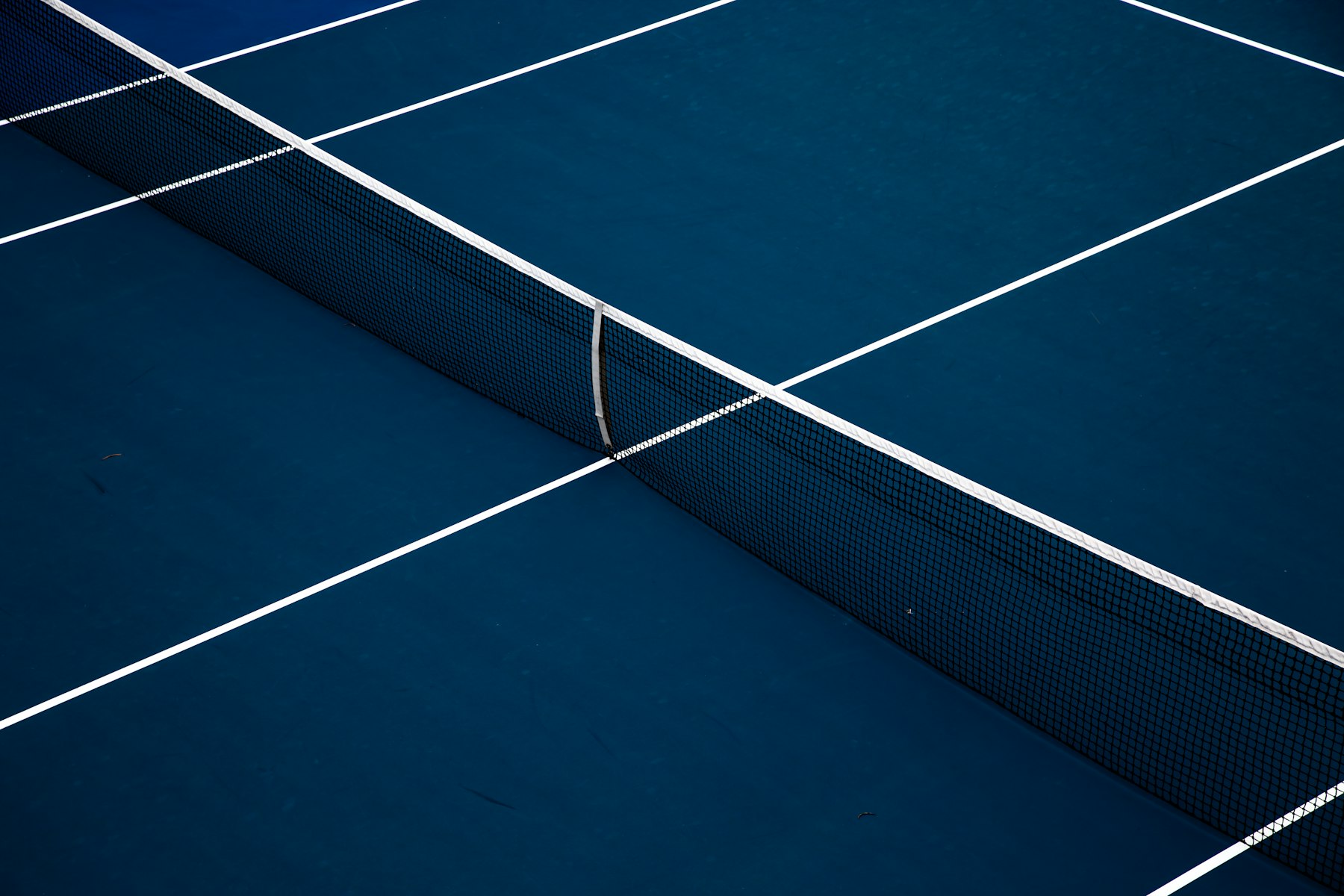
Court Striping & Line Painting Cost in New Jersey
A standalone line touch-up is the smallest job. Adding a whole new layout — like pickleball lines on an existing tennis court — costs more and scales with the number of courts. Here's what drives the difference and how the work actually gets done.
Get a Striping Quote →What Striping Costs in New Jersey
| Job Type | How It's Priced | What's Included |
|---|---|---|
| Line touch-up (existing lines, sound surface) | Smallest job; priced per court | Clean, tape, repaint existing lines in matching color. No new layout, no color coat. |
| New blended layout (e.g. pickleball on tennis) | Scales with number of courts | Tape and paint a new line layout in a contrasting color over a sound existing surface. |
| Striping as part of a full resurface | Included in resurfacing cost | Color coats plus new lines together — see the pickleball and tennis resurfacing guides. |
| Basketball court lines (key, arc, half-court) | More layout work than a rectangle | More paint runs and curved layout work than a rectangular pickleball or tennis court. |
Every quote varies with court count, surface condition, and how much prep the existing lines need before repainting.
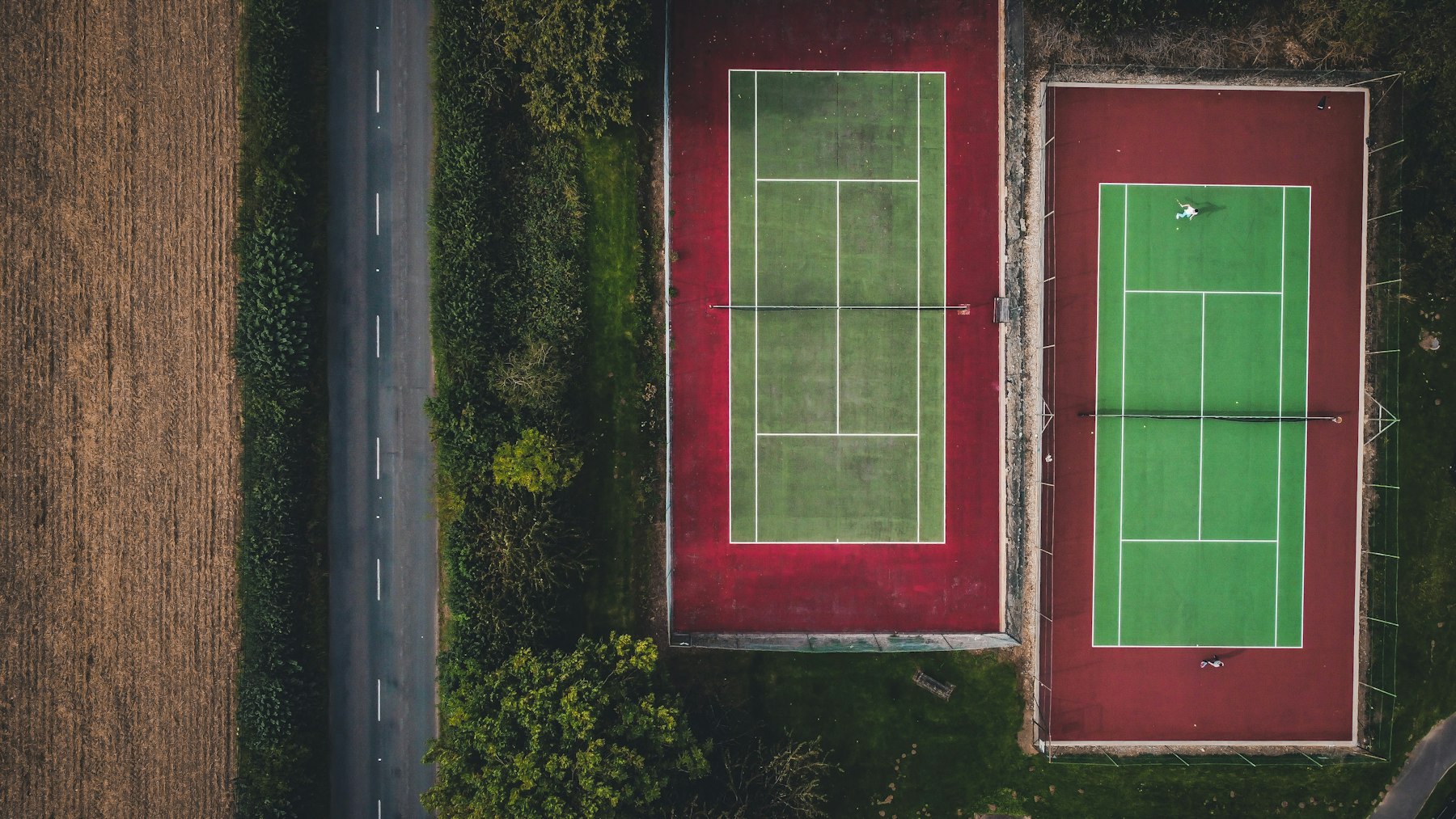
Lines That Hold Square
Touching up existing lines is realistic DIY. Laying out a new court from scratch is where it goes wrong — regulation lines have to hold square over 44 or 78 feet, and small drift compounds into visibly crooked lines.
- ✓ Line touch-ups on a sound surface
- ✓ Blended pickleball-on-tennis layouts
- ✓ Acrylic court paint that bonds and won't peel
The Striping Process, Step by Step
Clean & Inspect
The surface gets pressure-washed and checked for chalking or peeling on existing lines — paint won't bond to a chalky or contaminated surface, so this step gets skipped at your own risk.
Measure & Chalk the Layout
Regulation dimensions get measured and chalked before any tape goes down — 20 × 44 ft play area for pickleball, 78 × 36 ft for tennis. This is the step where DIY layouts most often drift out of square over the full length of the court.
Tape the Lines
Precision line tape masks off crisp, 2-inch regulation-width lines. Square corners and consistent width matter more for how professional the court looks than almost anything else in the job.
Paint & Cure
Acrylic court line paint goes on in one or two coats, textured to match the surrounding surface's traction. Tape comes up once the paint has set, and the court needs a dry cure window — typically a day, weather permitting — before full play resumes.
Need a Line Touch-Up or a New Layout?
Send us a photo of the court and we'll tell you whether it's a simple repaint, a new layout, or something the surface itself needs first.
Request a Quote →DIY vs. Professional Striping
Touching up lines that are already correctly measured is realistic to DIY — rent or buy a striping machine, use real acrylic line paint (not general-purpose exterior paint, which chalks and peels fast), and follow the existing tape lines. That part of the job is mostly about patience and steady hands.
Laying out a brand-new court is a different job. Regulation lines have to hold square over 44 feet for pickleball or 78 feet for tennis, and a small measurement error at one end compounds into a visibly crooked line by the other. We've been called in more than once to fix a DIY layout where the lines were close enough to look wrong but not close enough to play regulation — and by then the paint is already down, so the fix means stripping and re-taping the whole layout instead of just repainting it. If you're weighing what else is realistic to do yourself on a build, our DIY vs. professional court installation guide covers where that line generally falls.
When Striping Is Part of a Bigger Job
Striping is rarely the only thing happening on a court project. On a new build, lines go down as one of the last steps after the base and color coats — see our pickleball and tennis court installation cost guides for how striping fits into the full budget. On a resurfacing job, new lines are part of the same color-coat pass, not a separate cost — see our court color coating options guide for how single, two-tone, and kitchen-contrast layouts affect what gets painted alongside the lines. The one place striping stands alone as its own project is adding a second sport to an existing, sound court — most often pickleball lines on a tennis court — which our tennis-to-pickleball conversion guide covers in full, including how many courts fit and what a permanent versus blended layout costs. If you\'re keeping both sports permanently rather than converting outright, our multi-sport combo court cost guide covers what a blended layout adds across pickleball, tennis, and basketball lines on one court.
Related Guides
Pickleball Court Resurfacing in NJ
Full recoat-and-stripe process and pricing when lines aren't the only thing wearing out.
Convert a Tennis Court to Pickleball in NJ
Blended lines vs. a permanent conversion, and how many courts fit on one slab.
Sport Court Surface Types for New Jersey
How surface choice affects how well a color coat and lines hold up over time.
DIY vs. Professional Court Installation in NJ
Where self-installation genuinely works and where it tends to go wrong.
Court Striping FAQs
How much does it cost to stripe a court in New Jersey?+
A standalone line touch-up on a sound, already-colored surface — cleaning, taping, and repainting existing lines without a color recoat — is the smallest job. Adding a full new layout, like blended pickleball lines on a tennis court, costs more and scales with how many courts you lay out. Striping bundled into a full color-coat resurface is included in that job's price — see our pickleball court resurfacing and tennis court resurfacing guides for what drives it. Every job is quoted after we see the court.
Can I add pickleball lines to my tennis court without a full recoat?+
Yes, if the existing surface is sound and not due for resurfacing. Pickleball lines get taped and painted in a contrasting color directly over the tennis surface — no crack repair or color coat needed. This is the cheapest way to get a multi-use court, and it's covered in more depth in our tennis-to-pickleball conversion guide.
What paint is used for court line striping?+
Regulation lines use an acrylic court line paint formulated to bond to the same acrylic color-coat system as the rest of the surface, usually with a texture additive for traction. It's a different product from general-purpose exterior paint — using the wrong paint is a common DIY mistake that leads to lines peeling or chalking within a season.
How long do court lines last before they need to be redone?+
On a normally used court, lines generally track the same 4–8 year resurfacing cycle as the rest of the acrylic coating. High-traffic courts — club courts, HOA amenity courts with heavy weekend play — often show line wear at the kitchen line and baseline a season or two before the rest of the surface needs attention, since that's where players pivot and drag their feet most.
Is DIY court striping a bad idea?+
It depends what you're striping. Touching up existing, correctly-measured lines with a striping machine and the right paint is realistic for a handy homeowner. Laying out a new court from scratch is where DIY goes wrong — regulation dimensions have to hold square and true over 44 or 78 feet, and small measurement drift compounds across that distance into visibly crooked lines that are stuck there until the next recoat. If you're laying out a new court, see our guide on DIY vs. professional court installation for where the line usually sits.
Get a Striping or Line Layout Quote
Tell us what you need — a touch-up, a new layout, or lines as part of a resurfacing job — and we'll send a fixed quote.
Request a Quote →