Roller Hockey & Dek Hockey Rink Construction Cost in NJ
What drives the cost of a backyard or club roller hockey rink in New Jersey — paved base, sport tile, and dasher boards — and where converting an existing court beats building new.
Get a Rink Construction Quote →A roller hockey or dek hockey rink is built from three separate line items: a paved or compacted base, snap-together sport tile on top of it, and a dasher board or fence perimeter. The base is usually the biggest cost on a new build, and dasher board coverage is the biggest swing after that. Converting an existing sound basketball or tennis court skips the base and is usually the least expensive path to a real rink. We don't publish rink price ranges; you get a fixed quote after a site visit.
What Goes Into a Rink Build
Base & Site Prep
Excavation, grading, and a paved asphalt or concrete pad, or a sound existing court you convert instead. This is the largest cost on a new build and the one step a tile-only quote skips over.
Sport Tile
Snap-together polypropylene tile engineered for low rolling friction and puck glide, installed on top of the base rather than replacing it.
Dasher Boards
Rigid perimeter boards that keep play in and let players use the boards, not just a fence that stops stray shots.
No Minimum Size for Backyard Play
Competitive inline hockey rinks are far larger than almost any backyard. Residential rinks are usually sized to whatever pad already exists or fits the yard.
- ✓ Competitive rinks: far larger than a backyard pad
- ✓ Backyard builds: sized to an existing driveway, patio, or court pad
- ✓ No regulation minimum for casual or driveway play
- ✓ Converting an existing court is usually the fastest path to a real rink
Sport Tile vs. Bare Pavement
Broom-finished concrete or asphalt is playable for casual dek hockey — plenty of driveway games happen on bare pavement every winter. Where a real rink upgrades from that is purpose-built roller hockey sport tile: interlocking polypropylene tiles engineered specifically to reduce rolling friction and improve how a puck or ball glides across the surface, compared to the drag and unevenness of raw pavement. Tile is priced by the square foot, so pad size drives that part of the quote directly.
The tile sits on top of the paved or compacted base — it does not replace it. A base that is cracked, poorly sloped, or holding water will telegraph those problems up through the tile over time, the same way a worn base undermines any court surface. That is why base condition gets checked first on a conversion project, and why a new-build quote always starts with the base and works up from there. Our modular tile vs. poured court surface guide covers the base-plus-tile system in more depth for multi-sport builds, and our concrete vs. asphalt base guide covers which paved base makes sense under it.
Dasher Boards: The Line Item That Changes the Budget Most
Dasher boards are the low, rigid perimeter wall system that defines real hockey — ice or roller — as opposed to a game played inside a chain-link fence. They let players bank the puck or ball off the boards, keep play continuous along the perimeter, and give a rink the look and function of an actual hockey surface rather than a fenced-in pad. Board systems are priced by the linear foot, plus any upper containment netting, freight, and site-specific prep, so a full perimeter is a meaningful cost — which is exactly why partial board systems, boards on the ends only, or a standard fence perimeter are all real options depending on how competitively the rink will be used.
A casual backyard or driveway dek hockey setup often skips boards entirely, using an existing fence or none at all — kids and pickup games do not need regulation containment to be fun. A rink built for organized recreational or club-level play generally wants at least partial dasher boards along the ends and corners where the puck sees the most action, with the option to fence the remaining sides more affordably. Matching board coverage to how the rink will actually be used, rather than defaulting to a full perimeter because that is what a rink "should" look like, is one of the biggest cost levers on this project.
Full Dasher Perimeter
Boards on all sides, the closest experience to an ice or club roller rink. The largest single line item on the whole project — priced per linear foot around the full pad perimeter.
Partial Boards + Fence
Boards on the ends and corners where play concentrates, standard fencing on the remaining sides. A real cost saver that still delivers boards-in-play hockey.
Get a Roller Hockey Rink Construction Quote
New build, court conversion, full dasher perimeter, or tile-and-fence — tell us your project and we'll set up a free site visit.
Request a Quote →Converting an Existing Court Into a Rink
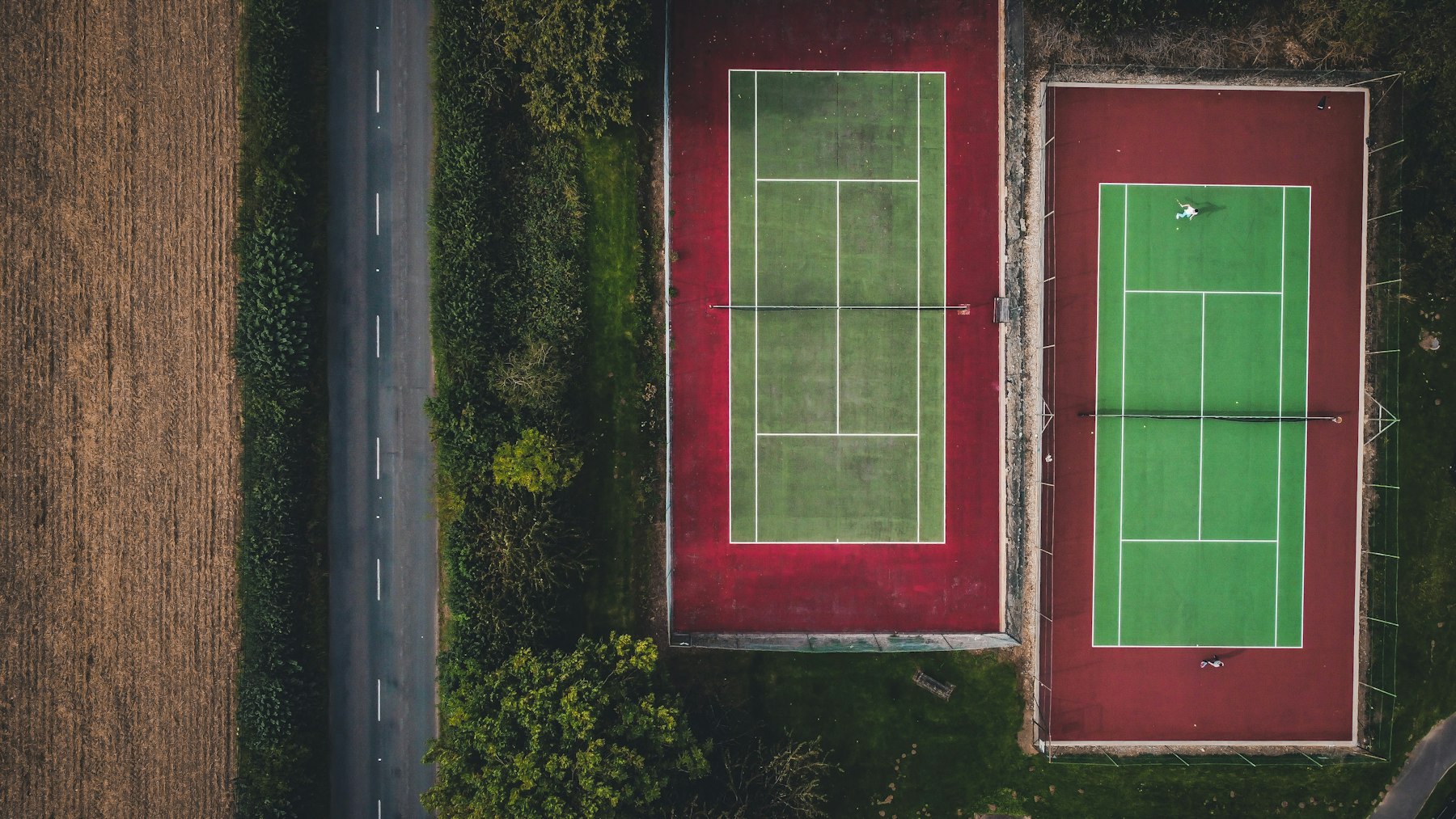
The fastest and usually cheapest way to get a real roller hockey rink is to convert a court you already have. A sound basketball court, an underused tennis pad, or a large driveway slab already did the expensive part — excavation, grading, and a paved base — which on a new build is typically the single largest cost. Add sport tile and a fence or dasher board perimeter on top of that existing pad, and you have skipped straight to the finishing work. Our multi-sport combo court cost guide and basketball court installation cost guide cover what goes into building a comparable pad from scratch, for comparison.
The catch is that a conversion is only as good as the slab underneath it. An existing court with real cracking, a settled section, or standing water after rain will pass those problems straight up through new tile — tile smooths the top layer, it does not fix a moving base. That is the same assessment any resurfacing job needs, and it applies here too: a site visit tells us whether your existing pad is a clean conversion candidate or needs crack repair or leveling first. If the base needs that kind of work, our crack repair vs. resurfacing guide walks through that decision in more detail.
Permits and Seasons
New Jersey does not publish a rink-specific permit separate from standard court and accessory-structure review — a new paved pad, dasher boards over a few feet tall, and any lighting go through the same municipal zoning and building review as a pickleball or tennis court, covering setbacks, impervious coverage, and electrical work if lighting is part of the build. Converting an existing court in the same footprint, adding only tile and a fence with no new paving, typically draws less scrutiny than a brand-new pad. Confirm specifics with your building department before ordering material; our permits and zoning guide covers what that review generally involves. Permit fees are set by each town, so ask your building department for the current fee.
Base and tile installation both prefer the same construction windows as any other paved New Jersey court — avoiding the deep freeze of midwinter and the peak heat of midsummer keeps paving and adhesive work on schedule. Our best time of year to build a court guide covers that seasonal window in more detail, and it applies to a rink base the same way it applies to any other court.
Related Guides
Modular Tile vs. Poured Court Surface
How a tile-on-base system compares to a poured or coated surface for multi-sport pads.
Concrete vs. Asphalt Court Base
The base decision that drives most of a new rink or court's build cost.
Multi-Sport Combo Court Cost
What a shared pickleball, tennis, and basketball pad costs — a comparable conversion candidate.
Basketball Court Installation Cost
What goes into a comparable paved pad you could convert into a rink later.
Court Crack Repair vs. Resurfacing
What to fix on an existing slab before adding tile and boards on top of it.
Best Time of Year to Build a Court
The paving and construction windows that also apply to a rink base.
Roller Hockey Rink FAQs
How much does it cost to build a roller hockey or dek hockey rink?+
It depends on four things: whether you need a new paved base or can use an existing sound slab, the size of the pad, whether you add sport tile, and how much of the perimeter gets dasher boards versus fencing. A new base is usually the biggest line item, and full dasher boards around the whole perimeter are the next. Converting an existing court with tile and partial boards is usually the least expensive path. We don't publish price ranges for rinks; the only number worth budgeting from is a fixed quote after a site visit.
What size should a backyard roller hockey rink be?+
There is no minimum size for casual and driveway play — a rink scales to whatever pad you have. Competitive inline hockey rinks are far larger than almost any backyard can hold, so residential rinks are usually sized to an existing basketball court, driveway, or patio pad, or to whatever new pad fits the yard once setbacks and other structures are accounted for.
Do I need dasher boards, or can I just fence the rink?+
It depends on how the rink gets used. Dasher boards — the low, rigid perimeter wall used in ice and roller hockey — keep the puck or ball in play along the boards the way a hockey rink is designed to be played, and they let players use the boards defensively. A standard court fence contains stray shots but does not give you that boards-in-play style of hockey. Casual driveway and backyard dek hockey often skips boards entirely and uses a simple perimeter fence or nothing at all; a rink built for real hockey play, even at the recreational level, generally wants at least partial dasher boards along the ends and corners.
What floor surface is best for roller or dek hockey?+
Smooth broom-finished concrete or asphalt works for casual play, but purpose-built roller hockey sport tile is a common upgrade — snap-together polypropylene tiles designed to reduce rolling friction and improve puck glide compared to bare pavement. The tile sits on top of a paved or compacted base rather than replacing it, so the base underneath still has to be built correctly. See our modular tile vs. poured surface guide for how that base-plus-tile system compares to a poured or coated finish.
Can an existing basketball or tennis court be converted into a roller hockey rink?+
Often, yes, and it is usually the most cost-effective way to get a rink. If the existing pad is sound — no major cracking, decent drainage, reasonably flat — adding sport tile and a dasher board or fence system on top of it skips the most expensive part of any new build: the paved base. The condition of that existing slab still needs an honest look first, since tile and boards installed over a base that is already failing will inherit the same problems. A site visit tells us whether your existing court is a good conversion candidate or needs base work first.
Get a Rink Construction Quote
Tell us whether you're building new or converting an existing court, and how much dasher board coverage you want. We'll set up a site visit and a fixed quote.
Request a Quote →