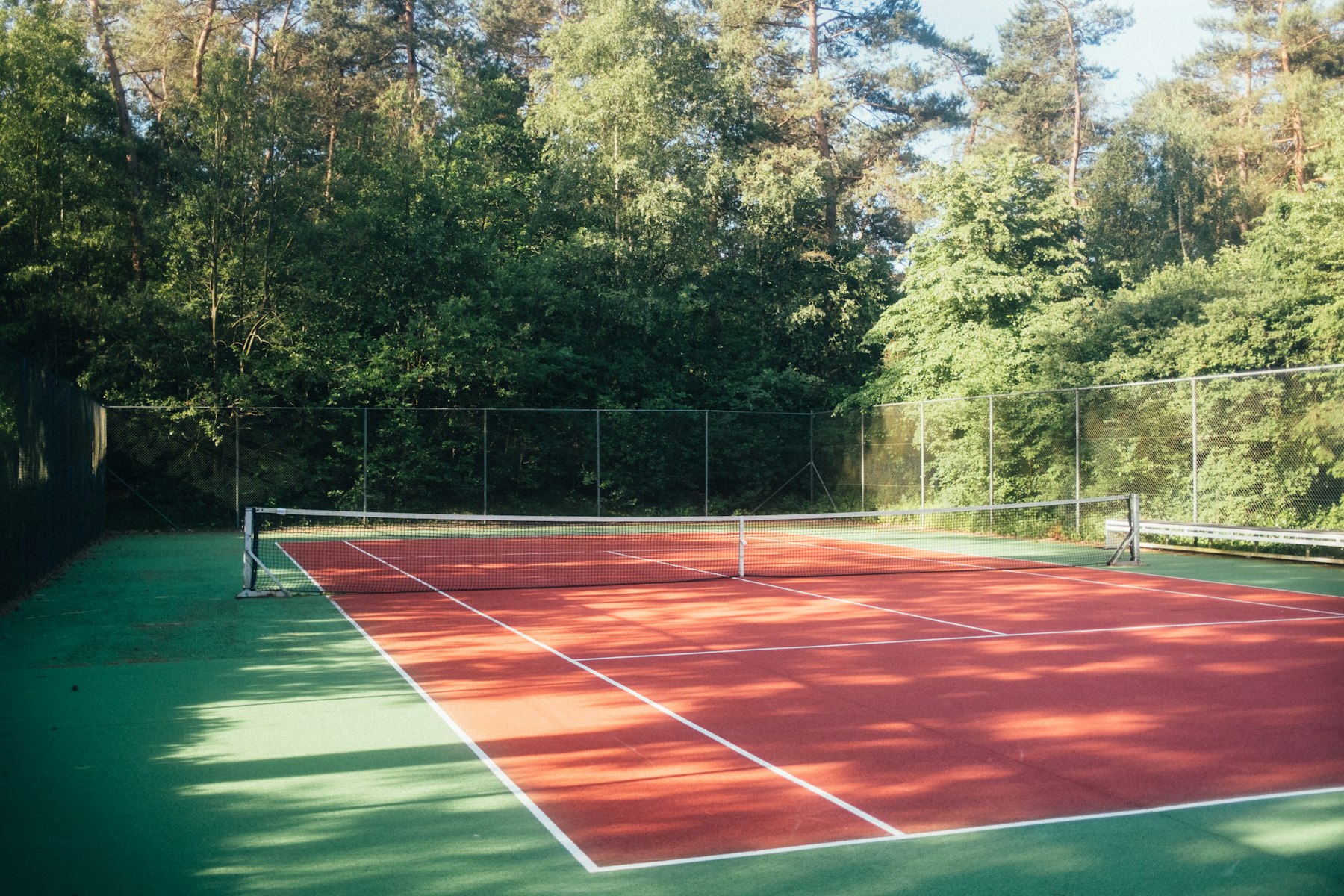
How to Convert a Tennis Court to Pickleball Courts in New Jersey
Four pickleball courts fit on one tennis court. Here's what the conversion actually involves, what it costs in NJ, and when it beats building new.
Get a Conversion Quote →A standard tennis court fits four regulation pickleball courts (20 ft × 44 ft of play area each) inside its roughly 60 ft × 120 ft fenced footprint. In New Jersey, adding blended lines and using portable nets is the low-cost option, while a permanent conversion is a bigger project — full resurface, dedicated pickleball colors and lines, and fixed net posts. Converting works because you reuse the existing base, the most expensive part of any court. NJ Court Pros converts and resurfaces courts across New Jersey with a fixed quote after a site visit.
How Many Pickleball Courts Fit on a Tennis Court?
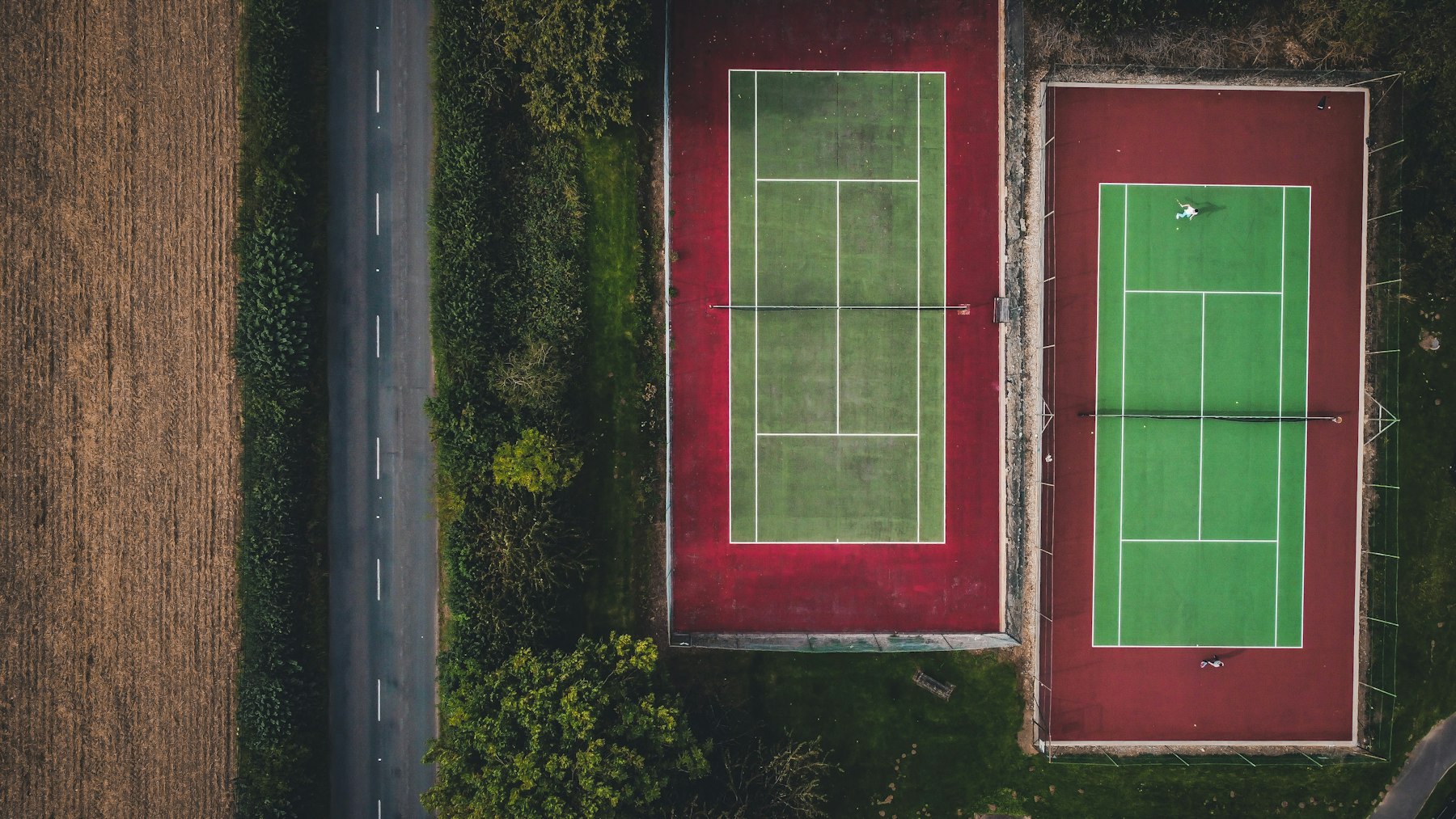
The math works out cleanly. A tennis court's play area is 78 ft × 36 ft for doubles, and the fenced enclosure around it is typically about 60 ft × 120 ft. A pickleball court needs 20 ft × 44 ft of play area, with a recommended total surface of 30 ft × 60 ft including out-of-bounds run-off. Turn the pickleball courts 90° to the tennis net and four of them drop into that footprint — the standard layout you see at clubs and parks.
Four is the maximum, not always the right answer. Four courts inside one tennis enclosure means players on adjacent courts share run-off space and balls cross between courts constantly. Two or three courts gives you real spacing and a noticeably better playing experience. We lay out the options against your actual court during the site visit.
Four Courts
Maximum capacity inside a standard tennis enclosure. Best for clubs, HOAs, and municipal courts where throughput matters more than elbow room.
Two Courts
Generous spacing, room for benches and shade, and far less cross-court interference. The comfortable choice for private and residential courts.
Keep Tennis Too
Blended lines let one court serve both sports. Cheapest option, but the overlapping lines are visually busy and the tennis net is not regulation height for pickleball.
What Does It Cost to Convert a Tennis Court to Pickleball in NJ?
Blended Lines Only
Lowest cost — stripe pickleball lines in a contrasting color on a sound existing tennis surface and play with portable nets. Keeps tennis fully playable. No base or surfacing work.
Permanent Conversion
Priced like a resurface plus layout and posts — full resurface of the slab, a dedicated pickleball color scheme and layout, and fixed net posts set in footings. Retires tennis on that court and delivers a true pickleball facility.
Add Dividing Fence
Priced by run length and height — optional fencing or netting between courts to stop balls crossing. Worth budgeting on a four-court layout where cross-court traffic is constant.
Conversion cost depends on the condition of the existing slab, how much crack repair it needs, and how many courts you lay out. Compare against building a new pickleball court (a new base on every court) and tennis court resurfacing. For a full breakdown of what standalone line work costs outside a conversion, see our court striping and line painting cost guide. The only way to get an accurate number is a site visit.
You Reuse the Base
A conversion works because it keeps the most expensive part of any court — the existing slab. A sound tennis base that still drains lets you skip the excavation and pour entirely and land at a fraction of a new-build price.
- ✓ Four regulation courts inside one tennis footprint
- ✓ Low-cost blended lines or a full conversion
- ✓ Fixed net posts and dividing fence when you want them
Thinking About Converting Your Court?
Send us your location and a photo of the court. We'll assess whether the slab is worth converting, lay out your court options, and send a fixed quote.
Request a Quote →What Does a Permanent Conversion Involve?
Assess the Existing Base
The whole case for converting rests on the slab. We check for structural cracking, settling, birdbaths (standing water), and whether the court still holds its drainage slope. A sound base means you skip the single most expensive part of a court build. A failing one means a conversion buys you three years, not twenty.
Crack Repair & Patching
Cracks get filled, and wider ones get crack fabric or a membrane system so they do not telegraph straight back through the new surface. Low spots are patched and leveled so water sheds instead of pooling on your new pickleball lines.
Lay Out the Courts
We chalk the actual layout on the slab before any coating goes down — 20 × 44 ft of play area per court, run-off spacing between them, and orientation checked against sun angle. This is when you see in real life whether four courts or two is the right call.
Resurface & Stripe
Multiple acrylic color coats across the full slab, then regulation 2-inch pickleball lines. A dedicated conversion uses a single clean color scheme instead of ghosting old tennis lines under the new ones.
Set Permanent Net Posts
Fixed net posts get cored into the slab and set in footings at each court — 36 in at the sidelines, 34 in at center. This is what separates a real conversion from a taped court with a portable net dragged out on weekends.
Should You Convert or Build New?
Convert when the base is sound. The base is the most expensive and most important part of any court, and an existing tennis slab that still drains and has not structurally failed is a real asset. Reusing it is why a conversion costs a fraction of building a new pickleball court from scratch in New Jersey.
Build new when the base has failed. New Jersey freeze-thaw cycles are what kill courts here: water gets under a tired slab, freezes, expands, and lifts the surface. If you are seeing wide structural cracks, sections that have settled unevenly, or water that stands after every rain, resurfacing over that is money spent on a countdown. Cracks will telegraph back through the new acrylic, often within a couple of seasons.
The honest test is simple: would you resurface this court if it were staying tennis? If yes, it is a good conversion candidate. If you would only resurface it because you are hoping to squeeze a few more years out of it, put the money toward a proper build instead. We will tell you which one you have — a conversion we do not believe in is not a job we want.
What Should NJ Owners Know Before Converting?
Permits
Resurfacing and restriping an existing slab usually avoids zoning review since the footprint and impervious coverage do not change — but adding lighting or changing fencing often does trigger it. See our court permits and zoning guide before you plan.
Noise & Neighbors
Pickleball is meaningfully louder than tennis, and four courts means four times the paddle strikes. Noise complaints are a live issue in NJ towns. Court placement, acoustic screening, and hours of play are worth thinking through up front.
Season
Acrylic surfacing needs dry weather generally above about 50°F, so NJ conversions are scheduled spring through fall. Booking over the winter means you play as soon as the weather turns.
Where in New Jersey Do We Convert Courts?
Bergen County
Club, HOA, and private tennis-to-pickleball conversions throughout North Jersey.
Bergen County court conversion →Essex County
Conversions and resurfacing for Montclair, the Oranges, and surrounding towns.
Essex County court conversion →Monmouth County
Shore-area club and residential court conversions and recoating.
Monmouth County court conversion →Morris County
Court conversions for Morristown, Madison, Chatham, and nearby communities.
Morris County court conversion →Hudson County
Space-efficient conversions and slab surfacing for Hoboken and Jersey City.
Hudson County court conversion →Tennis-to-Pickleball Conversion FAQs
How many pickleball courts fit on a tennis court?+
Four regulation pickleball courts fit inside the fenced footprint of a standard tennis court. A tennis court is 78 ft × 36 ft of play area inside a fenced area that is typically about 60 ft × 120 ft, and a pickleball court needs 20 ft × 44 ft of play area with a recommended 30 ft × 60 ft total surface — so four courts laid out perpendicular to the tennis net line is the standard configuration. If you want generous spacing between courts rather than the tight minimum, two or three courts is the more comfortable layout.
How much does it cost to convert a tennis court to pickleball in New Jersey?+
Adding blended pickleball lines to a sound existing tennis court and playing with portable nets is the least expensive option, priced mostly by how many courts you stripe. A permanent conversion — full resurface, dedicated pickleball color scheme and lines, and fixed net posts set in footings — costs about what a tennis resurface does plus the added layout and net post work, and the slab's condition moves it most. NJ Court Pros gives a fixed quote after a site visit.
Can you play pickleball on a tennis court without converting it?+
Yes. If the surface is sound, you can stripe pickleball lines in a contrasting color alongside the tennis lines and use portable nets. The tennis net itself is not regulation for pickleball — it sits 42 in at the posts and 36 in at center, while a pickleball net is 36 in at the sidelines and 34 in at center — so the tennis net plays high across the middle. Portable nets solve that and cost far less than a permanent conversion.
Is it better to convert the tennis court or build new pickleball courts?+
If the tennis court is structurally sound, converting is almost always cheaper because you reuse the most expensive part of any court: the base. Building a new pickleball court from scratch means paying for a new base, while a conversion reuses the existing slab. If the tennis court has significant base failure or major settling, a conversion only buys you a few years — at that point rebuilding is the better spend.
Do you need a permit to convert a tennis court to pickleball in NJ?+
A resurface-and-restripe conversion on an existing slab usually does not require a zoning permit because you are not changing the footprint or adding impervious coverage, though some towns still want a permit on file. Adding lighting, changing fence heights, or expanding the pad typically does trigger review. Pickleball noise is also a growing point of neighbor complaints in New Jersey towns, so it is worth checking local rules before you commit.
Planning your project? See pickleball court installation cost in NJ, tennis court resurfacing, court permits & zoning, court fencing & lighting, and net post & windscreen installation.
Get a Tennis-to-Pickleball Conversion Quote
Tell us where your court is and what shape it's in — we'll assess the slab, lay out your court options, and send a fixed quote after a site visit.
Request a Quote →