
Turning a Backyard Court Into a Winter Ice Rink
A pickleball, tennis, or basketball court is one of the best surfaces on a property to flood for skating — but a court's built-in drainage slope changes how you have to do it.
Ask About Off-Season Court Use →A rigid, well-graded pickleball, tennis, or basketball court makes a good base for a temporary winter ice rink — a plastic liner and perimeter boards go down over the existing surface, then the liner gets flooded in thin layers until it freezes solid. The catch is that a court is intentionally sloped about 1% for drainage, not dead level like a rink floor wants to be, so water runs toward the low end and needs to be flooded in stages rather than all at once. Material cost for a court-sized rink scales with rink size, and a kit with professional installation costs more than DIY.
What a Rink Conversion Actually Involves
Protective Liner
A heavy-duty plastic tarp or purpose-made rink liner laid smooth and tight across the entire court, with no wrinkles or gaps at the edges — this is what keeps water off the acrylic surface itself.
Perimeter Boards
Boards bracket to the liner edge and hold the flooded water in place. On a court, boards also have to route around fixed net posts and fence gates rather than a clean rectangle.
Staged Flooding
Water goes down in thin layers — roughly an inch at a time — letting each freeze before adding the next, rather than filling the whole rink to depth in one pass.
Removable Hardware
Net posts, portable nets, and anything bolted to the surface mid-court need to come out before boards go up, the same removal most owners already do for winter storage.
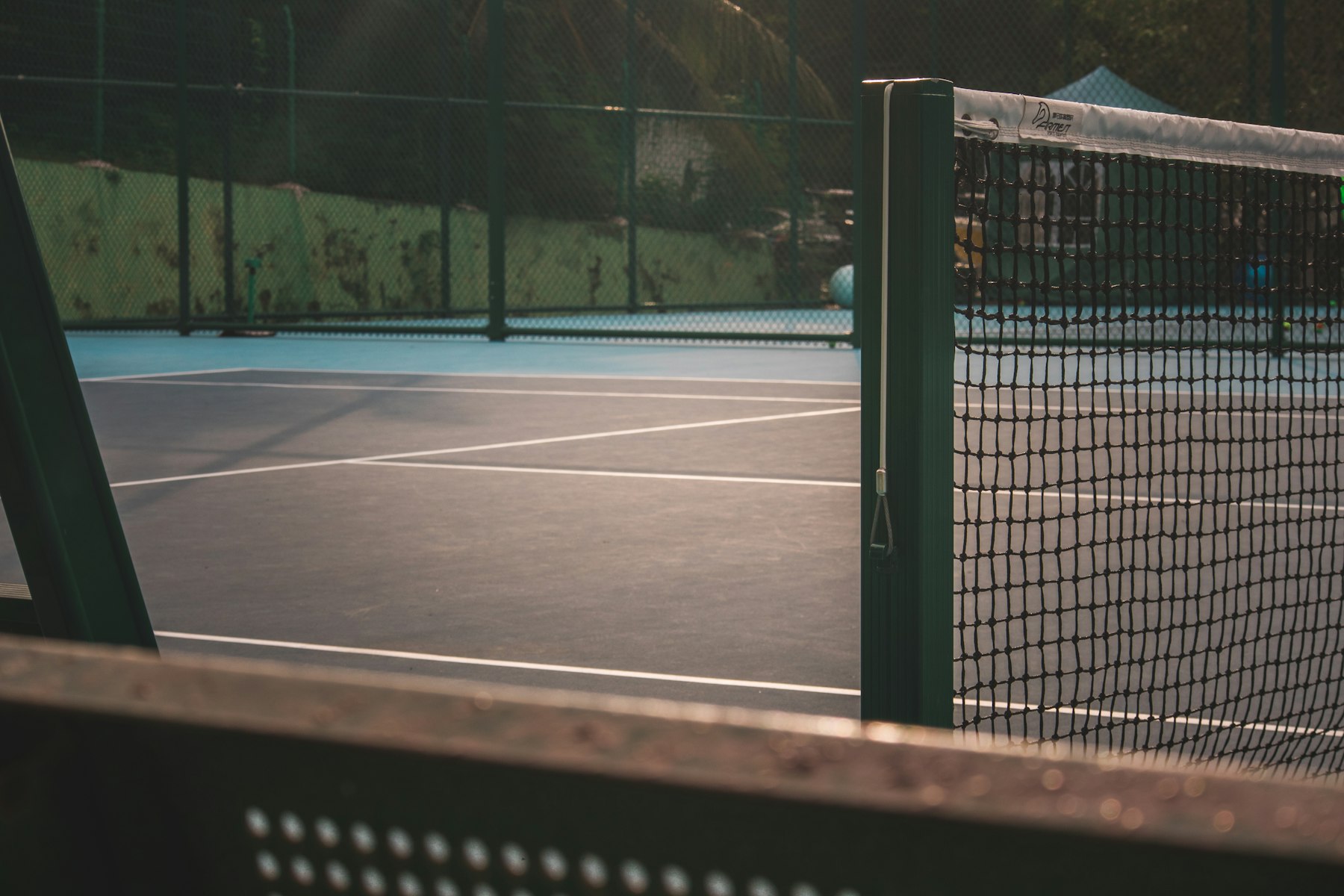
Your Court Isn't Flat — On Purpose
Every court we build slopes about 1% in one direction so rain sheets off instead of pooling. That's the right call for drainage and the wrong starting point for a rink, where water needs to sit still and freeze evenly across the whole surface.
- ✓ A 1% slope is roughly 1 inch of fall per 8–10 feet
- ✓ Flood water runs toward the low end instead of sitting evenly
- ✓ Boards set higher on the low side, or multiple thin layers, compensate
What a Court-Sized Rink Costs
Raw Materials, DIY
Liner, boards, and brackets sized to a full court, priced by square footage — a small corner rink costs proportionally less.
Kit + Pro Installation
Costs more — a purpose-made kit with brackets and connectors, installed by a crew rather than assembled yourself.
Permit (If Required)
A municipal fee in towns that require a permit for a temporary seasonal structure above a certain footprint — a quick call to your municipality before ordering avoids a surprise.
This is a seasonal add-on to a court you already own, not a construction project — NJ Court Pros doesn\'t install rink kits, but the guidance below on liner protection and slope comes directly from how we grade and build the courts underneath them.
Planning Multi-Season Use for a New Court?
If winter skating is part of the plan, tell us during design — we can flag where net posts and gates fall relative to a rink layout before the court is even built.
Request a Quote →Getting the Slope Right, and When Not to Bother
The mistake almost every first-time court-to-rink conversion makes is flooding the whole liner at once, the way you would a flat backyard lawn. On a sloped court, that just chases the water downhill — you end up with several inches pooled at the low corner and a bone-dry high corner that never builds an ice sheet at all. The fix is patience: flood in thin passes, let each one skin over before adding the next, and expect the low side to need more total water and more total freeze time than the high side before the whole surface reads as one uniform sheet. Checking the forecast matters here more than almost anywhere else in this guide — you need a stretch of consistent below-freezing nights to let each layer set before the next one goes down, and a warm afternoon mid-cycle can undo several days of work.
Board placement is the second place people get it wrong. Standard rink kits assume a flat rectangle with no obstructions, and a real court has net posts, sleeve caps, and fence gates that a rink layout has to route around or remove entirely. If your net posts are permanent sleeves rather than portable bases — see our net post and windscreen guide for the difference — pulling the post and capping the sleeve for winter, which most owners already do to protect the hardware from freeze-thaw, happens to clear the rink layout at the same time. Fence gates need to stay reachable too, both for getting equipment in and for basic winter access to the yard beyond the court.
There\'s a real case for skipping this altogether. If your court sees heavy use again as soon as the weather turns in spring, a rink that ran into late March can leave the surface holding moisture and cold longer than it otherwise would going into your first few weeks back on the acrylic — worth timing against our spring opening checklist rather than tearing the rink down the same week you want to play. And on a court with a meaningful negative grade or an existing low spot — the kind covered in our drainage systems guide — the slope problem above gets bad enough that a rink conversion may simply not be worth the flooding effort compared to a flatter patio, lawn area, or basketball pad elsewhere on the property.
Basketball pads deserve a specific mention here because they\'re often the best candidate on a property that has more than one hard surface. A basketball court is typically a single open rectangle without a net system in the middle of the playing area, and it\'s common for the slope to be shorter in total run than a full tennis court's, which means less total elevation change across the footprint. If you\'re choosing which surface on your property to flood, start with whichever one is flattest and least obstructed rather than defaulting to whichever one gets used most in summer.
Liner thickness is worth getting right the first time rather than shopping by price alone. A thin painter\'s-grade tarp is the wrong material — skate blades, snow shovels, and even a dropped hockey stick can punch through it over a season, and a puncture partway through winter means draining, patching, and re-flooding a rink that\'s already frozen solid. A rink-rated liner, typically a heavier low-density polyethylene sheeting sold specifically for this use, costs more per square foot but survives blade contact at the edges where skaters push off the boards hardest — which is also, not coincidentally, the same area of the court that takes the most wear from regular pickleball or tennis footwork in summer. Buying once for a liner rated to actually take a season of skating is cheaper in practice than replacing a bargain tarp mid-January.
Timing the takedown matters as much as the setup. Pulling the boards and liner while there\'s still ice on the surface risks scraping or gouging the acrylic coating underneath as you break the sheet apart and haul it off; waiting for a full, sustained thaw so the ice simply melts away on its own is slower but far gentler on the court. Owners who rush the teardown to reclaim the court for an early spring hit often end up with scuff marks or shallow gouges in the coating that show up as soon as the surface dries — a cosmetic problem this season, and a head start on the crack and wear patterns our crack repair vs. resurfacing guide covers if it\'s left unaddressed.
Related Guides
Court Drainage Systems in New Jersey
Why courts slope the way they do, and what that means for anything you flood on top of one.
Winter Snow & Ice Removal for a Backyard Court
What most NJ owners do with their court in winter if they aren't converting it to a rink.
Net Post & Windscreen Installation in NJ
Permanent vs. portable net posts, and pulling hardware for winter.
Pickleball & Tennis Spring Opening Checklist
What to check before the first match of the season, rink or no rink.
Rink Conversion FAQs
Can you actually turn a backyard tennis or pickleball court into an ice rink?+
Yes, with a temporary liner-and-board setup rather than any permanent change to the court. A rigid, roughly level pad — the kind any pickleball, tennis, or basketball court already is — is exactly what a backyard rink needs underneath it. The complication isn't whether it can be done; it's that a properly built sport court isn't perfectly flat by design, and that changes how the flooding process goes compared to flooding a flat lawn.
Does a court's drainage slope cause problems when you flood it for skating?+
It does, and it's the single biggest practical issue owners run into. Every court we build is graded to roughly a 1% single-direction slope so rain sheets off instead of pooling — that's only about an inch of fall over 8 to 10 feet, unnoticeable underfoot during play, but enough that flood water runs toward the low end instead of sitting evenly. You end up with thicker ice on the low side and a thin or bare patch on the high side unless you build the perimeter boards higher on the low end to compound extra water depth there, or flood in more, thinner layers and let each one level out before adding the next.
How much does a backyard rink conversion cost on top of an existing court?+
The court itself doesn't need any construction work — cost is just the rink kit. A basic DIY liner-and-board setup costs the least and scales with rink size; a full kit with professional installation costs more. On a raw-materials build the cost is the liner, the boards, and the brackets. Some NJ towns require a permit for a temporary structure over a certain size — worth a quick call to your municipality before ordering boards.
Will flooding a court for skating damage the acrylic surface or the slab underneath?+
Done correctly, no — a rink liner is the whole point of protecting the court surface, since the water and ice sit on top of the liner rather than directly on the acrylic coating. The real risk is skipping the liner or letting boards shift and puncture it partway through the season, which lets water reach the surface directly. Repeated freeze-thaw cycling against an unprotected acrylic coating over a full winter is a realistic way to shorten its resurfacing interval, so the liner isn't an optional step to save money on.
Which converts better for a winter rink — a basketball, tennis, or pickleball court?+
A basketball pad is usually the easiest candidate because it's often the flattest and most rectangular footprint on a property, without a net system or permanent fencing gates in the middle of the skating area. Tennis and pickleball courts work too, but net posts need to come out or get worked around, and fencing gates need to stay clear for board placement. Size also matters: a full tennis court gives you a much larger skating surface than a single pickleball court, if the extra liner and board cost is worth it for how much the rink actually gets used.
Designing a Court for Year-Round Use?
Tell us if winter skating, off-season flexibility, or multi-sport use matters to you — we'll factor net post placement and layout into the build from day one.
Request a Quote →