Winter Snow & Ice Removal for Backyard Courts in New Jersey
How to clear a pickleball or tennis court through a New Jersey winter without scratching the surface, cracking the coating, or stressing your fencing.
Get a Maintenance Quote →Clear snow early with a plastic shovel or soft snow broom — never metal blades or a plow, and never rock salt or chemical de-icers, all of which damage acrylic and modular court surfaces. Remove windscreens and lower or store the net before winter storms hit, and let ice melt naturally rather than chipping it off. Skipping these steps is one of the more common, and most avoidable, causes of early cracking and premature resurfacing on New Jersey courts.
Winter Court Care, Step by Step
Use the Right Tools
Plastic shovels, wide snow pushers with smooth edges, or soft snow brooms only. Metal blades and plows scratch and chip acrylic and modular tile surfaces.
Clear Early, in Light Layers
Move snow before it compacts or partially melts and refreezes. Thin, frequent passes are easier on the surface than one heavy clearing after a storm.
Skip Salt and De-Icers
Rock salt and chemical ice melt break down acrylic coatings, cause discoloration, and accelerate wear. Let ice melt naturally instead.
Protect Fencing & Net Posts
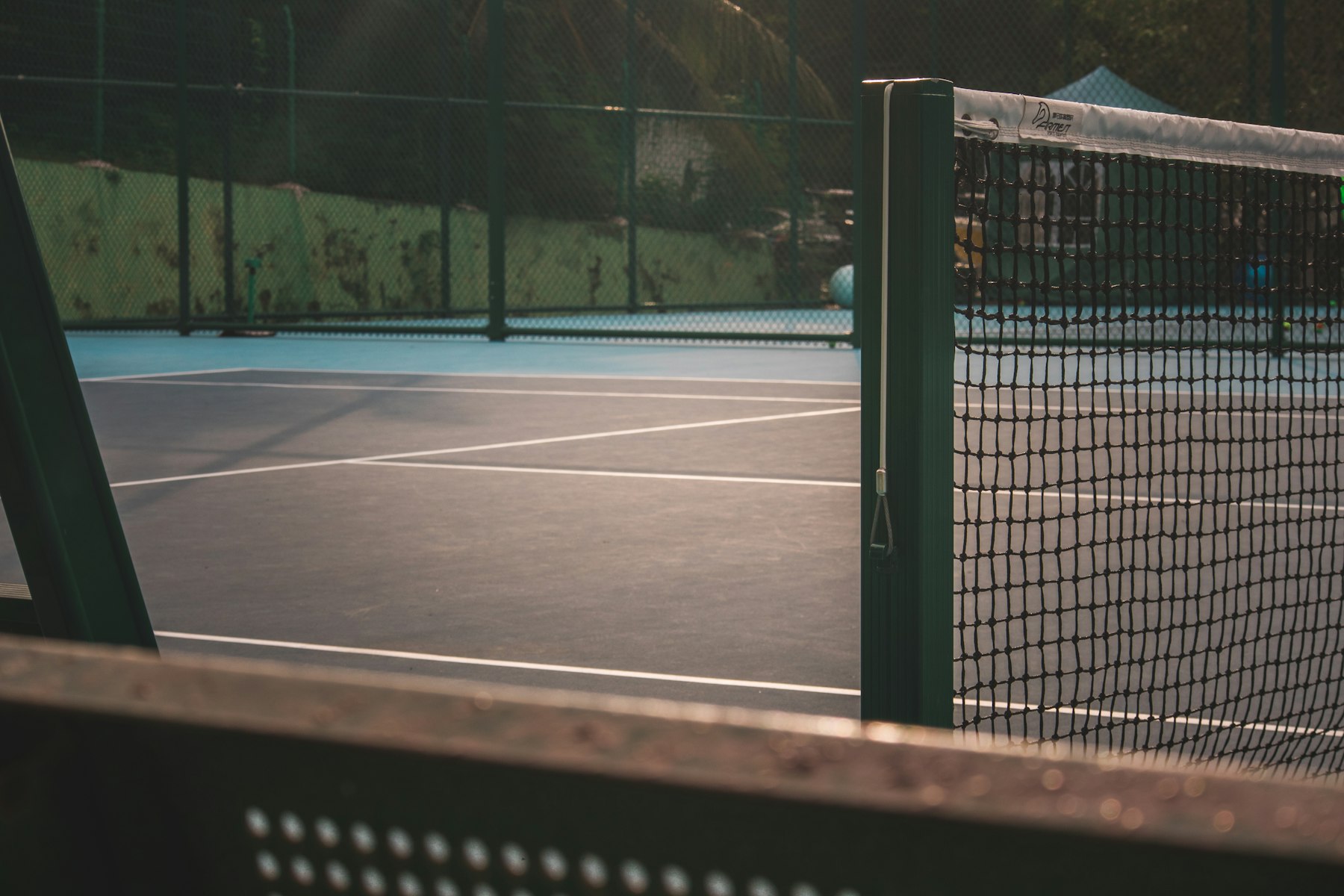
Take windscreens down before winter storms — left up, they catch wind and stress fence framing. Lower or remove the net and cap the post sleeves.
The Coating Is What You're Protecting
Every acrylic or modular court surface is more vulnerable in winter than it looks. Scratches from metal tools, salt residue, and refrozen standing water all shorten the interval before a court needs recoating — and all of it is avoidable with the right routine.
- ✓ Plastic tools only — never metal shovels or plows
- ✓ No rock salt or chemical de-icers, ever
- ✓ Windscreens down and net stored before storms
Before, During, and After a Storm
Before the Storm
Take windscreens down and store them folded and dry — wind load on a screened fence is a common cause of storm damage. Lower or remove the net and cap the post sleeves against moisture.
During Accumulation
Clear snow in light passes with a plastic shovel or snow pusher rather than waiting for one heavy clearing. This keeps the surface from ever bearing more weight than it has to.
After the Storm
Clear any standing water before a refreeze, and if ice has already formed, let it melt on its own. Chipping at bonded ice risks gouging the coating underneath.
Book a Winter Maintenance Visit
From storm prep to spring inspection, we'll keep your court's surface and fencing protected through the New Jersey winter.
Request a Quote →Why Winter Care Matters More Than It Seems
Some owners skip this seasonal routine entirely by building a court that heats itself — see our guide to heated court and snow-melt systems for what that costs and whether it's worth it for how often you actually play through winter. For everyone else, New Jersey's freeze-thaw climate is already the biggest long-term stress on any outdoor court surface — it's why we spend so much time on base selection in our concrete vs. asphalt court base guide and why certain surface systems hold up better through NJ winters than others. But the base and surface you chose at construction only get you so far if the court isn't cared for correctly once the snow starts falling. Standing water that refreezes on top of the acrylic coating adds another freeze-thaw cycle on top of the ones already happening underneath the surface, and that compounding is what turns a hairline crack into a resurfacing job a few years earlier than it needed to happen.
The tools matter as much as the timing. A metal shovel blade or a plow can put a scratch in an acrylic coating in seconds — and unlike a scuff on a driveway, that scratch is a point where water gets underneath the coating and accelerates the exact kind of cracking that eventually forces a choice between crack repair and full resurfacing. Rock salt and chemical de-icers do slower, less visible damage: the salts in most de-icing products break down acrylic binders over repeated seasons, which shows up as discoloration and a chalky, worn texture well before the surface is structurally due for a recoat. If your court is already showing that kind of wear, our court color coating guide covers what a fresh coating system actually involves.
Fencing and hardware take a hit in winter too, just less obviously than the playing surface. Left-up windscreens catch wind like a sail during winter storms, putting load on fence posts and framing they weren't sized for on a day-to-day basis — the same posts and hardware covered in our net post and windscreen installation guide. Taking screens down before the first hard storm of the season, and lowering or removing the net rather than leaving it under tension all winter, are both quick jobs that meaningfully extend the life of hardware that's otherwise expensive to replace. If you're pulling posts and screens down for the season anyway, that's also the setup step for a different winter use entirely — see our guide to converting a backyard court into an ice rink if skating is more appealing than a closed court until spring.
None of this replaces a proper annual maintenance schedule — winter care is one season of a year-round routine, not a substitute for it. But it's the season where the most damage happens the fastest if it's skipped, which is why we treat it as its own checklist rather than a footnote on the general maintenance guide.
Related Guides
Best Court Surfaces for New Jersey Winters
Which surface systems hold up best against NJ's freeze-thaw climate before you ever pick up a shovel.
Court Maintenance Schedule & Cost in NJ
The full year-round maintenance routine, from spring inspection through winter care.
Court Crack Repair vs. Resurfacing in NJ
How to tell whether winter damage needs a patch or a full recoat.
Net Post & Windscreen Installation in NJ
What goes into the hardware you're protecting every winter.
Spring Court Opening Checklist for NJ
What to actually check for freeze-thaw damage once the season everything above was protecting against is over.
Winter Court Care FAQs
What's the safest way to remove snow from an acrylic court surface?+
Use a plastic shovel or a wide snow pusher with a smooth, non-metal edge, or a soft snow broom for light accumulation. Clear snow early and in thin layers rather than waiting for it to pile up and compact — compacted snow is heavier, harder to move cleanly, and more likely to have already partially melted and refrozen against the surface by the time you get to it.
Can I use a metal shovel or plow on my court?+
No. Metal shovel blades and plow blades scratch and chip acrylic and modular tile surfaces, and those scratches become weak points where water intrudes and freeze-thaw damage starts. If your court has significant accumulation, a plastic blade or a soft push broom is the only tool that won't compromise the coating.
Should I use rock salt or ice melt on my pickleball or tennis court?+
No. Rock salt and most chemical de-icers contain salts that gradually break down acrylic coatings, cause discoloration, and accelerate surface wear over repeated winters. Let ice melt naturally instead of applying anything to speed it up — if the surface has already iced over, don't try to chip it off either, since that risks gouging the coating underneath.
Do I need to remove my court's windscreens and net before winter?+
Yes. Windscreens should come down and be stored folded in a dry place before winter — left up, they catch wind and add serious structural load to your fence framing during winter storms, which is a common cause of fence damage. Lower or fully remove the net and cap the net post sleeves as well, since leaving tension on the net posts through freeze-thaw cycles shortens their life.
Does letting snow and ice sit on my court cause long-term damage?+
It can. Standing water that refreezes on the surface accelerates the same freeze-thaw cycling that drives cracking in New Jersey's climate generally, and repeated freeze-thaw stress on an already-damp acrylic coating shortens the interval before you need resurfacing or crack repair. Clearing snow promptly, before it compacts into ice, is the cheapest maintenance step you can take to protect that investment.
Keep Your Court Ready for Spring
Whether you need a pre-winter checkup or spring repairs after a rough season, tell us what you're seeing and we'll take a look.
Request a Quote →