How to Build a Backyard Pickleball Court in NJ
From space and permits to base, surfacing, and lighting — the full process for building a backyard court in New Jersey that lasts.
Get a Court Build Quote →To build a backyard pickleball court in New Jersey you need about 30 ft × 60 ft of space (a 20 × 44 ft play area plus run-off), town permits, a properly drained and sloped base, acrylic surfacing, and net posts — and a professional build is quoted per site and takes roughly 3–6 weeks of construction. The five steps are: confirm space and layout, pull permits and plan drainage, excavate and pour the base, surface and stripe, then set nets, fencing, and lighting. The base is what makes or breaks longevity, so it's the step to get right. NJ Court Pros handles permitting and construction end to end across New Jersey.
How Do You Build a Backyard Pickleball Court, Step by Step?
Confirm Space & Layout
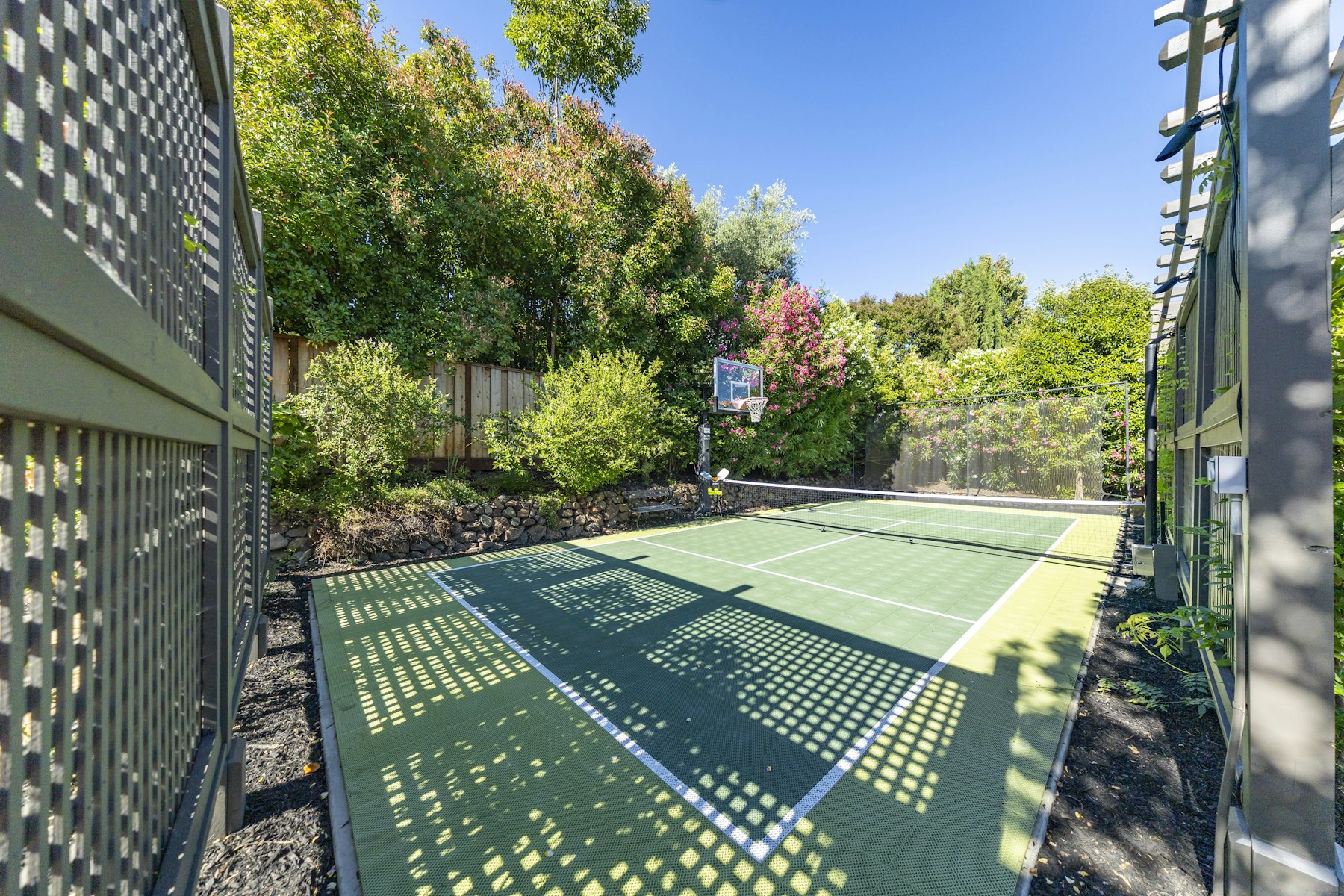
Measure your yard for a ~30 ft × 60 ft pad (20 × 44 playing area plus safe surround). We assess orientation, slope, and how to fit the largest usable court.
Permits & Drainage Plan
Check zoning, setbacks, and impervious-coverage limits, pull permits, and design drainage so water moves off the court and away from your home.
Excavation & Base
Grade the site and pour a properly sloped post-tension concrete base (or asphalt). This is the foundation of a crack-free court — the most important step, and the one that sets the schedule since concrete needs about 28 days to cure before surfacing.
Surfacing & Striping
After the base cures, apply acrylic or cushioned-acrylic color coats and regulation lines for a true, consistent playing surface.
Net, Fencing & Lighting
Set permanent net posts, add perimeter fencing and wind screens, and install LED lighting if you want evening play.
The Base Makes the Court
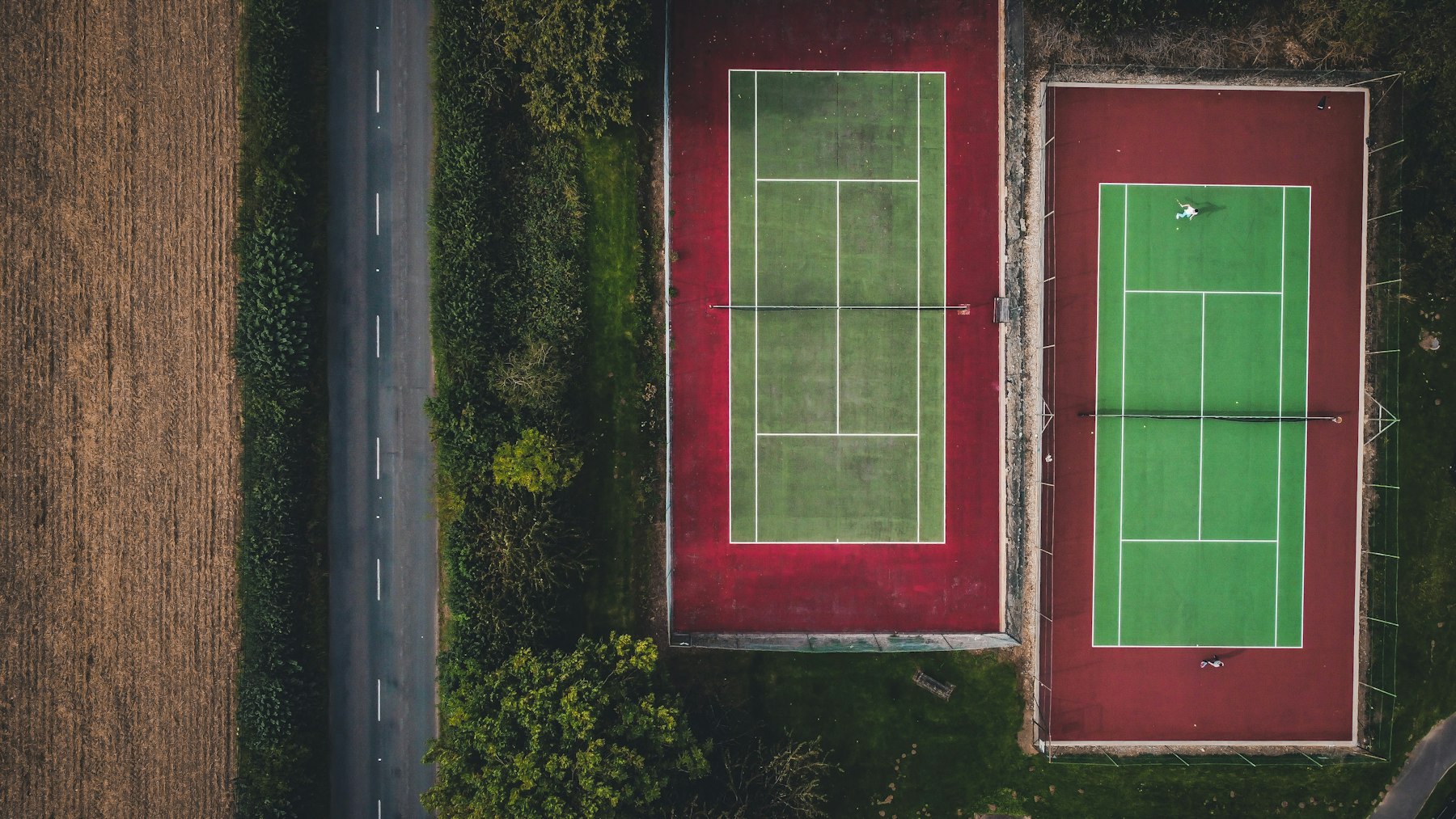
Surfacing, fencing, and lighting can all be upgraded later, but a bad base can't be fixed from the top. On a properly drained, sloped post-tension slab, a backyard court plays true for decades.
- ✓ ~30 × 60 ft pad for safe run-off
- ✓ Post-tension concrete resists freeze-thaw cracking
- ✓ About a 1% pitch keeps water moving off the court
Why Is the Base the Most Important Part of a NJ Court?
New Jersey's freeze-thaw winters are brutal on outdoor courts. Water that seeps under a poorly built base freezes, expands, and lifts the surface — the leading cause of cracking and an uneven, unsafe court. That's why the base is where a quality build earns its money.
A post-tension concrete base with steel tendons resists this movement and is the longest-lasting option, which is why it costs more up front than asphalt. Asphalt is cheaper on day one but moves with every freeze-thaw cycle, so it tends to crack sooner here and needs repair more often — over the life of the court, concrete usually wins on total cost. Proper drainage and slope — typically about a 1% pitch — keep water moving off the court instead of pooling or seeping underneath. Skimp here and no surface coat will save you; nail it and the court plays true for decades.
This is also why the base is the one line item you should never value-engineer. Surfacing, fencing, and lighting can all be added or upgraded later — you can resurface a sound court every 4–8 years and it stays excellent indefinitely. A bad base cannot be fixed from the top. Once it fails, the only real remedy is tearing it out and starting over, which means paying for the court twice. If your budget is tight, build a smaller court on a proper base rather than a bigger one on a compromised base. See sport court surface types for how the surface layers sit on top of it. Before any of that starts, there's homeowner-side prep worth handling first — see our guide to preparing your yard for court construction for equipment access, hidden utility lines, and landscaping to flag before the crew arrives.
Wondering If Your Yard Fits a Court?
Send us your address and a rough yard size. We'll check your town's setbacks and coverage limits, tell you honestly what fits, and send a fixed quote after a site visit.
Request a Quote →What Should You Plan For in a NJ Backyard?
Setbacks & Permits
Most NJ towns require permits and enforce property-line setbacks and impervious-coverage limits. A 30 × 60 ft pad is 1,800 sq ft of coverage, which is often what constrains the court rather than the yard itself. We confirm what your municipality allows before design.
Neighbors & Noise
Pickleball is meaningfully louder than tennis — the paddle strike is a sharp, repetitive pop that carries. Noise complaints are a live issue in NJ towns. Court placement, orientation, and acoustic fencing or screens help keep the peace with neighbors.
Orientation & Sun
Run the long axis north-south so low morning and evening sun stays off the baselines. An east-west court puts the sun straight into a server's eyes at the hours people most often play.
Fencing & Lighting
Perimeter fencing keeps balls contained — standard is 10 ft chain link. LED lighting extends play into the evening. Both sit outside the pad, so budget space as well as money for them.
Drainage
The pad is pitched about 1% so water sheds instead of pooling. Flat is wrong: standing water destroys the surface and, in NJ, freezes and lifts it. Water also has to go somewhere away from your home's foundation.
Season & Access
Acrylic surfacing needs dry weather above roughly 50°F, so NJ builds run spring through fall. Equipment also needs a path to the site — tight side-yard access can add cost and time.
Backyard Court Build FAQs
How much space do I need for a backyard pickleball court in NJ?+
A regulation pickleball court playing area is 20 ft × 44 ft, but you want a total pad of about 30 ft × 60 ft to allow safe out-of-bounds movement. You can play in a tighter footprint, but more surrounding space means safer, more comfortable play. We help you fit the largest usable court your yard allows.
Do I need a permit to build a pickleball court in New Jersey?+
Usually yes. Most NJ towns require a zoning and/or construction permit for a court because of grading, drainage, fencing, and sometimes lighting. Setback rules and impervious-coverage limits vary by municipality. NJ Court Pros handles the permitting process as part of a full installation.
Can I build a pickleball court myself?+
You can surface an existing, sound slab as a DIY project, but building from scratch is hard to do well — the base prep, drainage slope, and crack control are what separate a court that lasts 20 years from one that fails in three. Most homeowners hire a court builder for the base and surfacing and are glad they did.
What surface is best for a backyard court?+
For New Jersey, a post-tension concrete base with an acrylic or cushioned-acrylic surface is the most durable choice. Asphalt is cheaper but more prone to freeze-thaw cracking. Cushioned acrylic adds comfort underfoot at a higher cost. We walk you through the trade-offs during the site visit.
How long does it take to build a backyard court?+
Most backyard builds run 3–5 weeks of construction on an asphalt base or 5–7 weeks on post-tension concrete, once permits are in hand — the difference is the roughly 28-day concrete cure and cable-tensioning step. Permitting can add another 3–8 weeks up front depending on your town. Weather and tight-yard access can shift either number.
What net posts and fencing should a backyard court have?+
For a court you plan to keep, permanent net posts cored into the slab hold tension far better than a portable base and are what most homeowners end up wishing they'd chosen. Standard perimeter fencing is 10 ft chain link; a wind screen adds privacy but puts real wind load on the fence, so post spacing needs to account for it if you plan to add one.
Does a backyard court need ongoing maintenance after it's built?+
Yes, though it's light. Rinsing off debris and treating any moss or algae in shaded spots keeps the acrylic surface from staining, and most courts need a full resurfacing every 4–8 years regardless of how well they're kept up. Checking net tension a few times a season is the other easy task owners tend to forget.
Planning your project? See pickleball court installation cost in NJ, how long a build actually takes, court dimensions & space requirements, court permits & zoning, court fencing & lighting, and net post & windscreen installation.
Build Your Backyard Court in New Jersey
Send us your location and a rough idea of your yard — we'll handle the site visit, permits, and a fixed installation quote.
Request a Quote →