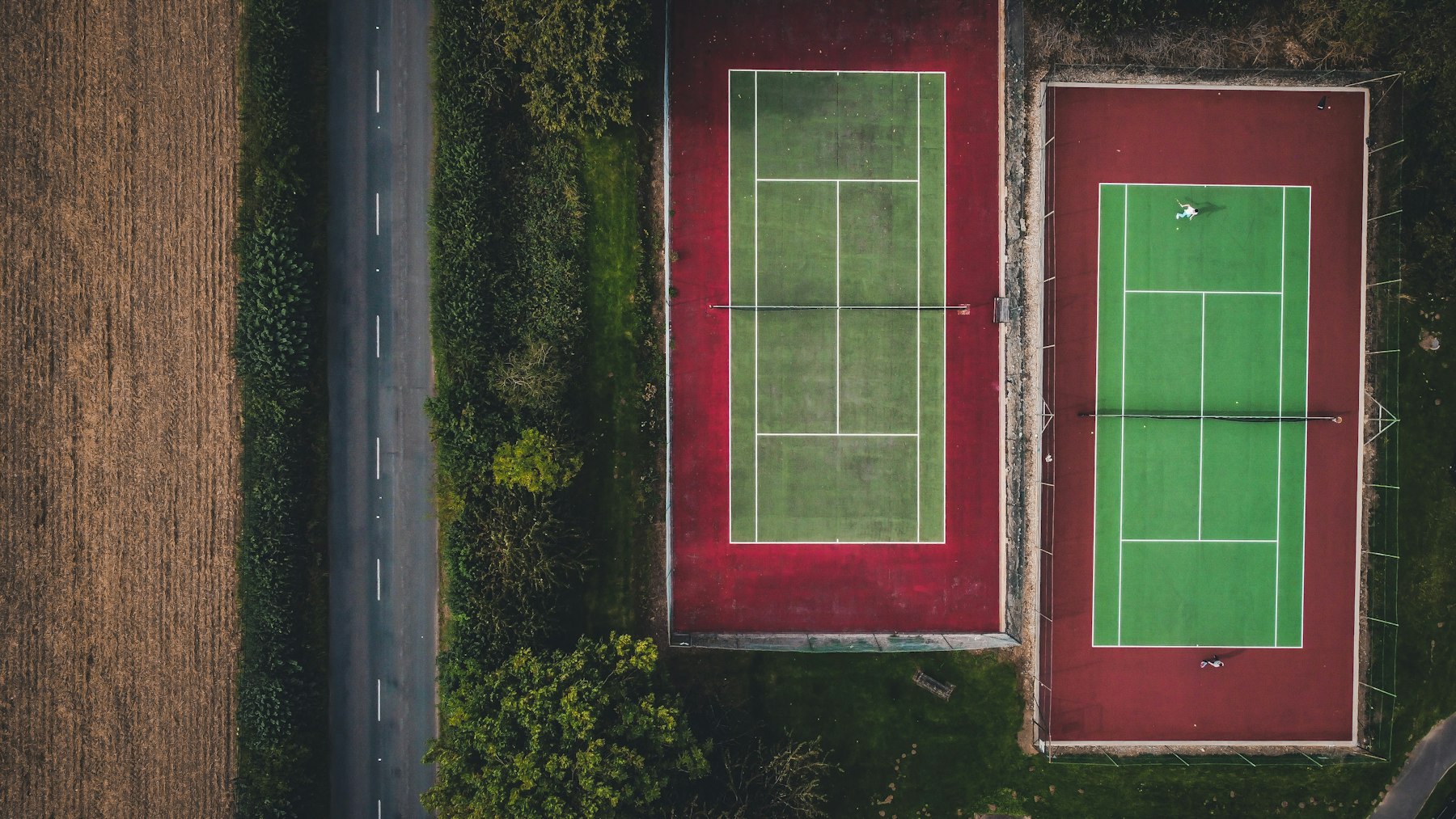
How Small Can a Backyard Be and Still Fit a Court?
Regulation dimensions are one number. The real question on a tight NJ lot is the minimum footprint that still lets you play safely.
Check If My Yard Fits →The smallest workable pickleball court footprint is about 30 × 60 ft (1,800 sq ft) — the 20 × 44 ft playing area plus enough runoff on each side to play safely. A backyard basketball half-court can go as small as roughly 30 × 50 ft. Regulation tennis needs 120 × 60 ft, which most suburban NJ lots simply don't have. Below these numbers, a practice wall or a driveway conversion is usually the better fit than squeezing in an undersized full court.
Minimum Footprint by Sport
Pickleball
20 × 44 ft playing area; 30 × 60 ft minimum footprint with runoff. 34 × 64 ft is more comfortable but not required to play safely.
Tennis
78 × 36 ft playing area; 120 × 60 ft recommended footprint with runoff. Rarely fits on a standard suburban lot without significant yard.
Basketball (Half-Court)
Roughly 30 × 50 ft, trimming depth behind the baseline while keeping full key width and a regulation 10 ft rim — the realistic option for a tight lot.
Practice Wall
A fraction of any full court's footprint. Real hitting practice for tennis or pickleball when a full court genuinely doesn't fit.
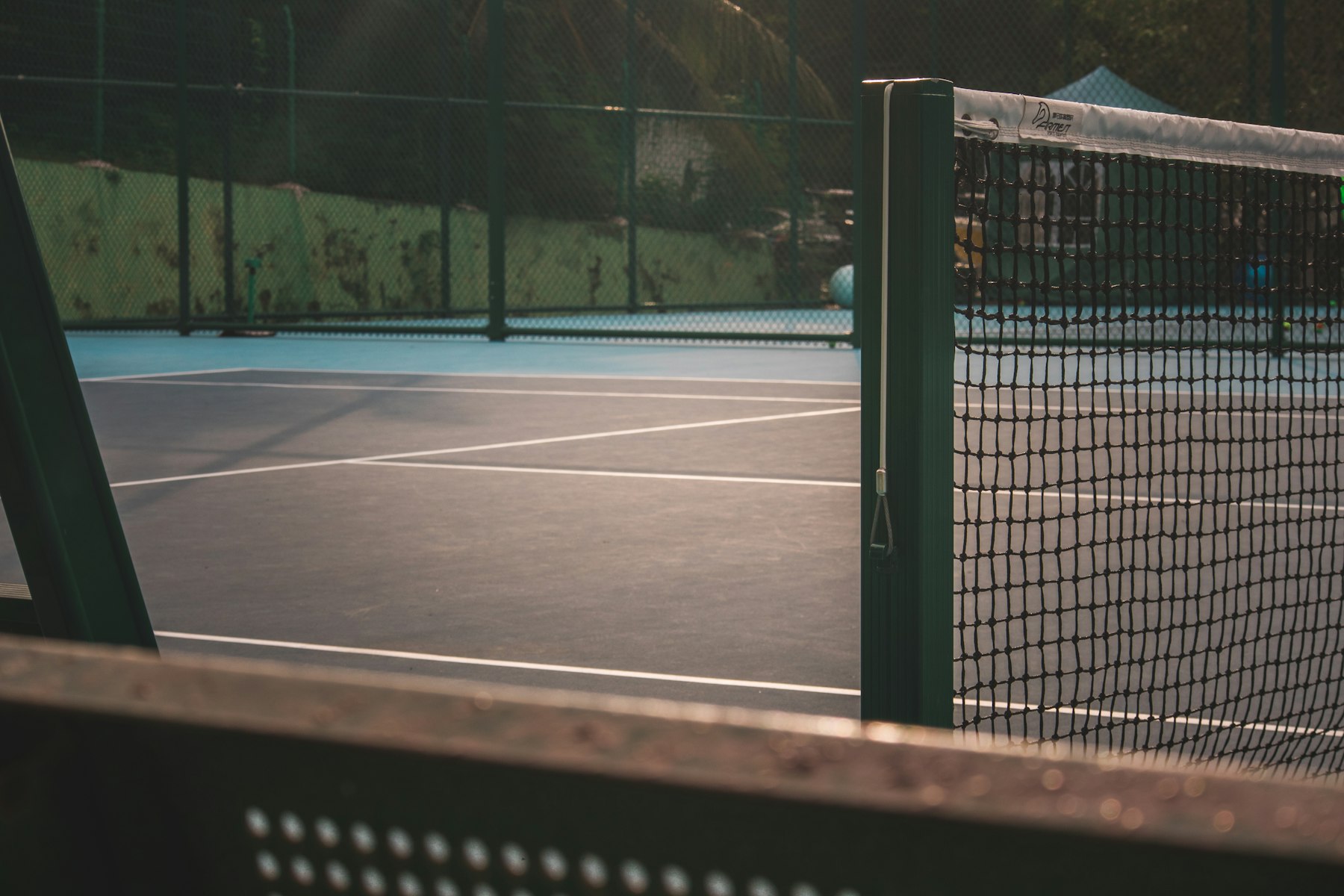
The Playing Lines Aren't the Whole Story
Regulation dimensions describe the lines on the court, not the space you actually need. Runoff — the buffer between the lines and any fence, wall, or drop-off — is what keeps a player from colliding with something on a lunge or an overrun, and it's non-negotiable on a real build even when it's the first thing a tight lot tries to cut.
- ✓ 5 ft minimum clearance on each pickleball sideline
- ✓ 7-8 ft minimum behind each baseline
- ✓ Setbacks from property lines apply on top of runoff, not instead of it
When the Yard Falls Short
Trim the Sport, Not the Safety Margin
Switch from tennis to pickleball, or from full-court to half-court basketball, before shrinking runoff below the safe minimum.
Use What's Already Poured
A driveway, patio, or old slab that already exists sometimes fits a court without carving new footprint out of usable yard.
Scale Down to a Wall
A standalone rebound or practice wall gives real hitting reps in a fraction of the space any full court needs.
Not Sure If Your Yard Has Room?
Send us your lot dimensions or let us measure on-site — we'll tell you honestly what fits before you start planning around a number that doesn't.
Request a Quote →Why "Minimum" Isn't a Fixed Number
Most space guides quote a single minimum footprint, but on an actual New Jersey lot the real constraint is usually shaped by more than raw square footage. Setback rules eat into the buildable area from the edges in, so a lot that's technically big enough on paper can still come up short once the required distance from property lines is subtracted — see our permits and zoning guide for how that plays out town by town. Slope changes the math too: a flat lot uses its full footprint efficiently, while a graded or terraced pad on a sloped site sometimes ends up smaller than the raw lot dimensions would suggest.
Where you land the court also matters more on a tight lot than a spacious one. Orientation affects sun glare regardless of size, and on a small footprint you have less flexibility to rotate the layout to avoid it — our court orientation and sun glare guide covers that tradeoff. And if the runoff math simply doesn't work no matter how the court is rotated, converting an existing slab — see our guide to converting a driveway or patio into a court — is often the more realistic path than trying to carve new footprint out of a yard that doesn't have it.
The honest answer to "will it fit" almost always requires seeing the actual lot rather than comparing it to a spec sheet number, since setbacks, slope, existing trees, and utility easements all eat into usable space differently on every property.
If a full-size tennis court still doesn't fit even after all of that, there's a smaller option worth knowing about beyond pickleball: a junior or mini tennis court, built to USTA's 36-foot or 60-foot youth dimensions, needs a fraction of the footprint a full 78-foot court does — worth considering if the household includes young players and the lot simply can't hold the adult game.
Related Guides
Pickleball Court Dimensions & Space Requirements
The full regulation playing area and recommended runoff, spelled out.
Tennis Court Dimensions & Space Requirements
Why regulation tennis needs so much more room than pickleball.
Backyard Basketball Court Dimensions & Layout
Half-court vs. full-court sizing options for a tighter lot.
Practice Wall & Rebound Wall Installation Cost
A standalone hitting wall when a full court genuinely doesn't fit.
Building a Court Near an Existing Pool
When a pool is what's actually eating into your usable yard space.
Small Yard FAQs
What is the smallest yard that can fit a pickleball court?+
The playing area itself is 20 × 44 ft, but you need runoff space around it to play safely — a minimum workable footprint is 30 × 60 ft (1,800 sq ft), giving roughly 5 ft of clearance on each sideline and 7-8 ft behind each baseline. Below that, players start running into fencing on aggressive shots, which is a safety issue, not just a comfort one. 34 × 64 ft is more comfortable if your lot has the room.
Can I fit a court on a smaller lot than that?+
You can go tighter than the recommended 34 × 64 ft, but going below the 30 × 60 ft minimum starts trading away real safety margin, not just polish. Some tight urban and shore-town lots do it anyway with shorter runoff on one or two sides where a fence or hedge is close, but that's a design compromise we walk through on-site rather than something to plan around from a spec sheet.
What about a small yard for tennis or basketball instead of pickleball?+
A regulation tennis court needs a 120 × 60 ft footprint including runoff, which rules out most suburban NJ backyards outright — pickleball or a half-court basketball setup are the realistic options on a tight lot. A backyard basketball half-court can work in a 30 × 50 ft footprint or smaller by trimming the depth behind the baseline while keeping full key width and a real 10 ft rim height, which is a legitimate compact option rather than an undersized compromise.
Does a small lot mean a cheaper build?+
Not necessarily. A tight lot often needs more precise grading and drainage design to fit the same 1% surface slope in less room, and setback rules apply regardless of how much runoff you sacrifice — a court still has to clear property lines by whatever your town requires. Small doesn't always mean simple; sometimes it means more engineering per square foot.
What if my yard genuinely doesn't have room for any court?+
A standalone practice or rebound wall needs a fraction of the footprint of a full court and still gives real hitting practice for tennis or pickleball — worth considering if a full court doesn't fit. Converting an existing driveway, patio, or old basketball slab is another way to get a court without needing to carve new space out of the yard, since you're not starting from a blank footprint.
Get an Honest Read on Your Lot
Tell us your yard dimensions and we'll tell you what actually fits — pickleball, half-court basketball, a practice wall, or a full build.
Request a Quote →