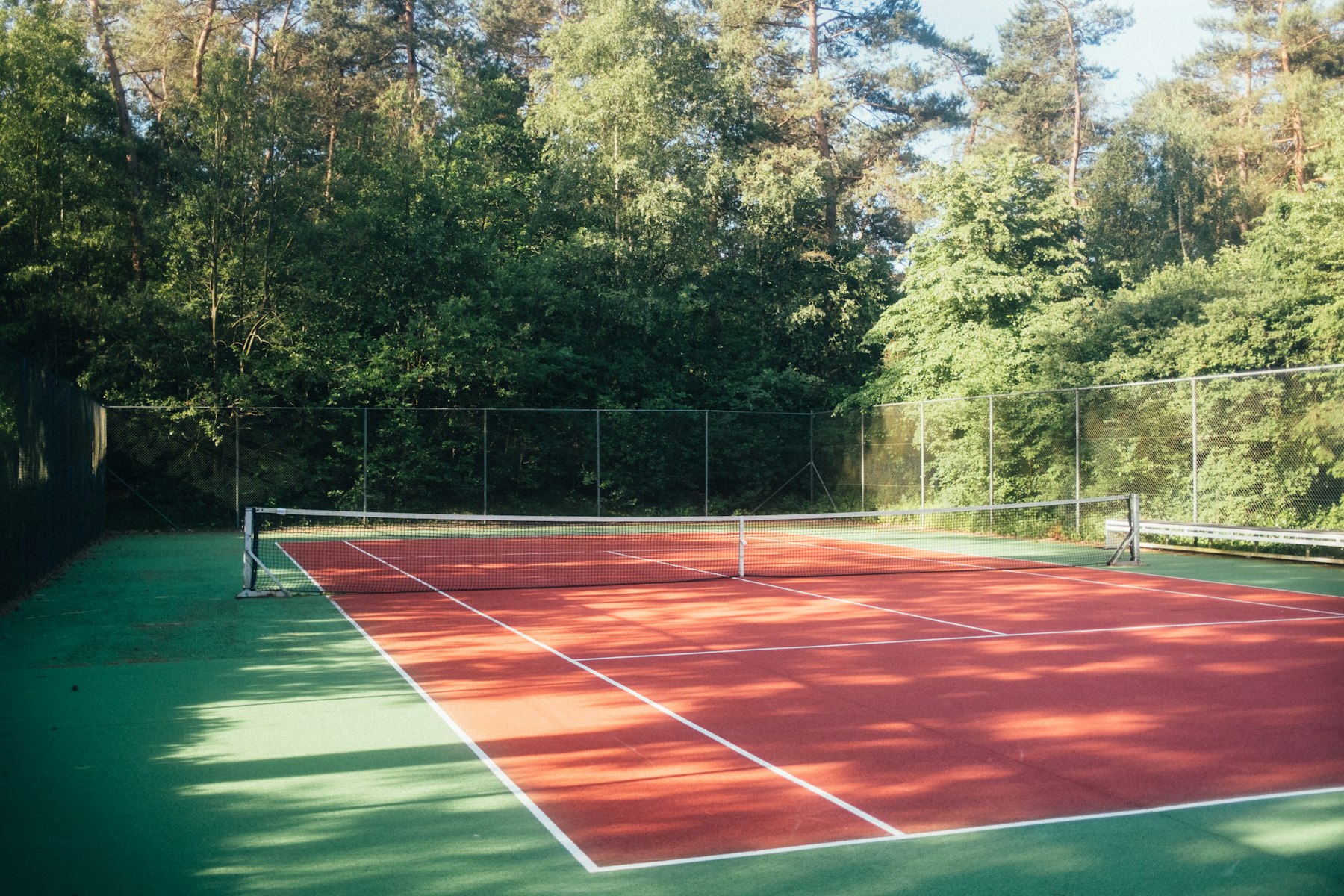
Junior & Mini Tennis Court Construction in New Jersey
36-foot and 60-foot USTA youth courts — real dimensions, net heights, and how a mini court compares to a full-size build.
Get a Junior Court Quote →A junior tennis court in New Jersey is built to one of two USTA youth sizes: 36 feet by 18 feet (red ball, roughly age 8 and under, 2-foot-9-inch net) or 60 feet by 21–27 feet (orange ball, roughly ages 9-10, 3-foot net). Both use the same base construction as a full 78-foot court — excavation, compacted sub-base, a sloped concrete or asphalt slab, and acrylic surfacing — just on a smaller footprint, which is what actually lowers the cost. NJ Court Pros builds standalone mini courts and blends youth lines onto full-size courts. Get a quote for either.
Junior & Mini Tennis Court Construction in New Jersey
Most families who ask us about a "kids' tennis court" have not actually looked at the USTA youth progression, and once they see the real dimensions the decision usually gets easier, not harder. USTA's Net Generation (formerly 10 and Under Tennis) pathway defines two scaled-down courts before a player moves to the full 78-foot game: a 36-foot red-ball court for the youngest beginners, and a 60-foot orange-ball court for players roughly nine and ten years old. Both use a lower net and a smaller ball that compresses the game to a scale kids can actually rally on, which is the whole point — a full-size court and a full-speed ball make early lessons mostly about chasing, not hitting.
The construction question we get most often is whether a junior court is a cheaper, easier version of a real tennis court build, or something structurally different. It is the former. A 36-foot or 60-foot pad goes through the same steps as a full court — excavation and grading, a compacted sub-base, a post-tension concrete or asphalt slab poured to a calculated drainage slope, then acrylic surfacing and striping. Nothing about a smaller footprint changes what the base has to do: shed water, resist freeze-thaw heave, and stay flat under years of play. What changes is the square footage, and square footage is the single biggest driver of cost on any court build. A 36-foot by 18-foot pad is a small fraction of the area of a 60-by-120-foot doubles court, so the excavation, concrete, and surfacing line items all shrink with it.
36-Foot Court (Red Ball)
36 ft × 18 ft. Net height 2 ft 9 in at center. Built for roughly age 8 and under. The smallest standard footprint — fits on lots too tight for a 60-foot or full-size build.
60-Foot Court (Orange Ball)
60 ft × 21 ft (singles) or 60 ft × 27 ft (doubles). Net height 3 ft at center, 3 ft 6 in at the posts. Built for roughly ages 9-10, the bridge size before full court.
Standalone vs. Blended Lines
A dedicated mini pad is the smallest footprint and lowest cost. Blended youth lines painted onto an existing or new full-size court let a player progress without a second slab.
Same Base Standards
Excavation, compacted sub-base, and a properly sloped concrete or asphalt slab — the construction rules do not relax because the court is smaller.
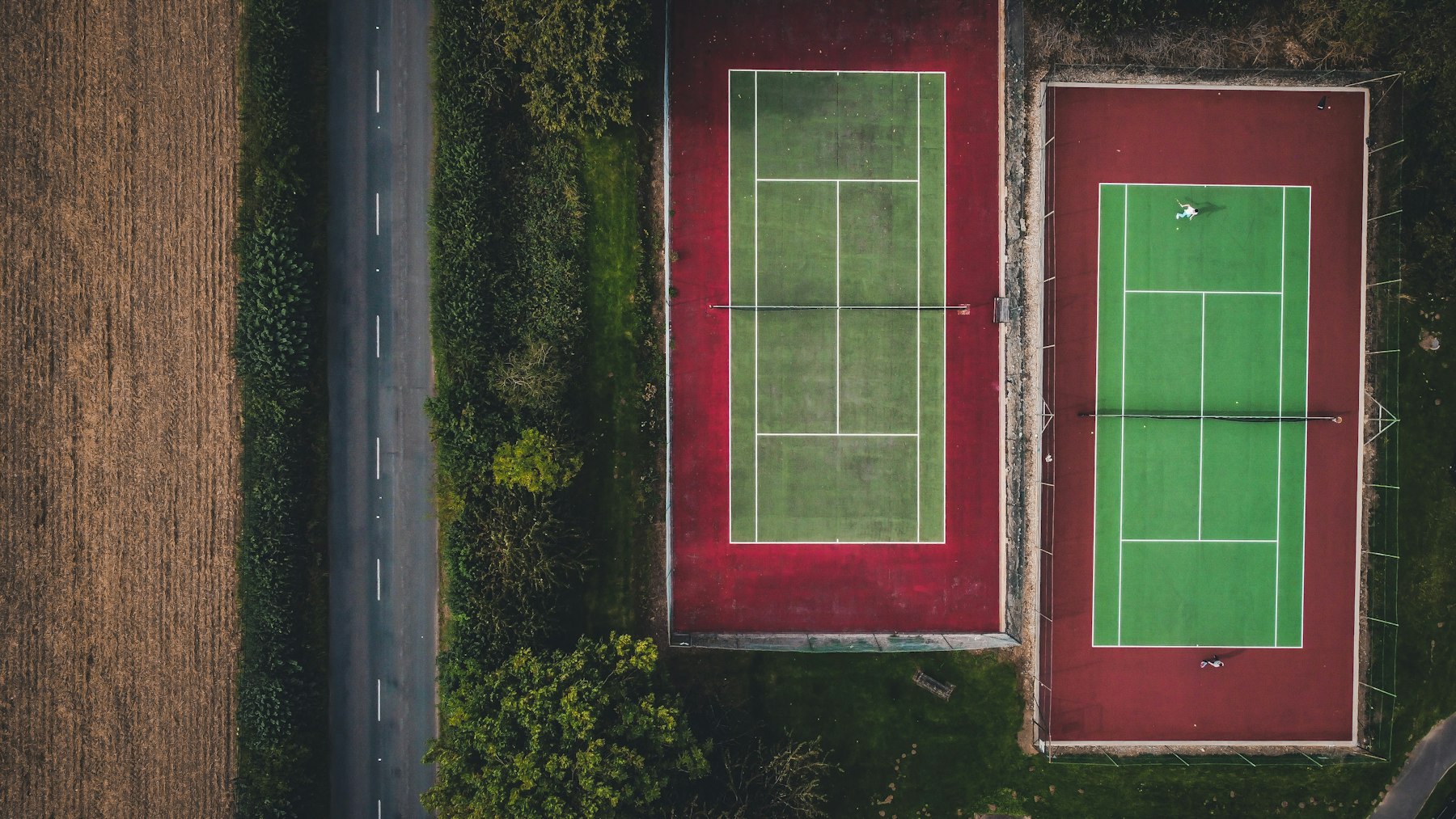
Smaller Footprint, Same Construction Standards
A junior court is not a lightweight version of a tennis court build — it is a full-standard build on a smaller pad. That is exactly why it costs less: less excavation, less concrete, less surfacing area, not a shortcut on any of the steps that keep a court from cracking.
- ✓ 36 ft × 18 ft: red-ball court, net 2 ft 9 in at center
- ✓ 60 ft × 21–27 ft: orange-ball court, net 3 ft at center
- ✓ Full base construction on a reduced footprint
- ✓ Blended lines are an option on an existing full-size court
Standalone Pad or Lines on a Full Court?
There are two honest paths to a junior court in New Jersey, and which one makes sense depends on the yard and the plan. A standalone 36-foot or 60-foot pad is the right call when the household genuinely only needs youth-scale play right now, the lot is too small for a full court anyway, or the family wants the lowest possible cost entry point into having a court at all. It is a real, permanent slab built to the smaller dimensions — not a temporary or portable setup — so it holds up the same way a full court does, just on less ground.
The other path is blending youth lines onto a full 78-foot court, either during a new build or as part of a resurfacing job. This is the same logic as adding pickleball lines to a tennis court: the lines go down in a contrasting color during the surfacing step, and a portable, height-adjustable net lets the same pad serve a 6-year-old on a red-ball court and a competitive adult on the full game, at different times. Families who expect a young player to progress through the USTA stages over several years often choose this route so they are not paying for a second pad in three years when the kid outgrows the mini court. If you already have, or are planning, a full-size court, ask about blended youth lines when you request your quote — it is a marking and layout decision made during construction, not a separate excavation.
One thing a junior court does not solve on its own: net height changes across the three stages (2 ft 9 in, then 3 ft, then the full 3 ft 6 in at the posts), so a fixed-height net that is correct for a 36-foot court is wrong once a player moves to 60-foot play. A portable or adjustable net system, or simply owning nets sized for each stage, is the practical fix — worth asking your installer about alongside the net post and windscreen installation for the pad.
Get a Junior Tennis Court Construction Quote
Standalone mini court or blended lines on a full-size build — tell us the age and stage you're building for and we'll set up a site visit.
Request a Quote →Where a Mini Court Fits on a New Jersey Lot
A 36-foot court's small footprint is exactly what makes it viable on lots that could never hold a full doubles court. That is worth knowing before assuming a backyard is "too small" for tennis entirely — see our smallest-yard guide for how mini tennis compares to pickleball as the space-efficient option, and our full tennis court dimensions guide for exactly how much more room the 78-foot game needs once a player is ready for it.
Because a junior pad is still a permanent slab, the same local review questions apply as any other court build — setbacks, lot coverage, and whether the added impervious area trips your town's threshold. A smaller pad usually clears these more easily than a full court simply because it adds less impervious surface, but it is not automatically exempt. Our permits and zoning guide covers what towns actually review before you plan a mini court into a tight side yard.
If the plan is to start with a mini court now and add a full court — or expand the pad — later as a player progresses, say so during the site visit. Site layout, drainage grading, and fence placement can sometimes be planned with that expansion in mind so a second project down the road does not mean redoing work from the first one.
Related Guides
Tennis Court Dimensions & Space Requirements in NJ
Full 78-foot court sizing and recommended clearance for the next stage up.
Tennis Court Installation Cost in New Jersey
What a full-size build costs so you can compare against a smaller junior pad.
Smallest Yard for a Court in NJ
How mini tennis compares to pickleball as the space-efficient build.
Court Net Post & Windscreen Installation
Net systems and posts, including height changes across youth stages.
Pickleball & Tennis Court Permits & Zoning in NJ
What towns review before any permanent pad, junior-sized or full court.
Court Base Preparation & Grading Cost
The excavation and sub-base work every court needs, scaled to pad size.
Sources
Junior Tennis Court FAQs
What size is a junior or mini tennis court?+
USTA's youth progression uses two smaller court sizes before players move to a full 78-foot court. The 36-foot court (red ball, roughly ages 8 and under) measures 36 feet by 18 feet with a 2-foot-9-inch net at center. The 60-foot court (orange ball, roughly ages 9-10) measures 60 feet by 21 feet for singles or 60 feet by 27 feet for doubles, with a 3-foot net at center and 3-foot-6-inches at the posts. Both are scaled-down versions of the full court, not a different sport.
Can a mini tennis court fit on a smaller lot than a full court?+
Yes — that is the main reason families build one. A 36-foot court needs a fraction of the pad a full 78-foot court needs, so it can fit on a lot too small or too tight-budgeted for a regulation build. A 60-foot court still needs meaningfully more room but remains smaller than a full doubles court. See our smallest-yard guide for how these compare to pickleball on a constrained lot.
Do you build a standalone mini court, or paint lines on a full court?+
Both are common. A standalone 36-foot or 60-foot pad works for a family that only needs youth-scale play and wants the smallest possible footprint and cost. On a property that already has, or is building, a full 78-foot court, blended youth lines can be painted onto the same slab in a contrasting color during construction or a resurfacing job — the same way blended pickleball lines get added to a tennis court. That gives a growing player room to progress without a second pad.
Does a junior court need the same base as a full-size court?+
Yes, proportionally. A 36-foot or 60-foot pad still needs excavation, a compacted sub-base, and a properly sloped post-tension concrete or asphalt slab before acrylic surfacing goes down — skipping base work on a small court causes the same cracking and birdbath problems it causes on a full one. The base is smaller, which is the main reason a mini court costs less, not because the construction standards are lower.
What net and posts does a junior court use?+
Youth courts use a lower net height than the standard 3-foot-6-inch (at posts) full-size net: 2 feet 9 inches at center for the 36-foot red-ball court, and 3 feet at center with 3-foot-6-inch posts for the 60-foot orange-ball court. Portable net systems sized for these dimensions are common so a family or program can adjust as a player moves up through the progression, rather than installing a fixed net that has to be replaced.
Get a Junior or Mini Tennis Court Quote
Tell us the age and stage you're building for — standalone 36-foot or 60-foot pad, or blended lines on a full-size court. We'll set up a free site visit.
Request a Quote →