Best Court Maintenance Equipment for NJ Home Courts
Water rollers, blade dryers, tank soppers, squeegees, water brooms and sweepers compared on published specs — plus what surface makers say about blowers, brooms and pressure washing.
Get a Free Court Assessment →By NJ Court Pros · Updated November 13, 2026
For an acrylic hard court in New Jersey, most owners need just three tools: a blower or soft push broom for a weekly debris pass, a 36-inch sponge roller (Douglas Courtdry or COURTMASTER Royale Sweep) for puddles, and a water broom such as Har-Tru's 9-Jet for the annual rinse. Add a 5-foot Rain Shuttle if you want a court dry in a few passes, or a Super Sopper if low spots hold water. Clay courts need clay tools. Table order is not a ranking.
Disclosure: NJ Court Pros builds, resurfaces and repairs courts and earns money when you hire us. We don't sell this equipment and no manufacturer paid for placement. Every product fact below comes from the manufacturer's or seller's own page, linked in Sources. Quote-only — no prices.
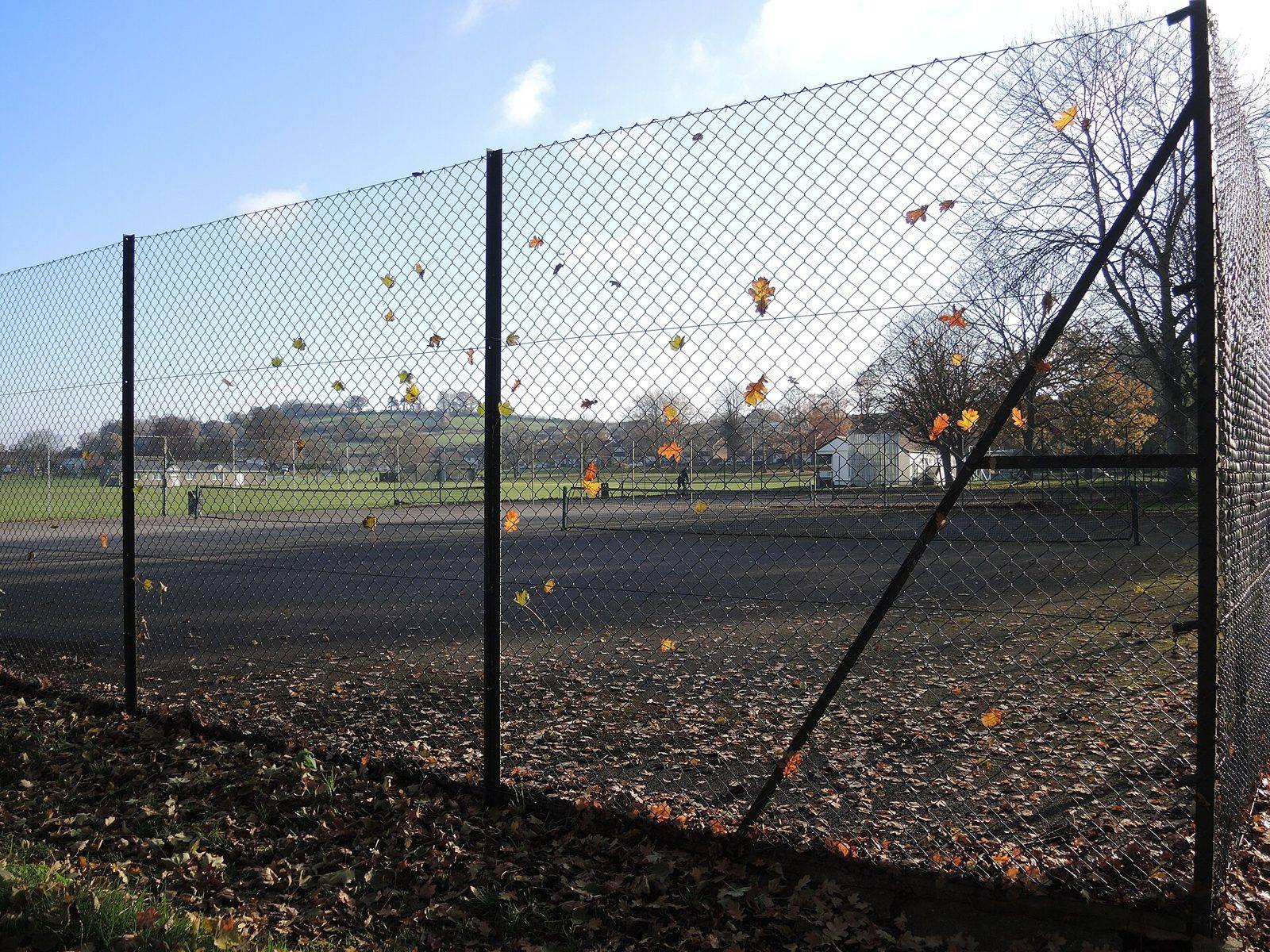
Photo: leaves on the tennis courts, Neil Owen (CC BY-SA 2.0, Wikimedia Commons / geograph.org.uk) — an illustrative autumn court, not a New Jersey project or a product endorsement.
Why Maintenance Gear Matters On A Jersey Court
New Jersey courts take a beating from three things the equipment on this page is built for: leaf drop from mature oaks and maples every fall, summer thunderstorms that leave puddles on a court you wanted to play an hour later, and the grit, pollen and fuzz that grind into an acrylic surface when nobody clears it. Acrylic color coatings are durable, but surface makers are clear that dirt left in place and water left standing shorten their life. Dalton Coatings' care sheet says long periods of recurring puddles can wear down the acrylic color finish and that puddle areas should be squeegeed or rolled dry to prevent staining.
The good news is that the routine is simple and the tools are inexpensive compared with a resurfacing. The care guides below are built around exactly that routine: clear debris weekly, dry puddles after rain, and rinse once a year. This guide compares the products; our court maintenance schedule covers the calendar and our winter snow and ice guide covers what to use (and avoid) when the court freezes.
How We Compared
- Job: push water, lift water, rinse, or sweep debris — the tools are not interchangeable.
- Published working width (36 in roller vs 5 ft blade vs 2 ft drum) and how many passes a court takes.
- Frame and roller or blade materials, and whether replacement rollers or blades are sold.
- Whether the maker says it is safe for acrylic hard courts, clay courts, or both.
- Only specs printed on the manufacturer's or seller's own product page; maker performance claims are labeled as claims.
Court Maintenance Equipment Compared
| Tool | Job | Width | Build | Notes |
|---|---|---|---|---|
Courtdry (Courtdry I / Courtdry II) Douglas Sports | Push roller for puddles on outdoor tennis and pickleball courts | 36 in roller | Powder-coated stainless-steel frame, T-socket holds roller and handle; PVC-core roller | Two roller options: 5/8 in blue PVA, or a seamless extra-thick foam the maker says gives three times the drying power and suits uneven courts. Replacement rollers sold. |
COURTMASTER Royale Sweep Har-Tru (COURTMASTER) | Rolling-seal water remover for hard courts | 36 in sweep | All-steel powder-coated frame; extra-thick polyurethane foam roller; ships with a 4 in blue PVA roller (2 in PVA also fits) | Maker says it pushes water ahead of the roller without skipping depressions and without scraping the surface; up to three times the drying power of standard rollers (maker claim). |
COURTMASTER All-Aluminum Rain Shuttle Har-Tru (COURTMASTER) | Wheeled blade court dryer for clearing a whole court fast | 5 ft sweep | All-aluminum frame, upgraded casters, replaceable blade; 15 lb (maker figure) | Blade designed not to scratch or mar the court. Replacement blades and wheels sold separately. |
Super Sopper (Mackerel 7 gal / Dolphin 14 gal) Sold by Har-Tru | Picks up standing water into a tank instead of pushing it | 2 ft wide drum | Foam-padded drum; adjustable top roller squeezes water into a suspended holding tank; drain elbow to empty | Mackerel: 15 in drum, 7 gal. Dolphin: 24 in drum, 14 gal. For low, puddle-prone spots on hard or Har-Tru courts. Har-Tru lists an 8-week ship time after ordering. |
Super Squeegee Har-Tru | Contractor acrylic-spreading squeegee that also pulls water off hard courts | 36 in (per product listing) | 50-durometer rubber blade, 6 ft aluminum handle, solid mounting bracket, optional blade support plate | Built for hard-court construction and resurfacing; the maker says it can also be used to pull water quickly. Overkill for most homeowners, but useful if your installer leaves you one. |
9-Jet Water Broom Har-Tru | Hose-fed rinse tool for the annual or spot wash | 4 ft path per pass | Anodized aircraft-grade aluminum, nine brass jets with guards, non-marking neoprene wheels, quick-release fitting for a standard 5/8 in hose; 42 in long, 7 lb | Needs 60 PSI water pressure and uses about 5.4 gallons per minute (maker figures); maker claims up to 90% less water than conventional washing. |
Aussie Clean Sweep Har-Tru | Debris sweeper for clay (Har-Tru) courts | 4 ft (49 in) or 8 ft (97 in) models | Aluminum frame, PVC tines, 3/8 in polypropylene rope handle; hand-pulled or vehicle-towed, no motor | Lifts leaves, pine needles, stones and ball fuzz while grooming the surface like a drag brush. A clay-court tool — not for acrylic hard courts. |
Water Removal: Rollers, Blades And Soppers
Laykold's cleaning and care instructions say its acrylic surfaces can go back into play quickly after rain: remove the excess water with a wide sponge roller or squeegee and play can resume, and the surface is slip resistant when damp. That is the whole case for owning a water remover. Which one depends on court size and how your slab drains.
Douglas Courtdry. Douglas Sports, an Iowa manufacturer, sells the Courtdry as a water-removal roller for all outdoor courts. The 36 in roller sits in a powder-coated stainless-steel frame with a T-socket that locks roller and handle together, and the roller lifts out for replacement. Douglas offers a 5/8 in blue PVA roller molded onto the core, or a seamless extra-thick foam roller that it says resists tears and separation, gives three times the drying power and suits uneven courts. For a single backyard pickleball or tennis court, this is the default tool.
COURTMASTER Royale Sweep. Har-Tru's COURTMASTER Royale Sweep is the same idea in a heavier build: a 36 in all-steel powder-coated frame and an extra-thick polyurethane foam roller with a rolling-seal action that Har-Tru says pushes water ahead of the roller without skipping depressions. It ships with a 4 in blue PVA roller and accepts a 2 in PVA roller. Har-Tru also markets it for pool decks and driveways, which matters if one tool has to do several jobs around the yard.
COURTMASTER All-Aluminum Rain Shuttle. For a full tennis court, a 36 in roller means many passes. The Rain Shuttle uses a blade on casters with a 5 ft sweep and weighs 15 lb per Har-Tru, so one person can push water off the court in fewer passes. Har-Tru says the blade is designed not to scratch or mar the surface, and it sells replacement blades and wheels.
Super Sopper. Rollers and blades push water; if your court has a low area with nowhere to push it, the water just moves. The Super Sopper lifts it: a foam pad on a drum absorbs water, an adjustable top roller squeezes it into a suspended tank, and you empty it through a drain elbow. Har-Tru lists two sizes, the 7 gal Mackerel (2 ft wide, 15 in drum) and the 14 gal Dolphin (2 ft wide, 24 in drum), for hard and Har-Tru courts, and says it ships about 8 weeks after ordering, so buy before spring rather than after the first wet weekend. If water is pooling deep enough to need one, also look at our birdbath repair guide: a depression that holds water past the maker's tolerance is a repair, not a maintenance task.
Har-Tru Super Squeegee. This is a contractor tool, designed to spread acrylics and adhesives during construction and resurfacing, with a 50-durometer rubber blade, 6 ft aluminum handle and adjustable bracket. Har-Tru says it can also pull water off hard surfaces quickly. Most homeowners will be happier with a roller, but it is the right tool for a crew.
Cleaning: Blowers, Brooms And Water Brooms
Both surface-maker care guides we read start with dry debris removal. Laykold says outdoor courts in a low maintenance environment should be swept with a broom, air blower or water broom approximately once a week, and in heavy-pollen or leaf environments debris should be hosed off at least weekly. Dalton Coatings says to use a soft nylon or hair-type push broom or a mechanical blower to clear ball fuzz, sand, dirt, dust and debris, and warns that scrubbing too hard can damage the acrylic finish.
We are not naming a specific blower brand, because neither care guide does and any reasonably powerful homeowner blower will move leaves off a court. What the guides do specify is how to use it: Dalton says to make sure a gas blower is not leaking oil or gasoline and never to refuel it on the court. Battery blowers sidestep that issue entirely.
Har-Tru 9-Jet Water Broom. For the annual rinse Dalton recommends to clear dirt, dust, sand and salts, a water broom beats a hose nozzle. Har-Tru's 9-Jet covers a 4 ft path per pass with nine guarded brass jets, runs on 60 PSI from a standard 5/8 in hose at about 5.4 gallons per minute, rolls on non-marking neoprene wheels and weighs 7 lb. Har-Tru claims it uses up to 90% less water than conventional washing; we have not tested that.
Pressure washers. If a court needs more than a water broom, Dalton's care sheet sets the limits: no more than 1,500 psi, nozzle no closer than 6 inches, and keep it moving at all times. Laykold says a new outdoor court should wait at least 12 months before pressure washing and 3 months before any scrubbing equipment. Shaded courts near trees are where Dalton suggests talking to your installer about an annual power wash.
Mold and stains. Laykold's instructions for mold in shaded or puddle-prone areas: hose off debris with a stiff-bristle broom, saturate with clean water, apply a dilute sodium hypochlorite (liquid pool chlorine) solution, let it soak 10 to 15 minutes without drying, then rinse thoroughly, keeping it away from plants, pets and children. It says not to use powdered calcium hypochlorite, solvent thinners or scouring powders on the surface.
Clay Court Tools Are A Different Kit
Clay courts are maintained by grooming, not just cleaning. Har-Tru's Aussie Clean Sweep is one example: a motorless sweeper with PVC tines in 4 ft and 8 ft widths that lifts leaves, pine needles, stones and ball fuzz while grooming the surface like a drag brush, and can be hand-pulled or towed. Har-Tru also sells line scrubs and rollers for clay. If you own a clay court, our clay court spring reconditioning guide and clay court systems comparison cover the routine. Some water removers, including the Super Sopper, are listed for both hard and Har-Tru courts.
Care Habits The Makers Call Out
- Wear white or non-marking flat-soled court shoes; Laykold recommends them, and Dalton says dark, hard soles can scratch and scuff the finish.
- Keep chairs, ladders and idle ball machines off the court; Dalton says legs need flat bases and nothing should be dragged.
- Keep bikes, mowers, skateboards and ride-on toys off the surface, per Dalton.
- Put protective material down if a lift or service vehicle has to drive on the court.
- In winter, release net tension after use to reduce the chance of heaving or bent net posts, per Dalton.
What To Buy For A Typical NJ Backyard
- Single pickleball court: blower or soft broom, one 36 in roller (Courtdry or Royale Sweep), hose plus water broom.
- Full tennis court: the same, plus a 5 ft Rain Shuttle so one person can clear it after a storm.
- Court with a persistent low spot: a Super Sopper as a stopgap, and a birdbath repair quote as the fix.
- Clay court: clay-specific sweepers, drag brushes and line tools instead of hard-court gear.
Related reading: winter closing checklist, spring opening checklist, and crack repair vs resurfacing.
FAQ
What maintenance equipment does a New Jersey backyard hard court actually need?
Three things cover most homeowners: a leaf blower or soft push broom for the weekly debris pass, a 36 in sponge roller such as the Douglas Courtdry or COURTMASTER Royale Sweep for puddles, and a garden hose with a water broom for the annual rinse. Laykold, a major acrylic surface maker, says outdoor courts should be swept with a broom, air blower or water broom about once a week and that excess water can be removed with a wide sponge roller or squeegee. Add a Super Sopper only if you have low spots that hold water.
Is a sponge roller or a squeegee better for drying a tennis or pickleball court?
Both work on acrylic hard courts. A 36 in sponge roller absorbs and pushes water and is easy for one person; a wheeled blade dryer like the 5 ft COURTMASTER Rain Shuttle covers more width per pass. A tank-style Super Sopper lifts water out of low spots instead of pushing it into the next one. Pick by court size and how much standing water you get,. Replacement rollers and blades are sold for most of these units.
Can I pressure wash my court?
Usually yes, carefully, once the surface is mature. Laykold says a new outdoor court needs at least 3 months before any scrubbing equipment and 12 months before pressure washing. Dalton Coatings’ care sheet says pressure should not exceed 1,500 psi, the nozzle should stay at least 6 inches from the surface, and the spray must keep moving. Test any cleaner in a corner first.
Is a gas leaf blower safe on an acrylic court?
Dalton Coatings lists a mechanical blower as an acceptable way to clear fuzz, sand and debris, but says to inspect a gas blower so it is not leaking oil or fuel and never to refuel it on the court. Spilled fuel and oil can stain or soften acrylic coatings, so refuel on the grass or driveway.
How do I get rid of mold or algae in shaded corners?
Laykold’s care instructions call for hosing off debris with a stiff-bristle broom, saturating the area with clean water, applying a dilute sodium hypochlorite (liquid pool chlorine) solution, letting it soak 10–15 minutes without drying, then rinsing thoroughly. It warns against powdered calcium hypochlorite (white residue), solvents and scouring powders. Trim overhanging trees, because leaf litter and standing water are what feed the growth.
Do clay courts need different equipment?
Yes. Clay (Har-Tru) courts are groomed with drag brushes, line brushes and rollers rather than just swept. The Aussie Clean Sweep is one clay-specific debris sweeper. See our clay court spring reconditioning guide for the full routine.
Does NJ Court Pros sell this equipment?
No. We build, resurface and repair courts. This guide names products from manufacturer pages so you know what to ask for; we earn money if you hire us for court work, not from equipment sales. Quote-only — no prices published.
Sources
- Douglas Sports — Courtdry (Courtdry I / Courtdry II)
- Har-Tru (COURTMASTER) — COURTMASTER Royale Sweep
- Har-Tru (COURTMASTER) — COURTMASTER All-Aluminum Rain Shuttle
- Sold by Har-Tru — Super Sopper (Mackerel 7 gal / Dolphin 14 gal)
- Har-Tru — Super Squeegee
- Har-Tru — 9-Jet Water Broom
- Har-Tru — Aussie Clean Sweep
- Advanced Polymer Technology — Laykold Sports Surfaces Cleaning and Care Instructions (Rev 01/13/2025)
- Dalton Coatings — General Care for Outdoor Tennis Courts & Court Conditions
Manufacturer pages and care guides accessed November 13, 2026. Quote-only; no prices.
Court Needs More Than A Cleaning?
If puddles won't roll off, cracks are opening or the color has worn through, tell us about your court. We'll inspect the surface, check drainage and low spots, and send an itemized quote for repair or resurfacing.
Request a Quote →