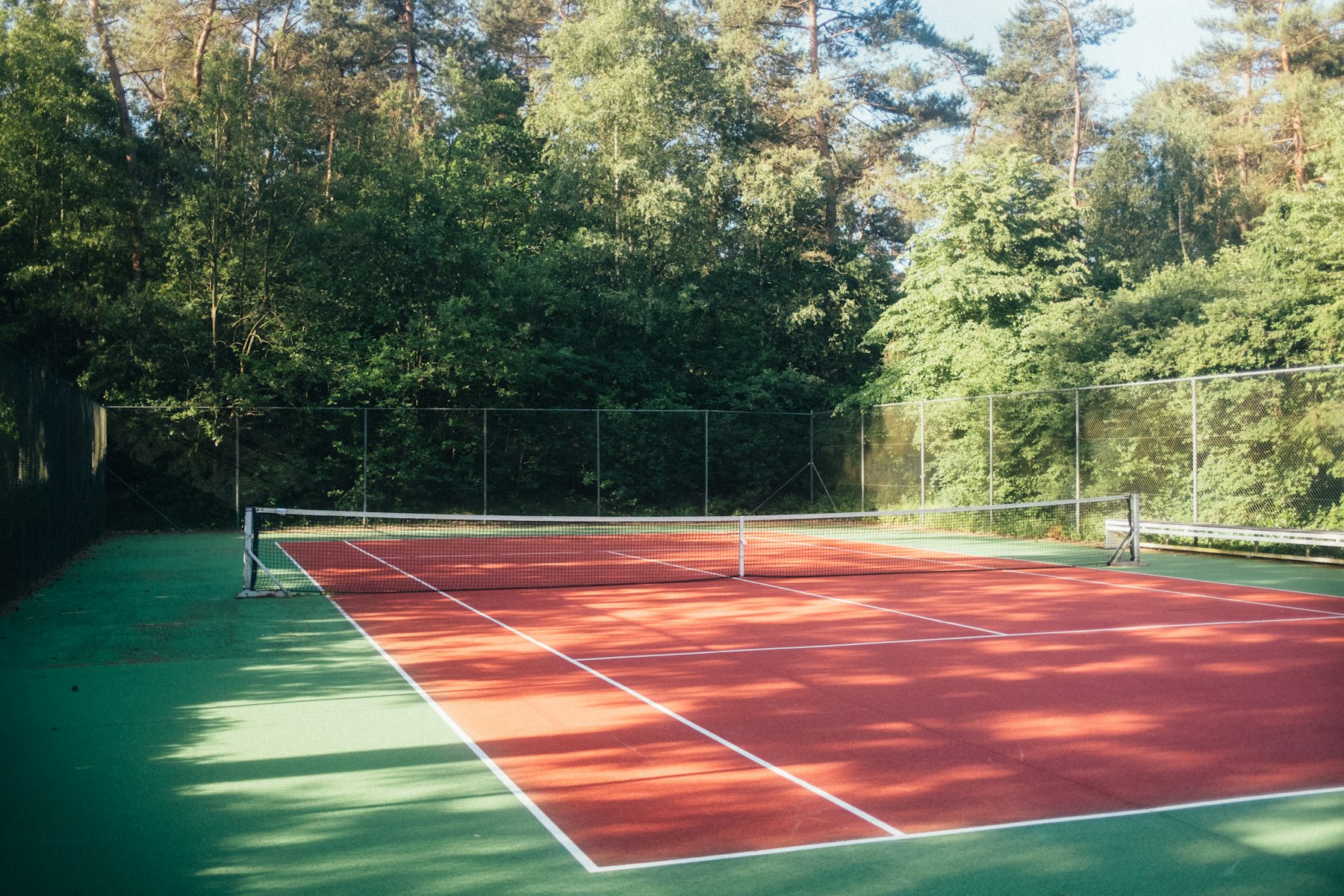
Best Clay Tennis Court Systems for New Jersey
Sprinkler Har-Tru, three subsurface systems, hybrid ClayTech and red clay compared: how each is watered, what winter close-down takes, and which court each fits.
Get a Free Site Visit →By NJ Court Pros · Updated October 20, 2026
For a new clay court in New Jersey, the best system for most owners is Har-Tru green clay over subsurface irrigation. That means HydroCourt (self-regulating), HyQ Court (digital, with an app) or HydroGrid. All three water the court from below, so it never closes for sprinklers, and they need less daily brushing and rolling. Sprinkler-watered Har-Tru still suits an existing court with a working system and someone to care for it every day. ClayTech puts a thin layer of clay on a mat over an existing hard court, with no irrigation. European red clay is mostly a look and a training choice. Every clay court in New Jersey closes for winter, so plan for close-down and spring opening whichever system you pick.
Disclosure: NJ Court Pros builds and resurfaces courts and earns money when you hire us. We are not a dealer for Har-Tru or any system on this page, nobody paid for placement, and no manufacturer reviewed this page. Every product fact below comes from the manufacturer's own page, a maintenance guide from a court-supply company, or a licensed installer's published page, all linked in Sources. We did not invent ratings, test results, or prices.
How We Picked
A clay court is two systems at once: the surface material and the way water gets into it. Har-Tru describes its green clay as crushed, screened Pre-Cambrian metabasalt from Virginia's Blue Ridge, laid over a porous crushed-stone base. The stone particles lock together, but only when the court holds the right amount of moisture. So the watering method decides most of what you'll live with: daily labor, downtime, water bills, and how the court comes through a New Jersey winter.
We compared each option on five things that matter for a New Jersey owner:
- Watering method: above-ground sprinklers, subsurface cells, digital subsurface, capillary base, or barely any water
- Winter close-down: what has to be drained, stored, or covered before freezing, as published by the maker
- Daily and annual upkeep: brushing, rolling, top dressing, and reconditioning
- Published claims we could source: water savings, downtime, install time, play characteristics
- Fit: a new private court, a club bank of courts, a hard-court conversion, or adding pickleball to clay
This page is about choosing a system. For what drives the price of a clay court, see our clay tennis court installation cost guide. For a hard court instead, see the best pickleball court surface systems and best court surfaces for NJ winters.
Clay Court Systems Compared
| System | Watering | Winter close-down | Upkeep (as published) | Best fit |
|---|---|---|---|---|
| Har-Tru green clay, above-ground sprinklers Har-Tru | Pop-up sprinklers on a timer; court closes while it waters | Blow out the pressurized lines before the first freeze; store heads, cap risers | Brush, water and roll daily; patch low spots; annual top dressing (10-S guide: 2–3 tons a year in most regions) | Existing clubs with working sprinkler systems; backyard owners who enjoy daily court care |
| Har-Tru HydroCourt (subsurface) Har-Tru | Six cells fed from below; water level set in control boxes; no sprinkler downtime | Pull float valves and drain plugs so cells drain; record each box’s water level for spring | Little brushing; rolling mainly after freeze-thaw; annual reconditioning with about one ton of HydroBlend per court | Clubs, schools and serious home courts that want lower daily labor and steady moisture |
| Har-Tru HyQ Court (digital subsurface) Har-Tru | Subsurface, with a digital panel adjustable in 1/10-inch steps and a phone app (needs Wi-Fi) | Follow Har-Tru’s subsurface close-down; confirm valve and controller winterizing with the installer | Same reduced routine as HydroCourt; alerts and remote adjustments from the app | Facilities with staff who aren’t on site every morning; owners who want remote control |
| HydroGrid (subsurface) Patented system, installed by court builders | Capillary moisture from a full 6-inch base; off-court control box; no pressurized lines under the court | Ask the installer for the HydroGrid-specific close-down and spring start-up steps | Builder literature claims about half the surface-material replacement of sprinkler courts | Buyers comparing a second subsurface option against HydroCourt/HyQ on the same bid sheet |
| ClayTech hybrid clay Har-Tru | Occasional sweep and spritz before play; far less water than classic clay | Maker says freeze-thaw problems are “nonexistent”; permanent painted lines | Mat with a thin layer of red or green clay on top; lines touched up with paint | Converting an existing hard court to a clay feel, often in about two days, without irrigation |
| European red clay (crushed brick) Har-Tru (imported, 55 lb bags) | Depends on the court underneath; often used as a top dressing or cap | Same close-down as the court it sits on | Slower, softer play; Har-Tru says green clay plays faster and more consistently | Owners who want the red look or players training for European-style clay |
Not ranked against each other. Details checked against each linked source on October 20, 2026. No prices: every court is quoted per site.
The Systems, One by One
Har-Tru with above-ground sprinklers: the classic, and the most labor
This is the clay court most people picture: green Har-Tru, pop-up sprinklers around the perimeter, and someone dragging a brush at the end of the day. The 10-S maintenance guide for sprinkler-watered Har-Tru lays out the routine. After play, brush the surface and sweep the lines. Water thoroughly and evenly. Roll as needed, especially on new courts. Over time, low spots form at the baselines and in the service boxes and need patching. Larger "dead" granules work up to the surface and have to be scraped off. Because watering, wind, rain and play carry material away, the guide says sprinkler courts in most regions lose 2 to 3 tons of material a year, about 50 to 75 80-lb bags, and need annual top dressing.
It works and it's proven. It also closes the court while the sprinklers run, and it takes daily labor. In New Jersey, the pressurized lines also have to be blown out before the first hard freeze, as Har-Tru's close-down guidance says. If you already own a sprinkler court with a healthy system, keep it. If you're building new, at least price a subsurface option next to it.
Har-Tru HydroCourt: steady moisture from below
Har-Tru calls HydroCourt a self-regulating system that waters the court from below. The court is built as six individually controlled cells lined with a chemical-resistant liner, and each cell is monitored by its own water-filled control box. Raise the water in the box and the water under the court rises with it, so you adjust surface moisture by moving one level. Har-Tru lists the benefits as zero downtime for sprinkling, even coverage for consistent footing, less brushing and rolling, water savings of up to 60% compared with conventional irrigation, and quick play after rain. HydroCourt is the official subsurface irrigation system of the USTA National Campus.
Har-Tru's maintenance page says HydroCourts need very little brushing. The annual reconditioning is cleaning, leveling, top dressing with about one ton of HydroBlend per court, and new lines. Rolling matters most coming out of a freeze-thaw winter, which is New Jersey every year. Then it should happen daily until the court reaches proper compaction. Winterizing is simple: Har-Tru says to remove the float valves, pull the drain plugs so the cells drain, and record each box's water level so spring set-up has a starting point.
Har-Tru HyQ Court: subsurface with a digital panel and an app
HyQ (pronounced "High-Q") is Har-Tru's digital subsurface system. It does what HydroCourt does but adds a digital control panel with adjustments as precise as 1/10 inch, plus a mobile app that sends alerts and lets you adjust the court remotely. The app needs the system connected to Wi-Fi. Har-Tru also lists up to 60% water savings, faster return to play after rain, and solenoid valves with built-in scrubbers to protect against chemicals and debris. The fit is a facility where nobody is on site at 7 a.m. to check moisture, or a homeowner who travels and wants to watch the court from a phone. Ask the installer how the controller and valves are winterized, since that is equipment a sprinkler or HydroCourt owner doesn't have.
HydroGrid: the other patented subsurface option
HydroGrid is a patented subsurface system for fast-dry courts, installed by court builders. One of them, General Acrylics, says every HydroGrid court uses a full six inches of base material, tested by an independent lab. The base moves water up to the clay surface by capillary action, with no pressurized lines under the court. An off-court control box sets watering times and amounts, and moisture can be dialed wetter (slower) or drier (faster). The same page claims nearly 2,000 HydroGrid courts worldwide, water use cut in half, and surface-material replacement cut roughly in half. Those are an installer's claims, not independent test results. Treat them as questions to put to any HydroGrid bidder, and ask for the winter close-down steps in writing.
ClayTech hybrid clay: a clay feel without irrigation
ClayTech is Har-Tru's hybrid surface. A specially designed polypropylene mat is the base for a thin layer of red or green Har-Tru clay, with permanent painted lines that only need occasional touch-ups. Har-Tru says it needs only an occasional sweep and a spritz of water before play, uses far less clay and water than a classic court, covers holes and cracks in the court below, and can go over an existing hard court in as little as two days. It also says freeze-thaw problems are "nonexistent." That claim matters in New Jersey, but it's the maker's claim, so ask for installations in a cold climate you can visit. ClayTech is the logical choice for a homeowner with a tired hard court who wants softer footing and sliding without signing up for daily maintenance.
European red clay: a look and a training surface
Har-Tru imports European Red Clay made from crushed brick, sold in 55-lb bags. It describes the product as ideal for top-dressing existing clay courts, covering red ClayTech courts, and even capping an existing Har-Tru court for a red finish. Red clay plays slower and softer. Har-Tru's own pickleball page says green Har-Tru plays "faster and more consistent than European red clay." Choose red for the look or for players training for European clay, and expect to work at least as hard on maintenance as on a green court.
The New Jersey Winter Plan
Har-Tru notes that some 60% of the U.S. closes clay courts for the winter. New Jersey is in that group. Its close-down checklist is the best single reference for owners here:
- Nets and posts: take the net down and label it, pull posts that sit in sleeves, cap the sleeves, and store the posts indoors.
- Line tapes: in milder areas, tapes can stay down if you hold them in place through freeze-thaw (boards, or rolling them in while the court is frozen). Otherwise, pull them at close-down.
- Irrigation: blow out pressurized sprinkler systems before any freeze, store the heads indoors and cap the risers. On HydroCourt, remove the float valves, pull the drain plugs and note the water levels.
- Equipment: inventory tools and store them out of the weather, and drain fuel from rollers.
- Covers: Har-Tru says covered courts can often open 2 to 3 weeks earlier in spring, because they take on less moisture, heave less and lose less material to wind.
- Fall top dressing: some facilities recondition before winter and open about three weeks earlier, but Har-Tru warns against it on windy sites with little snow cover.
In spring, rolling is the main job. Har-Tru's subsurface maintenance guidance says courts coming out of freeze-thaw should be rolled daily until they reach proper compaction. Our spring opening and winter closing checklists cover the parts that apply to every court.
Which System Fits Your Court
A new private clay court on an estate lot
Price HydroCourt or HyQ against HydroGrid on the same base and drainage spec. Choose HyQ if you want to check moisture from your phone while you're away. Ask about water supply early, since subsurface systems still need a steady feed during the season.
A club with a bank of aging sprinkler courts
Convert in phases. Subsurface irrigation saves labor and water, and courts stay open while they water, so the courts with the most bookings are usually first in line. Keep the remaining sprinkler courts on a strict top-dressing schedule until their turn comes.
A homeowner with a cracked hard court who wants clay
Look at ClayTech first. It goes over the existing slab, needs no irrigation, and keeps painted lines. Have the base checked for movement first. A heaving slab is a base problem no surface fixes. Our slab settlement and heave guide explains what to look for.
A club adding pickleball without losing clay
Har-Tru says one clay tennis court can become three or four clay pickleball courts, and it suggests a dedicated conversion, a blended court that keeps tennis, or temporary lines to test demand. For the layout side, see converting a tennis court to pickleball in NJ.
How to Compare Clay Court Bids
- Get the system name in writing: "Har-Tru over HydroCourt," "HyQ Court," "HydroGrid" or "ClayTech," not "fast-dry with irrigation."
- Specify the base: depth and material of the stone base, how it will be laser-graded, and how it drains. A clay court is only as good as what's under it.
- Ask about water: where the supply line comes from, and whether the system needs electrical or Wi-Fi service at the court.
- Get the winter plan in writing: who drains, covers and reopens the court, and what the spring start-up costs.
- Ask for the maintenance schedule the builder expects you to follow, and which tools you'll need to own (drag brush, line broom, roller, rake).
- Visit a court built by the same crew that has been through at least one New Jersey winter.
Choosing a builder? Start with our best NJ court builders guide and read what a court contractor warranty should cover.
Clay Court System FAQs
What is the best clay court system for a New Jersey court?+
For most new clay courts in New Jersey, Har-Tru green clay over a subsurface irrigation system (HydroCourt, HyQ Court, or HydroGrid) is the strongest choice. Har-Tru says the vast majority of new courts now go in with subsurface irrigation, which waters from below, so the court never closes for sprinklers. It also uses less water and cuts daily brushing and rolling. Sprinkler-watered Har-Tru still makes sense for an existing court with a working system. ClayTech fits owners who want a clay feel on top of an existing hard court without irrigation or daily care.
Can you have a clay court in New Jersey winters?+
Yes, but it closes for the winter. Har-Tru notes that about 60% of the U.S. closes clay courts seasonally. Close-down means removing nets and capping post sleeves, blowing out sprinkler lines or draining a HydroCourt, and deciding whether to keep line tapes down. Har-Tru says covered courts can often open two to three weeks earlier in spring because they take on less moisture and heave less. Expect daily rolling for a while in spring until the court firms up after freeze-thaw.
HydroCourt vs. HyQ: what is the difference?+
Both are Har-Tru subsurface systems that water the court from below. HydroCourt is self-regulating: six cells, each tied to a water-filled control box, and you raise or lower the water level by adjusting the box. HyQ adds a digital panel with adjustments as fine as 1/10 inch and an app for remote monitoring and alerts, which needs Wi-Fi. Har-Tru says both can cut water use by up to 60% compared with conventional irrigation. HydroCourt is the official subsurface irrigation system of the USTA National Campus.
Is ClayTech real clay?+
It is a hybrid. Har-Tru describes ClayTech as a specially designed polypropylene mat that serves as the base for a thin layer of red or green Har-Tru clay, with permanent painted lines. You get some of clay’s sliding feel with hard-court-style upkeep: an occasional sweep and a spritz of water before play. It can go over an existing hard court in as little as two days, according to Har-Tru. It does not play exactly like a deep, irrigated Har-Tru court.
Can I play pickleball on a clay court?+
Yes. Har-Tru publishes guidelines for pickleball on clay and says one clay tennis court can become three or four clay pickleball courts, depending on the design. Its three suggested approaches are a dedicated conversion, a blended court that keeps tennis and pickleball on the same surface, or temporary lines to test demand first.
How much does a clay tennis court cost in New Jersey?+
We quote every court after a site visit and do not publish price ranges. The number moves with base and drainage work, whether the court is new or a conversion, sprinkler vs. subsurface irrigation, water service, fencing and access. Our clay court installation guide explains where the money goes. For a fair comparison, get bids that name the exact system.
Sources
- Har-Tru — Green Clay (metabasalt, porous base, play characteristics)
- Har-Tru — Court Irrigation (subsurface vs. sprinkler; most new courts subsurface)
- Har-Tru — HydroCourt (six cells, control boxes, up to 60% water savings, USTA National Campus)
- Har-Tru — HyQ Court (1/10-inch digital adjustment, app, Wi-Fi)
- Har-Tru — HydroCourt & HyQ maintenance (rolling after freeze-thaw, one ton HydroBlend per court)
- Har-Tru — Closing Your Clay Courts for the Winter
- Har-Tru — ClayTech all-weather hybrid clay
- Har-Tru — European Red Clay
- Har-Tru — Pickleball on clay
- 10-S Tennis Supply — Har-Tru maintenance guide (sprinkler-irrigated courts)
- General Acrylics — HydroGrid clay court construction (licensed installer claims)
Get a Written Clay Court Quote
Tell us about your site or your existing court. We'll schedule a visit and send an itemized quote that names the clay system, irrigation method, base spec, and winter plan.
Request a Quote →