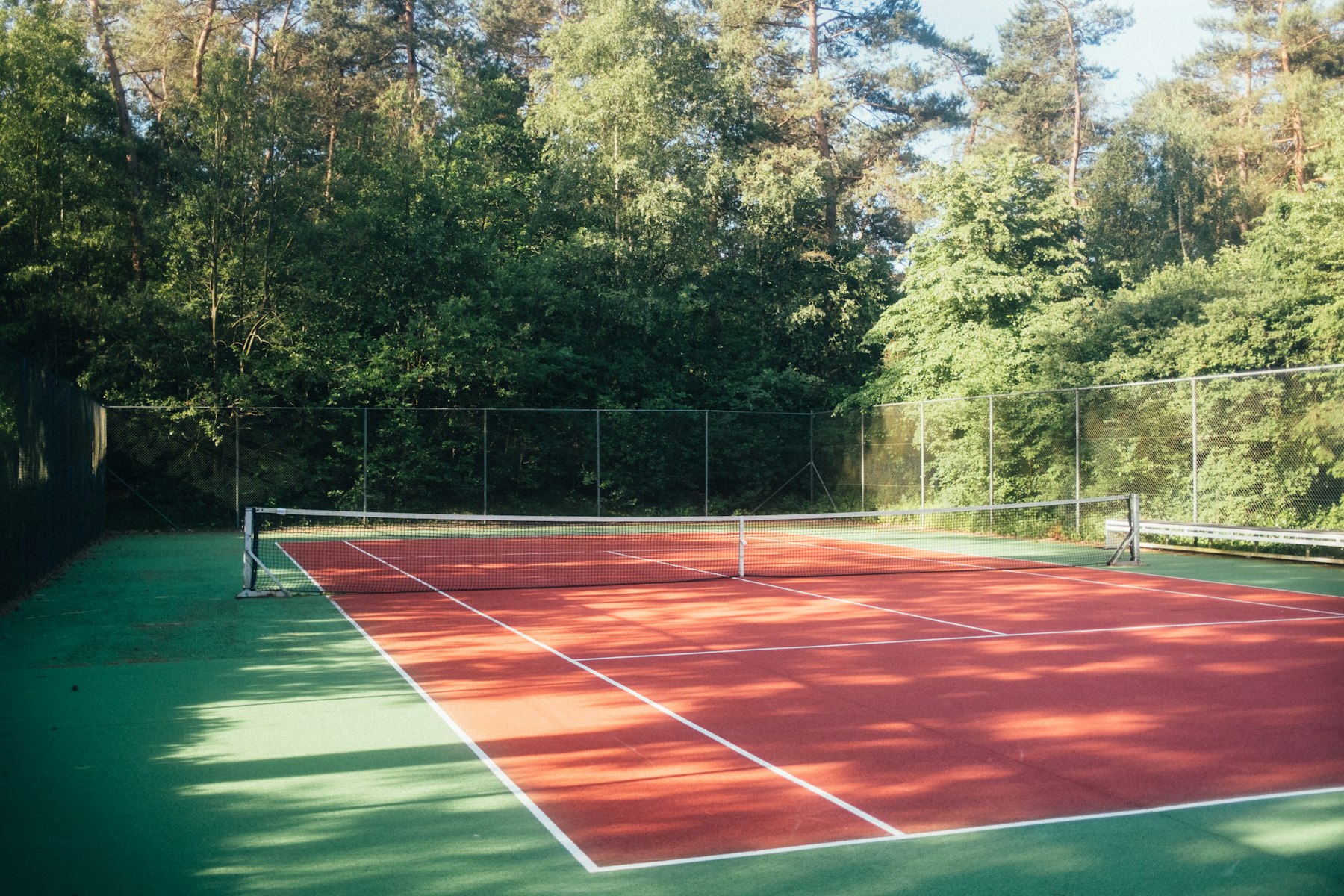
Winter Closing Checklist for a Backyard Court
Five jobs to do before the first hard freeze — net posts, crack sealing, drainage, and whether a cover is actually worth it — so a New Jersey winter doesn't cost you a spring resurface.
Get a Fall Maintenance Visit →Closing a backyard court for winter comes down to five things: clear debris off the surface, seal any open cracks before water can get into them, pull or slack the net and cap the post sleeves, confirm drainage paths are clear, and decide whether a cover is worth it for your lot. None of it takes a crew — most of it is an afternoon with a hose, a crack-fill kit, and a wrench. Skipping it doesn't break a court in one season, but it's the difference between a resurface on the normal 5-8 year cycle and one that comes early.
The Five-Item Closing List
Clear the Surface
Sweep or blow off leaves, twigs, and pollen buildup, then rinse with a hose. Decomposing organic matter left on acrylic through winter stains it, and wet leaf piles clog whatever drainage channel or edge drain your court relies on.
Seal Open Cracks
Any hairline crack that's appeared since spring should get filled now, not in March. Water that gets into an open crack and freezes expands roughly 9% in volume, which is exactly what widens a small crack into a bigger one by the time the court thaws.
Net Posts & Tension
Pull removable posts and cap the sleeves so water and debris can't sit in them all winter. If your posts are permanently cored, at minimum release the net tension completely rather than leaving it tight against an empty court for four months.
Check Drainage Paths
Confirm gutters, downspouts, and any surface drain near the court are clear before the first real storm. A court that drains correctly in summer can still pond water in winter if a fall's worth of leaves has quietly dammed the low edge.

A Cover Solves a Specific Problem
A surface cover isn't required — a properly built court is engineered to sit through a New Jersey winter uncovered. It earns its cost on lots with heavy tree canopy, where meltwater and leaf tannins do more damage than cold ever would.
- ✓ Best fit: courts under mature trees or near gutters that overflow onto the surface
- ✓ Skippable on open, well-draining lots with a good fall cleaning
- ✓ Never a substitute for sealing cracks first — a cover over an open crack just traps the water in
Book a Fall Maintenance Visit
We'll check for cracks that need sealing before winter, confirm drainage is clear, and handle net post service — one visit instead of guessing.
Request a Quote →Why Closing Matters More Here Than in Milder Climates
New Jersey's Uniform Construction Code splits the state into two frost zones — a 30-inch minimum frost depth in South Jersey and 36 inches in North Jersey, roughly the Mercer and Middlesex County line north. That number matters for post footings, but the same freeze-thaw cycle that drives it is what does the damage to an unclosed court surface: water gets into a crack, freezes, expands, and pries the crack open a little wider. It thaws, refreezes on the next cold night, and repeats. One winter of that on a court that was never sealed going in usually isn't dramatic. Three or four winters in a row is how a court that should've gotten a routine recoat ends up needing real crack repair instead.
The net post question comes up more than people expect. Permanent net posts get cored into the slab with a removable sleeve specifically so the post can come out for mowing, resurfacing, or the off-season — see our net post and windscreen installation guide for how that sleeve system works and why it matters more than people assume. Pulling the post and capping the sleeve for winter keeps water out of a cavity that otherwise sits full of freeze-thaw cycling all season. If you leave the net up for occasional winter play, at least back the tension off — a fully tensioned net strains the footing every day whether or not anyone's using it, and there's no upside to that load in January.
Windscreens are the one item that shouldn't just get slacked — take them down entirely. A screened fence catches wind and holds wet snow like a sail, and ice-loaded windscreen fabric is one of the more common causes of a fence panel failure over a New Jersey winter. It's a half hour of labor to remove and re-hang in spring, against a repair that can run into real money if a panel goes down mid-February.
Crack sealing is worth doing properly rather than as an afterthought. A flexible acrylic crack filler — not a rigid patch — is what actually holds up through repeated freeze-thaw movement, because it can expand and contract with the surface instead of cracking again at the same seam. If you're seeing more than a few hairline cracks, or the same crack keeps reopening in the same spot no matter how many times it's been filled, that's usually a base problem rather than a surface one — see our crack repair vs. full resurfacing guide for how to tell the difference before you spend another fall re-sealing the same spot.
It's worth being clear about what this checklist isn't. It's a once-a-year, close-it-down list — different from the ongoing question of how to handle snow and ice sitting on the court through the winter itself, which is its own routine with its own do's and don'ts around shovels, salt, and timing. Our winter snow and ice removal guide covers that in-season maintenance separately. Think of closing as the prep work that makes the rest of the winter a non-event, and snow removal as what you do if it isn't.
Surface choice affects how much winter closing actually matters. If you're building or resurfacing and haven't settled on a material yet, our guide to the best court surfaces for New Jersey winters covers which acrylic systems and bases hold up best against the exact freeze-thaw cycle this checklist is trying to protect against — a court built on the right base needs less babying every fall to begin with.
One more thing worth saying plainly: closing a court well in the fall is what makes the spring opening checklist a quick once-over instead of a repair job. A court that went into winter clean, sealed, and drained usually needs nothing more than a pressure wash and a net re-tension come April. One that didn't is where spring inspections turn up new cracks, post heave, and moisture trapped under the coating — problems that trace straight back to a fall that got skipped, not anything that happened over the winter itself.
Related Guides
Spring Court Opening Checklist
What to inspect once the season starts — the flip side of this checklist.
Winter Snow & Ice Removal for Backyard Courts
Ongoing in-season maintenance once the court is closed for the year.
Frost Line & Footing Depth for Court Posts
Why New Jersey's frost depth requirements exist and what they protect against.
Net Post & Windscreen Installation in NJ
How permanent sleeves work and what to remove before winter.
Court Maintenance Schedule & Cost
Weekly, seasonal, and annual upkeep tasks and realistic yearly cost.
Crack Repair vs. Full Resurfacing
When a patch holds and when it's a sign the base needs attention.
Winter Closing FAQs
When should I close my backyard court for the winter in New Jersey?+
Once nighttime lows are reliably dropping into the 30s and you're not getting regular use out of it, close it rather than waiting for the first hard freeze. North Jersey generally gets there a few weeks before South Jersey. There's no penalty for closing early; there is a real one for leaving standing water and loose net hardware in place through a mid-November cold snap that catches you off guard.
Do I actually need to take the net down for winter?+
If the posts are on portable or removable sleeves, yes — pull the post, cap the sleeve, and store the net and hardware somewhere dry. That keeps water out of the sleeve and off the hardware for four months of freeze-thaw nobody's using it through anyway. If your posts are permanently cored with no removable sleeve, at minimum slack the net tension off completely; a fully tensioned net through winter puts sustained load on the footing when nobody's benefiting from it being tight.
Should I cover my court surface for the winter?+
It's optional, not required, and it mainly protects against staining and debris rather than structural damage — a properly built court surface is designed to handle a New Jersey winter uncovered. A cover earns its cost fastest under heavy tree canopy, where leaf tannins and pooled meltwater are the bigger threat to the acrylic finish than the cold itself. On an open, sunny lot, a good fall cleaning and crack check does most of the same job for free.
What actually happens if I skip winterizing my court?+
Nothing dramatic in year one — that's what makes it easy to skip. Leaves left to decompose on the surface stain the acrylic; any hairline crack left unsealed lets water in that freezes, expands, and reopens it wider by spring; and a net left under full tension all winter keeps stressing the post footing. None of that is catastrophic after one season, but it compounds. A court that gets closed properly every fall needs resurfacing on the normal 5-8 year cycle; one that doesn't tends to need crack repair and re-coating sooner.
Can I still play on my court through a New Jersey winter?+
On a clear, dry, above-freezing day, sure — plenty of NJ owners get occasional winter use out of a court that's otherwise closed. The closing checklist isn't about locking the gate; it's about not leaving standing water, tensioned hardware, and open cracks unattended for months at a time. If you're playing semi-regularly through the winter, keep the net up but back off the tension, and skip a surface cover so you're not fighting it every time you want to play.
Get Your Court Ready for Winter
Crack sealing, net post service, and a drainage check — one fall visit so the freeze-thaw season doesn't cost you a spring resurface.
Request a Quote →