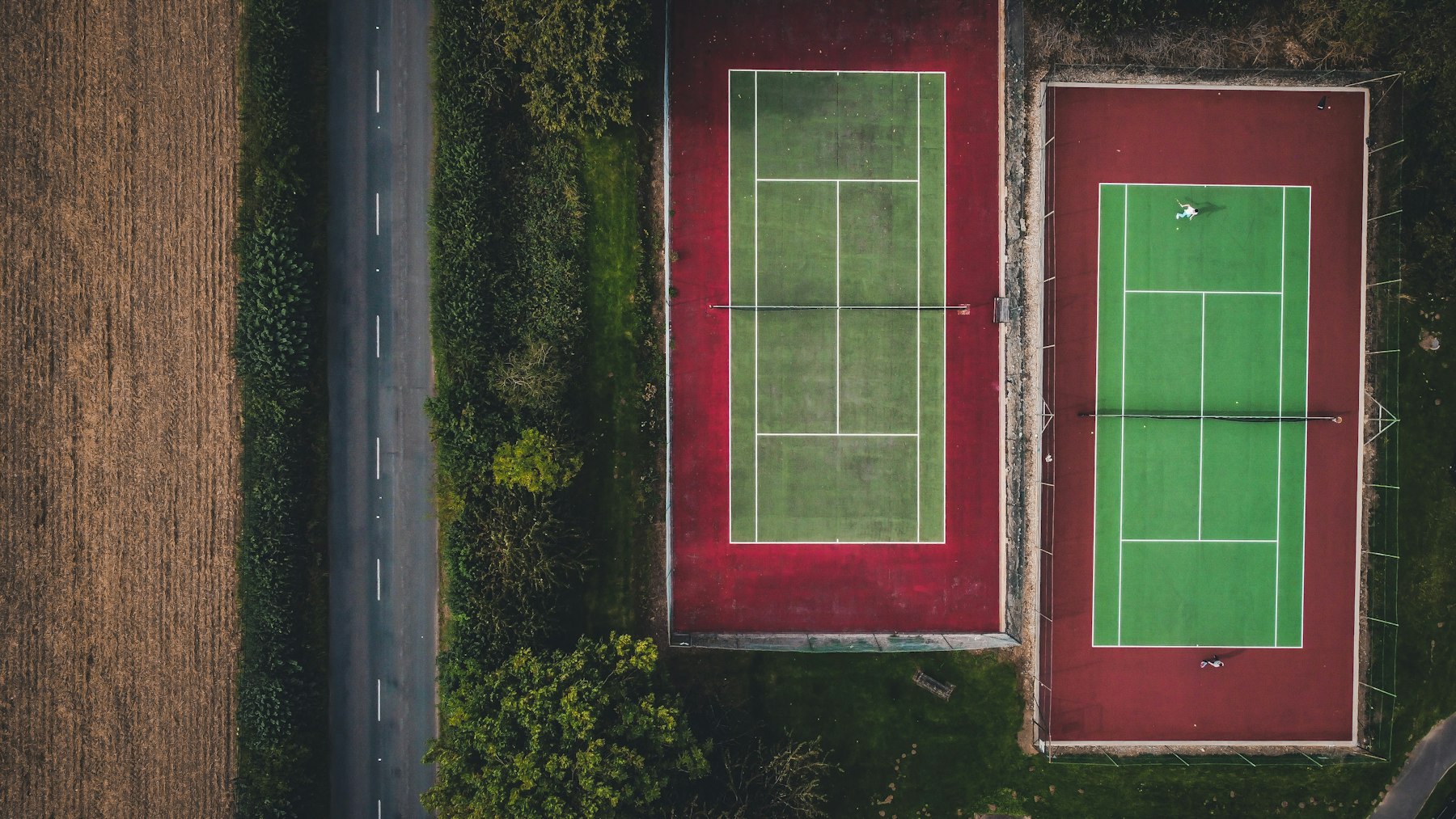
Permeable & Porous Court Surfacing in New Jersey
Porous asphalt, permeable pavers, and where a water-infiltrating base actually helps a New Jersey court project.
Ask About Permeable Options →A permeable court surface — porous asphalt/concrete or permeable interlocking pavers over a stone storage bed — lets water infiltrate instead of running off, which NJDEP recognizes in its Stormwater Best Management Practices Manual. It can help a project that is close to New Jersey's impervious-surface stormwater thresholds or sits on a poorly draining lot. It is not a substitute for a rigid acrylic slab on a regulation tennis or pickleball court — it fits best under multi-sport modular tile, a basketball pad, or the areas around a court. Ask whether it applies to your site.
Permeable & Porous Court Surfacing in New Jersey
Most New Jersey sport courts are built the standard way — a sealed, sloped acrylic-on-concrete or acrylic-on-asphalt slab that sheds water off the edges into a drainage system. That is the right build for regulation tennis and pickleball, and it is what most of our other construction guides walk through. This page is about the alternative: a permeable or porous surface, built so water passes through the surface itself into an engineered stone bed and infiltrates into the ground, rather than running off. It is a smaller slice of court construction, but for the right lot it solves a real problem the standard build can't.
NJDEP's Stormwater Best Management Practices Manual devotes a full chapter (9.6, Pervious Paving Systems) to this construction method, which tells you it is a recognized, engineered technique in New Jersey — not a niche or unproven idea. The manual describes two surface course types: porous asphalt or concrete, mixed with fewer fine particles so water drains directly through the material, and permeable interlocking pavers, solid units laid with open-graded aggregate in the joints that water passes through between the pieces. Both sit over a stone reservoir bed engineered to store water temporarily and let it infiltrate into the subgrade soil, which is also how the system earns stormwater quality treatment credit rather than just moving the runoff problem downhill.
Porous Asphalt / Concrete
A "no-fines" surface course mixed to leave open voids water passes straight through, over an engineered stone reservoir base.
Permeable Interlocking Pavers
Solid paver units with open-graded aggregate joints. Water infiltrates between units rather than through the units themselves.
Stone Reservoir Bed
The engineered layer beneath either surface type that stores water temporarily and lets it infiltrate into the subgrade soil below.
NJDEP-Recognized BMP
Covered directly in the NJ Stormwater Best Management Practices Manual, Chapter 9.6 — a standard, not an experimental technique.
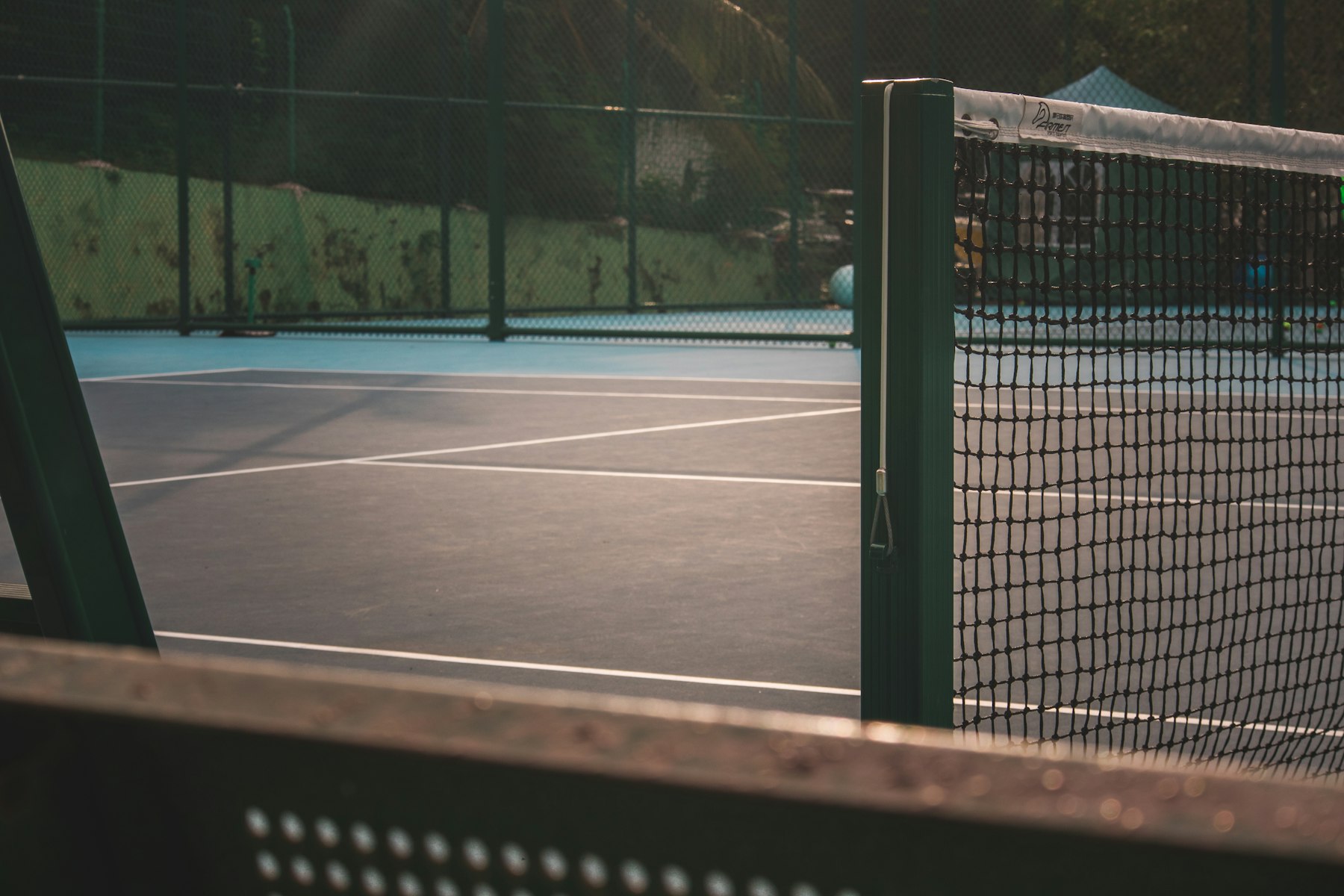
A Site-Engineering Tool First, a Surface Choice Second
Permeable paving is not a general upgrade — it earns its cost when it solves a specific site problem: a lot near New Jersey's impervious-coverage thresholds, a poorly draining corner, or a town stormwater condition on your permit.
- ✓ Reduces regulated impervious surface when built to NJDEP BMP standards
- ✓ Best fit: multi-sport tile, basketball pads, and surrounding walkways
- ✓ Not a substitute for a rigid slab under regulation tennis or pickleball
- ✓ Confirm design criteria and credit with your engineer, not just the paving product
Where Permeable Surfacing Fits — and Where It Doesn't
The honest limit first: a permeable base is not a drop-in substitute under a standard acrylic tennis or pickleball court. Regulation play needs a rigid, precisely sloped slab for a true, consistent bounce, and that is what post-tension concrete or properly compacted asphalt delivers. A porous or permeable structure, by design, behaves differently underfoot and can settle unevenly over time in ways a rigid slab doesn't — acceptable for a driveway or patio, not acceptable for a court where ball bounce has to be predictable. See our concrete vs. asphalt base guide for why the standard rigid slab wins for competitive play.
True clay and Har-Tru courts are the one traditional exception, and they already get their own guide: clay play relies on a permeable, multi-layer stone base by design, which is a completely different construction method from an acrylic hard court — see our clay court installation guide for that build. This page is about a different use case: applying permeable paving deliberately, as a stormwater tool, to a basketball pad, a multi-sport tile court, or the patios and walkways around a court — not converting a competitive tennis or pickleball surface to permeable pavement.
Where it genuinely helps: modular sport tile systems already sit on a semi-rigid base rather than a monolithic slab, which makes a permeable stone bed underneath a natural pairing rather than a compromise. A basketball pad, a casual multi-sport turf area, or a walking path connecting the house to the court are all good candidates when the lot needs the drainage benefit. Our modular tile vs. poured surface guide and synthetic turf guide cover the surface systems that pair naturally with a permeable base.
Ask If a Permeable Base Fits Your Project
Close to a stormwater threshold, or dealing with a wet corner of the yard? Tell us the site and we'll tell you honestly whether permeable paving is worth the premium.
Request a Quote →Stormwater Rules, Impervious Coverage, and Where This Actually Matters
New Jersey's stormwater rule under N.J.A.C. 7:8 treats a project as "major development" — triggering the state Stormwater Management rules — when it disturbs one acre or more, or creates a quarter-acre or more of regulated impervious surface. NJDEP's own FAQ defines impervious surface as a layer highly resistant to infiltration and specifically lists paved sport courts among its examples. A single backyard court is usually well under that quarter-acre threshold on its own, but a multi-court build, a court paired with a large patio or driveway expansion, or a lot that has already used up most of its coverage budget under a local ordinance is a different math problem — and that is exactly the situation where a permeable base is worth pricing.
The key word is "regulated": whether a specific pervious paving installation actually reduces your counted impervious area depends on meeting NJDEP's BMP Manual design criteria for that system, and your town or engineer signs off on that determination on your actual plans — it is not something a paving product guarantees by itself just by being labeled permeable. If impervious coverage or stormwater review is the reason you are considering this route, say so at the start of the design conversation so the base can be engineered to the standard that actually counts, not built as a cosmetic permeable surface that doesn't change your regulatory math. Our permits and zoning guide covers the broader town-by-town review process this decision usually comes up inside of, and our drainage systems guide covers how standard court drainage is engineered when a permeable base isn't the right tool for your site.
Cost and What Drives It
A permeable system costs more than a standard sealed surface for two reasons: the stone reservoir bed underneath is thicker and more engineered than a typical compacted sub-base, and porous asphalt or paver surface courses generally cost more per square foot to supply and install than standard asphalt, concrete, or a sealed paver system. There is no honest single number to publish here — it depends on the reservoir depth an engineer specifies for your soil and drainage math, the surface course you choose, and the total area involved. What we can say plainly: it is a premium worth paying only when it is solving a real problem on your lot, not a general upgrade to add for its own sake.
If your project doesn't need the stormwater or drainage benefit, a standard sealed base and acrylic or tile surface remains the more economical, better-performing choice for actual court play — see base preparation and grading cost for what a standard build runs. The right first step either way is the same: a site visit where we look at your lot's drainage, your town's stormwater posture, and what you actually want to play, then tell you honestly which base makes sense. Request that visit.
Related Guides
Concrete vs. Asphalt Court Base in NJ
Why a rigid slab wins for regulation tennis and pickleball play.
Modular Tile vs. Poured Court Surface
The semi-rigid surface system that pairs naturally with a permeable base.
Synthetic Turf Multi-Sport Court Cost
A permeable, lighter-base surface for casual multi-sport play.
Clay Tennis Court Installation Cost
The one traditional court sport already built on a permeable stone base.
Court Drainage Systems in New Jersey
How standard court drainage is engineered when a permeable base isn't the fit.
Pickleball & Tennis Court Permits & Zoning
The town review process where impervious-coverage questions come up.
Sources
Permeable Court Surfacing FAQs
What is a permeable court surface?+
It is a paving system built to let water pass through the surface into a stone storage bed and the soil below, instead of shedding it off like a standard sealed asphalt or concrete slab. NJDEP's Stormwater Best Management Practices Manual (Chapter 9.6, Pervious Paving Systems) recognizes two surface course types: porous asphalt or concrete, which is mixed with fewer fines so water drains straight through it, and permeable interlocking pavers, which are solid units with gaps or joints filled with open-graded aggregate that water passes through between them.
Does a permeable surface count as impervious for New Jersey stormwater rules?+
NJDEP defines impervious surface as a layer highly resistant to infiltration, and its stormwater rule FAQ specifically lists paved sport courts among the examples of impervious surface. A properly designed pervious paving system is built to infiltrate rather than resist it, which is the point of using one — but whether a specific installation qualifies for reduced-impervious treatment depends on meeting NJDEP's BMP Manual design criteria and is a determination your engineer or town makes on your plans, not something a surface material guarantees on its own.
Can you build a regulation tennis or pickleball court on a permeable surface?+
Not with a standard acrylic system — regulation tennis and pickleball need a rigid, evenly sloped slab for consistent ball bounce, which is what a post-tension concrete or asphalt base provides. True clay and Har-Tru courts are the exception: they already use a permeable, multi-layer stone base by design, which is a different construction method covered in our clay court installation guide. Permeable systems fit best under multi-sport modular tile, a basketball pad, or the walkways and patios around a court — not under an acrylic tennis or pickleball surface.
Why would I choose a permeable base for a basketball or multi-sport pad?+
The main reason is site constraints, not play quality. If your lot is close to a stormwater major-development threshold, has a local impervious-coverage limit, or drains poorly toward a neighbor or wetland buffer, a permeable base under modular sport tile can reduce how much of the pad counts as regulated impervious surface and cut down on runoff leaving the property. It is a site-engineering decision as much as a surfacing one.
Does a permeable court surface cost more to install?+
Generally yes, because the stone reservoir bed below the surface is thicker and more engineered than a standard compacted sub-base, and a porous asphalt or paver surface course costs more per square foot than a standard sealed one. Whether that premium is worth it depends entirely on whether it solves a real problem on your lot — an impervious-surface limit, a wet corner of the yard, or a town stormwater condition — rather than being a general upgrade. A site visit is the only way to know if it applies to your project.
Talk Through Your Site's Drainage and Coverage Situation
Tell us about your lot, your town's stormwater posture, and what you want to build. We'll give you an honest read on whether permeable paving belongs in the plan.
Request a Quote →