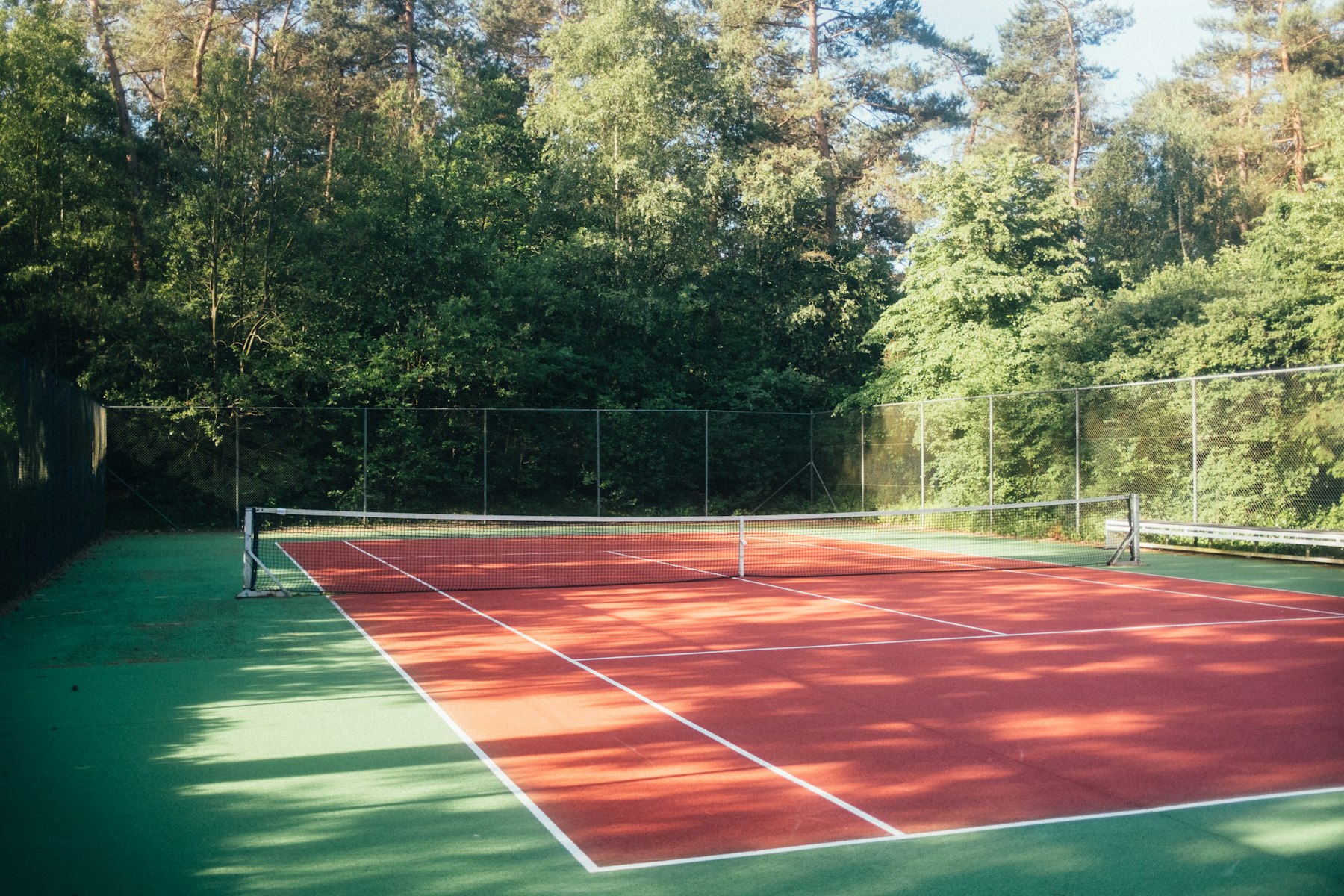
How to Build a Backyard Tennis Court in NJ
From space and permits to base, surfacing, and lighting — the full process for building a backyard tennis court in New Jersey that lasts.
Get a Court Build Quote →To build a backyard tennis court in New Jersey you need roughly 120 ft × 60 ft of space (a 78 × 36 ft play area plus run-off), town permits, a properly drained and sloped base, acrylic surfacing, and net posts — and a professional build is quoted per site and takes roughly 6–10 weeks of construction, plus 3–8 weeks of permitting up front. The five steps are: confirm space and layout, pull permits and plan drainage, excavate and pour the base, surface and stripe, then set the net, fencing, and lighting. The base decides how long the court lasts, so it's the step worth getting right. NJ Court Pros handles permitting and construction end to end across New Jersey.
How Do You Build a Backyard Tennis Court, Step by Step?
Confirm Space & Layout
Measure your yard against a ~120 ft × 60 ft pad (78 × 36 ft play area plus run-off). We check orientation, slope, and whether a full-size court or a tighter-footprint compromise fits.
Permits & Drainage Plan
Check zoning, setbacks, and impervious-coverage limits, pull permits, and design a single-plane drainage slope so water moves off the court and away from your home.
Excavation & Base
Grade the site and pour a properly sloped post-tension concrete base (or asphalt), then let it cure — about 28 days for concrete. This is the foundation of a crack-free court and the step that decides how long it lasts.
Surfacing & Striping
Once the base has cured, apply acrylic or cushioned-acrylic color coats and paint regulation doubles lines (with the singles sidelines) for a true, consistent playing surface.
Net, Fencing & Lighting
Set permanent, cored-in net posts, add perimeter fencing (typically 10 ft chain link) and wind screens, and install LED lighting if you want evening play.
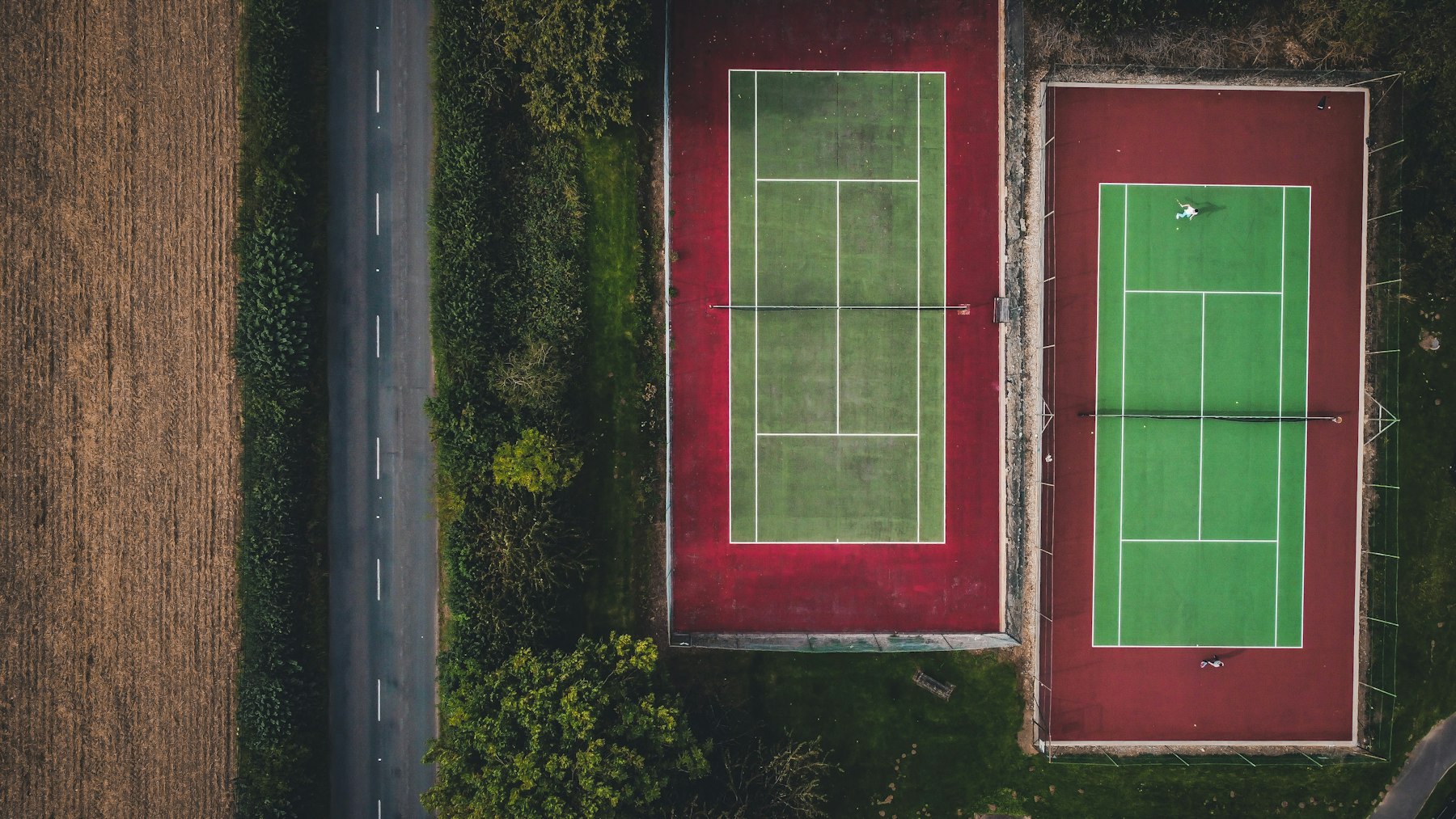
The Base Makes the Court
Surfacing, fencing, and lighting can all be upgraded later, but a bad base can't be fixed from the top. On a properly drained, sloped post-tension slab, a backyard tennis court plays true for decades.
- ✓ ~120 × 60 ft pad for regulation run-off
- ✓ Post-tension concrete resists freeze-thaw cracking
- ✓ A single-plane slope keeps water moving off the court
Why Does a Tennis Court Need So Much Room?
The 78 × 36 ft figure most people search is only the play area — the lines a ball is in or out of. It says nothing about where a player ends up chasing a deep return past the baseline at full speed. That's exactly what the extra footprint is for: the joint USTA/ASBA construction manual and ITF Rule 1 set recommended run-off at roughly 21 ft behind each baseline and 12 ft along each sideline, which is where the standard 120 × 60 ft build target comes from. Build tighter than that and you can still play, but a full-speed sprint into a fence a few feet past the baseline is a real risk, not a hypothetical one.
On most New Jersey lots, town setbacks and impervious-coverage limits — not the raw yard size — are what actually decide whether a full-size court fits. A 120 × 60 ft pad is 7,200 sq ft of new impervious surface, which is enough to push many suburban lots against their coverage cap on its own, before fencing or a patio even enters the conversation. If your lot genuinely can't hold that footprint, a pickleball court fits in roughly a quarter of the space and is worth a real look rather than forcing a cramped tennis build. Full dimension tables, service box sizes, and net heights are in our tennis court dimensions guide.
Wondering If Your Yard Fits a Tennis Court?
Send us your address and a rough yard size. We'll check your town's setbacks and coverage limits, tell you honestly what fits, and send a fixed quote after a site visit.
Request a Quote →Concrete, Asphalt, or Clay — Which Base Is Right?
Post-tension concrete
The longest-lasting base for NJ's freeze-thaw winters. Steel tendons under tension resist the expansion and contraction that cracks a slab over time. Costs more up front; usually wins on total lifetime cost.
Asphalt
Cheaper on day one, but it moves with every freeze-thaw cycle, so it tends to crack sooner in New Jersey and needs more frequent crack repair or resurfacing. A reasonable choice on a tighter budget with realistic expectations.
Clay / Har-Tru
A completely different build and a completely different maintenance year — rolling, top-dressing, and a seasonal close-and-cover routine instead of an acrylic recoat cycle. Choose this for the playing feel, not to save money; it's not lower-maintenance.
Whichever base you choose, it's the one part of the build you should never value-engineer. Surfacing, fencing, and lighting can all be added or upgraded later — a sound acrylic hard court gets resurfaced every 5–8 years and stays excellent indefinitely. A bad base can't be fixed from the top; once it fails, the only real remedy is tearing it out and paying for the court twice. See our concrete vs. asphalt base comparison and base preparation and grading cost guide for what actually goes into this step before a form even goes up. If you want the clay build and upkeep specifics instead of an acrylic hard court, see our clay tennis court installation guide.
What Should You Plan For in a NJ Backyard?
Setbacks & Permits
A 120 × 60 ft pad is 7,200 sq ft of impervious coverage — often what constrains the court more than the yard itself. We confirm what your municipality actually allows before design. Full permitting details are in our permits and zoning guide.
Orientation & Sun
Run the long axis north-south so low morning and evening sun stays off the baselines rather than straight into a server's eyes at the hours people most often play.
Fencing & Lighting
Perimeter fencing keeps balls contained — standard is 10 ft chain link. LED lighting extends play into the evening. Both sit outside the 120 × 60 ft pad, so budget the space as well as the dollars.
Drainage
The pad is pitched to a true single-plane slope so water sheds instead of pooling. Flat is wrong: standing water damages the surface and, in NJ winters, freezes and lifts it.
Net Posts
Permanent net posts cored into the slab hold tension far better than a portable base and are what most owners end up wishing they'd chosen from the start — see our net post and windscreen guide.
Season & Access
Acrylic surfacing needs dry weather above roughly 50°F, so NJ builds run spring through fall. Equipment also needs a real path to the site — tight side-yard access can add cost and time.
Related Guides
Tennis Court Installation Cost in NJ
The full cost breakdown for a new build across New Jersey.
How Long Does It Take to Build a Tennis Court in NJ
A week-by-week schedule, from permitting through the concrete cure to first serve.
Tennis Court Dimensions & Space Requirements
Exact play-area and run-off measurements, service boxes, and net heights.
Permits & Zoning for Courts in NJ
What towns actually review before you can break ground.
Court Fencing & Lighting Installation
How fencing and lighting costs fit into a full build budget.
Preparing Your Yard for Court Construction
Equipment access, hidden utility lines, and landscaping to flag before the crew arrives.
Tennis Court Resurfacing in NJ
What it costs to bring an aging court back to true instead of building new.
Clay / Har-Tru Tennis Court Installation
A different build and a different maintenance year than an acrylic hard court.
Backyard Tennis Court Build FAQs
How much space do I need for a backyard tennis court in NJ?+
A regulation doubles play area is 78 ft × 36 ft, but the recommended total build footprint is about 120 ft × 60 ft — roughly 7,200 sq ft — once you add run-off behind the baselines and along the sidelines. The joint USTA/ASBA construction manual and ITF Rule 1 put that run-off at about 21 ft behind each baseline and 12 ft along each sideline. Fencing and equipment access sit outside that pad. See our tennis court dimensions guide for the full breakdown.
Do I need a permit to build a tennis court in New Jersey?+
Almost always. A tennis court this size involves grading, drainage changes, and roughly 7,200 sq ft of new impervious coverage, which triggers zoning and/or construction permits in nearly every NJ municipality. Setback rules and coverage limits vary town to town. NJ Court Pros handles the permitting process as part of a full installation.
How much does it cost to build a backyard tennis court in NJ?+
A full-size backyard tennis court in New Jersey is quoted per site, covering excavation, base, surfacing, net posts, and basic fencing. The base and site prep are the largest line items. Surfacing an existing sound slab instead of building from scratch is far cheaper — see our tennis court installation cost guide for the full breakdown.
How long does it take to build a backyard tennis court?+
Plan on 6–10 weeks of active construction, plus 3–8 weeks of permitting before ground breaks. The longest single step is the concrete cure — a post-tension slab needs about 28 days to reach strength before it can be surfaced. Most NJ builds run spring through fall, since acrylic surfacing needs dry weather above roughly 50°F.
What surface should I choose for a backyard tennis court?+
For New Jersey's freeze-thaw winters, a post-tension concrete base with a standard or cushioned acrylic surface is the most durable choice. Asphalt costs less up front but moves more with the seasons and tends to crack sooner, meaning more frequent repair. Clay/Har-Tru is a different build and maintenance commitment entirely — see our clay court installation guide if that's the surface you want.
Can I build a backyard tennis court myself?+
Surfacing an existing, sound slab is realistic as a DIY or semi-DIY project. Building the base from scratch is not — grading a 7,200 sq ft pad to a true single-plane drainage slope, then pouring and curing a post-tension or reinforced slab correctly, is what separates a court that plays true for decades from one that cracks or ponds water within a few seasons.
Planning your project? See tennis court installation cost in NJ, court dimensions & space requirements, court permits & zoning, and net post & windscreen installation.
Build Your Backyard Tennis Court in New Jersey
Send us your location and a rough idea of your yard — we'll handle the site visit, permits, and a fixed installation quote.
Request a Quote →