Tennis Court Fence Repair & Replacement in NJ
Fabric bellying out at the baseline, a top rail bent by a fallen limb, a corner post leaning after a few hard winters. Here's how to tell what failed, when repair is enough, and when the fence needs to come out.
Get a Fence Assessment →By NJ Court Pros · Updated November 18, 2026
Most court fence problems start at a post, a rail or the bottom tension wire, and the fabric sags as a result. Fix the structure first, then re-stretch and re-tie the fabric. Posts that lean because of a failed footing, frost or roots need a new footing or replacement, not just a push back into line. Because New Jersey's permit exception covers only fences six feet or less in height (N.J.A.C. 5:23-2.14), and court fences are usually taller, expect a permit for replacement or new posts, and call 811 at least three full business days before digging. Quote-only: we price after seeing the fence.
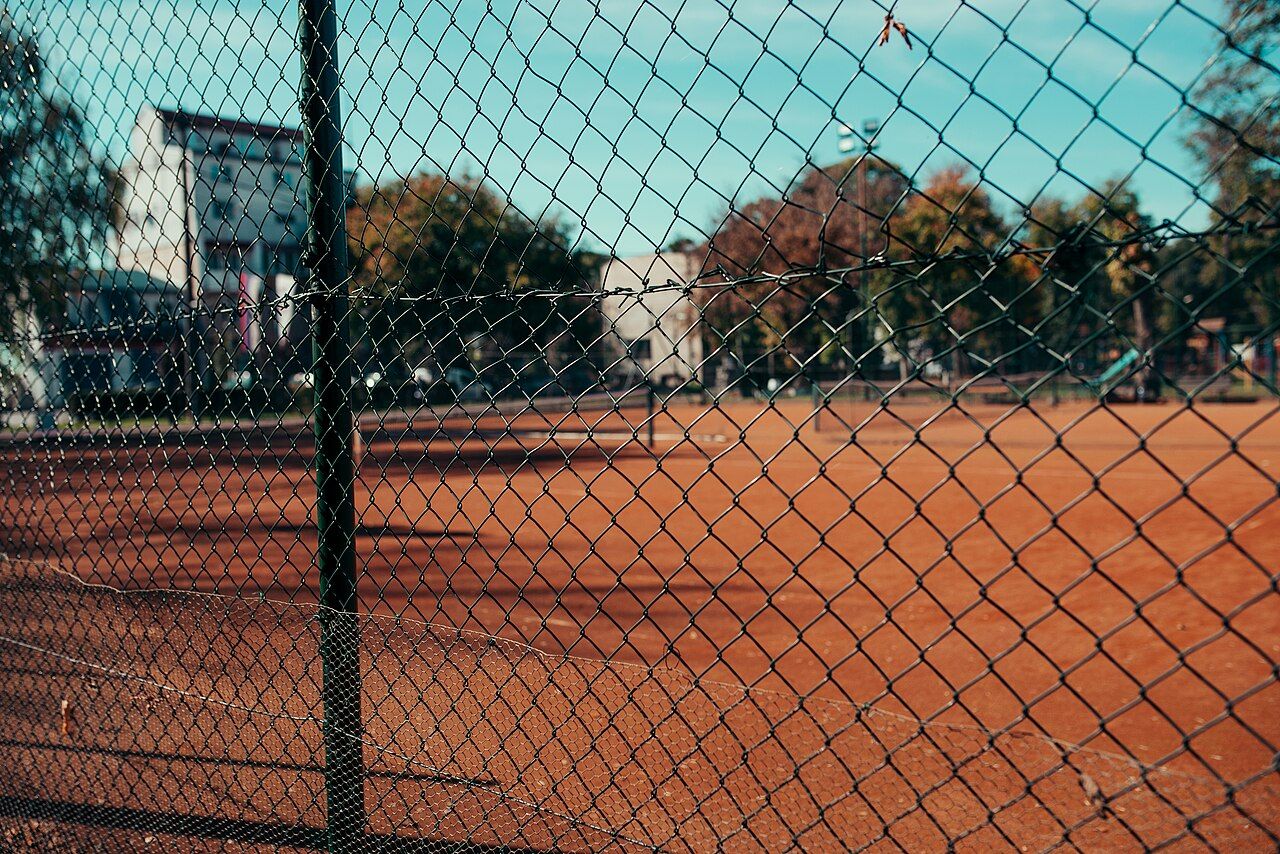
Photo: chain-link fence and post around a clay tennis court, by Shixart1985 (CC BY 2.0, Wikimedia Commons), resized. Not a New Jersey project.
How A Court Fence Is Put Together
A chain-link court fence is a simple system, and knowing the parts makes it much easier to read a repair quote. Line posts and heavier terminal posts (corners, ends and gate posts) are set in concrete footings. A top rail runs along the posts, and many court fences also have a mid rail or bottom rail. The chain-link fabric is pulled tight between terminal posts with a tension bar and bands, tied to posts and rails with fabric ties, and held down at the bottom by a tension wire or rail.
Court fences carry more load than a backyard property fence. They are taller, they take hundreds of ball impacts a week in season, and when windscreens are hung on them they act like a sail in a storm. That is why court fence failures tend to show up at the same places: the bottom edge, the top rail and the terminal posts that hold all the tension.
If you are choosing between galvanized and vinyl-coated systems, or looking at a different height, our court fence material comparison covers the options. This guide is about diagnosing and fixing the fence you already have.
What You See, What Failed, What Fixes It
| What you see | Likely cause | Usual fix |
|---|---|---|
| Fabric bellies out or sags at the bottom | Broken or loose bottom tension wire, failed ties, or fabric stretched by balls and players leaning on it | Re-tension or replace the bottom wire, re-stretch the fabric with a stretcher bar, and replace ties at the spacing the system calls for |
| Top rail bent, separated or missing | Fallen limbs, storm wind on windscreens, or rail sleeves that pulled apart | Replace the damaged rail section and sleeves, then re-tie the fabric to the rail |
| One or more posts leaning | Shallow or cracked footing, frost heave, soft or wet soil, or a tree root pushing from one side | Excavate and pour a new footing, or replace the post; address roots or drainage before resetting |
| Rust at the base of posts | Water held against the post at grade, mulch or soil piled against it, or worn coating | Spot-treat surface rust; replace posts with section loss near the footing |
| Gate drags, sags or will not latch | Worn hinges, a leaning gate post, or a frame that has racked out of square | Replace hinges and latch, brace or replace the gate frame, and reset the gate post if it has moved |
| Torn fabric or holes at ball height | Impact, vandalism or corrosion in an older galvanized fabric | Splice in a new section of matching fabric, or replace the full run if the old fabric is brittle |
Walk the fence with your phone before calling anyone. Photograph each problem area, plus a wide shot of each side of the court, and note which posts move when you push on them. That gets you a more accurate quote and helps separate a few isolated repairs from a fence that is failing everywhere.
Leaning Posts: Find The Cause First
A leaning post is the repair most likely to come back if the cause is skipped. Three causes account for most of them in New Jersey.
- Footing failure. A footing that was too shallow, too narrow or cracked lets the post rock. The fix is a new footing, sized and set to the depth the installer and the local building department require.
- Frost. Footings that don't reach below the frost line can be lifted by freezing soil over several winters, which shows up as posts that slowly tilt or rise. Our guide to frost line and footing depth for court posts covers this in detail.
- Roots and wet soil. A growing root can push a post out of line from one side, and saturated soil along a low edge lets posts drift. If roots are involved, see our tree root damage guide; the tree work is a separate job from the fence.
Terminal posts deserve extra attention. They hold the tension of the whole run of fabric, so a corner that has moved an inch can loosen fabric for an entire side. Bracing and truss rods at terminals are part of what keeps them plumb, and a quote that replaces a corner post should say how it will be braced.
Fence Sagging Or Posts Leaning?
Send us photos of the problem areas and a wide shot of each side of the court. We'll check the posts, rails and fabric, tell you what can be repaired and what needs replacing, and send an itemized quote.
Get a Fence Assessment →Repair Or Replace?
Most fences don't need to come out. A repair is usually the right call when the posts are plumb and solid and the problems are limited to fabric, ties, a rail section or a gate. Replacement starts to make more sense when:
- Several posts on a side lean or move, or footings are failing along a whole run.
- Posts or rails have rust with real section loss, not just surface rust.
- The fabric is brittle enough that it tears when re-stretched.
- You want a different height, a vinyl-coated system, or a new layout such as added gates or a divider.
- The court is being rebuilt or substantially reconstructed and the fence line will move.
Timing matters too. If the court is due for resurfacing, schedule heavy fence work first. Excavating footings and moving equipment over a fresh acrylic surface risks damaging it, and resurfacing crews need the perimeter clear anyway. Our tennis court resurfacing guide explains how that project is sequenced.
Permits, 811 And Your Town
New Jersey's Uniform Construction Code lists specific work that doesn't need a construction permit. One item, in N.J.A.C. 5:23-2.14, reads that a permit shall not be required for fences six feet or less in height, and that the exception does not apply to barriers around swimming pools. Most tennis court fences are well above six feet, so they fall outside that exception.
Separately, N.J.A.C. 5:23-2.7 lets ordinary maintenance proceed without a permit or notice, but it excludes work affecting structural or fire safety and work that increases a structure's nonconformity. Whether re-tying fabric or swapping a rail section counts as ordinary maintenance is a call for your construction official; replacing posts, changing the height or building a new fence is not something to assume is exempt.
Your municipality may also have zoning rules on fence height, location and setbacks for accessory structures, and an HOA may have its own approval step. Our court permits and zoning guide covers how towns review court projects.
Any new post hole is digging. New Jersey One Call says state law requires anyone digging to call at least three full business days before starting, excluding weekends and holidays, and to wait for the site to be marked. Court perimeters often have buried lighting conduit, irrigation lines or drainage pipe near the fence, so a markout is worth it even for one post.
Windscreens And Storm Damage
Windscreens are good for play and hard on fences. A screened fence catches far more wind than open chain link, which is why bent top rails and pulled ties often follow a storm. If the fence is already weak, take screens down ahead of a major storm, and make sure they are hung with the fastening method and spacing the screen maker recommends.
After a storm, check for bent rails, leaning terminals and fabric pulled off its ties before re-hanging screens. Our storm and flood damage repair guide covers the rest of the court, and the net post and windscreen installation guide covers screen hardware.
What A Fence Quote Should Include
Two quotes for “fence repair” can describe very different jobs. A useful written quote lists:
- Which posts get new footings or are replaced, by location, and how terminals will be braced.
- Linear feet of fabric replaced or re-stretched, and the fabric gauge, mesh and finish.
- Rails, tension wire, ties and hardware being replaced.
- Gate work: hinges, latch, frame repair or replacement.
- Whether windscreens are taken down and re-hung.
- Who handles the permit and the 811 markout.
- How the court surface will be protected during the work.
- Debris removal and site restoration.
Ask whether the contractor will match your existing system or recommends changing it. Mixing a new vinyl-coated section into an old galvanized fence works, but it looks patched; on a fence with many problems, a full side replaced in one material is often the cleaner result.
Frequently Asked Questions
Do I need a permit to repair or replace a tennis court fence in New Jersey?
Often, yes. Under N.J.A.C. 5:23-2.14, a construction permit is not required for fences six feet or less in height, and most tennis court fences are taller than that. Replacing a court fence, raising it or adding new posts is work you should expect to permit. Small like-for-like repairs, such as re-tying fabric or replacing a torn section, may not need one, but the construction official decides; call the building department with a description before work starts. Fences that also act as a pool barrier are excluded from the six-foot exception.
Why is my court fence sagging between posts?
The most common causes are a loose or broken tension wire along the bottom, failed fabric ties, a bent or disconnected top rail, or a post that has started to lean and taken tension off the fabric. Windscreens add a lot of wind load to a fence, so sagging often starts on the side where screens are hung. Fixing the sag usually means correcting the post or rail first, then re-stretching and re-tying the fabric.
Can a leaning fence post be straightened, or does it need to be replaced?
It depends on why it is leaning. A post that has rocked loose in a shallow or cracked footing usually needs a new footing. A post pushed out of line by frost or a tree root needs the cause dealt with, not just the post reset. A bent steel post generally has to be replaced. Your installer should dig around or expose the footing before promising a straighten-only fix.
Do I need to call 811 before replacing fence posts?
If you are digging, yes. New Jersey One Call says New Jersey law requires anyone digging to call at least three full business days, excluding weekends and holidays, before beginning work, and to wait for the site to be marked. That applies to new post holes, footing replacement and any trenching for court lighting conduit near the fence.
Should I repair the fence or replace it during a resurfacing?
Resurfacing is a good time to deal with the fence because the court is already out of play and equipment is on site. If posts are sound and only fabric, ties or gates are failing, repair is usually enough. If several posts are leaning, rails are rusted through, or you want a different height or a black vinyl-coated system, replacement before the new surface goes down avoids damaging fresh coatings with heavy work later.
How much does it cost to repair a tennis court fence?
We price fence work after seeing it, because the range of jobs is wide: re-tying one section is very different from replacing a run of posts in new footings. What moves the price is how many posts need new footings, the length of fabric replaced, the fence height, galvanized vs. vinyl-coated material, gates, windscreen rehanging, access for equipment and whether a permit is required.
Get A Court Fence Plan That Lasts
Tell us about your court, the fence height and what's failing. We'll inspect the posts, rails and fabric and send an itemized quote for repair or replacement, coordinated with any resurfacing. No prices published here; every fence is different.
Request a Quote →Sources
- N.J.A.C. 5:23-2.14 — Construction permits, when required (fence exception at six feet or less)
- N.J.A.C. 5:23-2.7 — Ordinary maintenance
- New Jersey One Call — call 811 at least three full business days before digging
Sources accessed November 18, 2026. This guide is general information. Your municipal construction official decides whether a specific fence job needs a permit, and local zoning or HOA rules may add requirements.