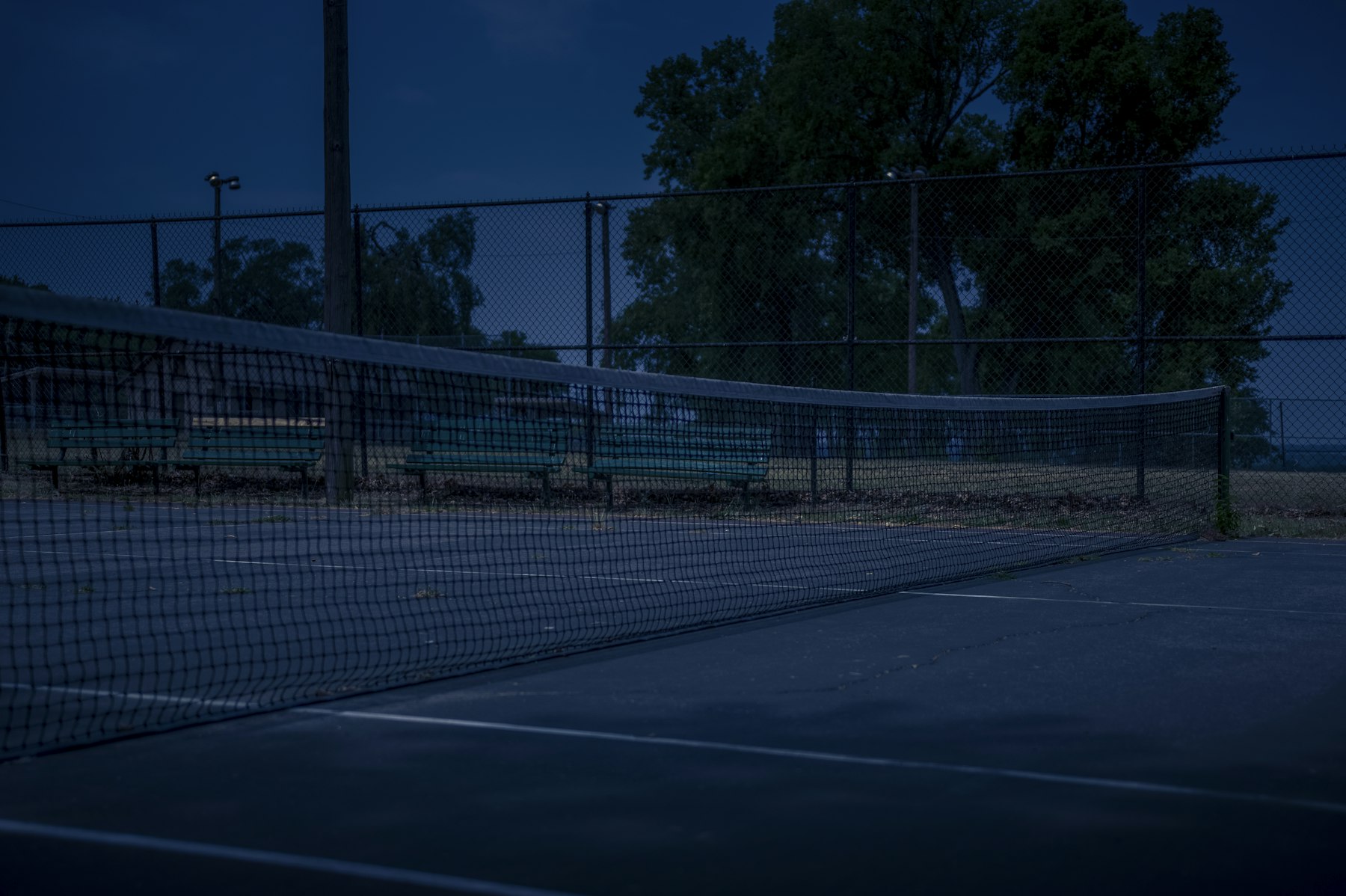
Chain Link vs. Vinyl-Coated vs. Aluminum Court Fencing
Which fence material actually belongs around a New Jersey pickleball or tennis court — height, gauge, lifespan, and where an ornamental look and ball containment start to conflict.
Get a Fencing Quote →For most New Jersey courts, 10-foot vinyl-coated chain link with 9 or 11 gauge wire and a 1¾-inch mesh is the right default — it contains balls reliably and resists rust and glare better than bare galvanized fabric. Aluminum ornamental fencing looks more upscale but its wide picket spacing does not stop a mis-hit ball, so it usually gets paired with chain link on the sides that actually take play rather than used as the whole perimeter. The right combination depends on your lot, your HOA, and your budget — a site visit settles it in one trip.
Three Materials, Three Different Jobs
Galvanized Chain Link
The budget default. Bare steel wire, hot-dipped or electro-galvanized. Contains balls just as well as coated fabric — it just shows wear, rust spots, and bright glare sooner.
Vinyl-Coated Chain Link
Same fabric, wrapped in black or dark green polymer. Costs more per foot but resists corrosion longer, glares less in sun, and reads as intentional landscaping instead of a construction fence.
Aluminum Ornamental
Vertical-picket rail fencing, the look most HOAs already approve for pools and yards. Handsome, but the open spacing between pickets does not stop a ball the way tight mesh does.
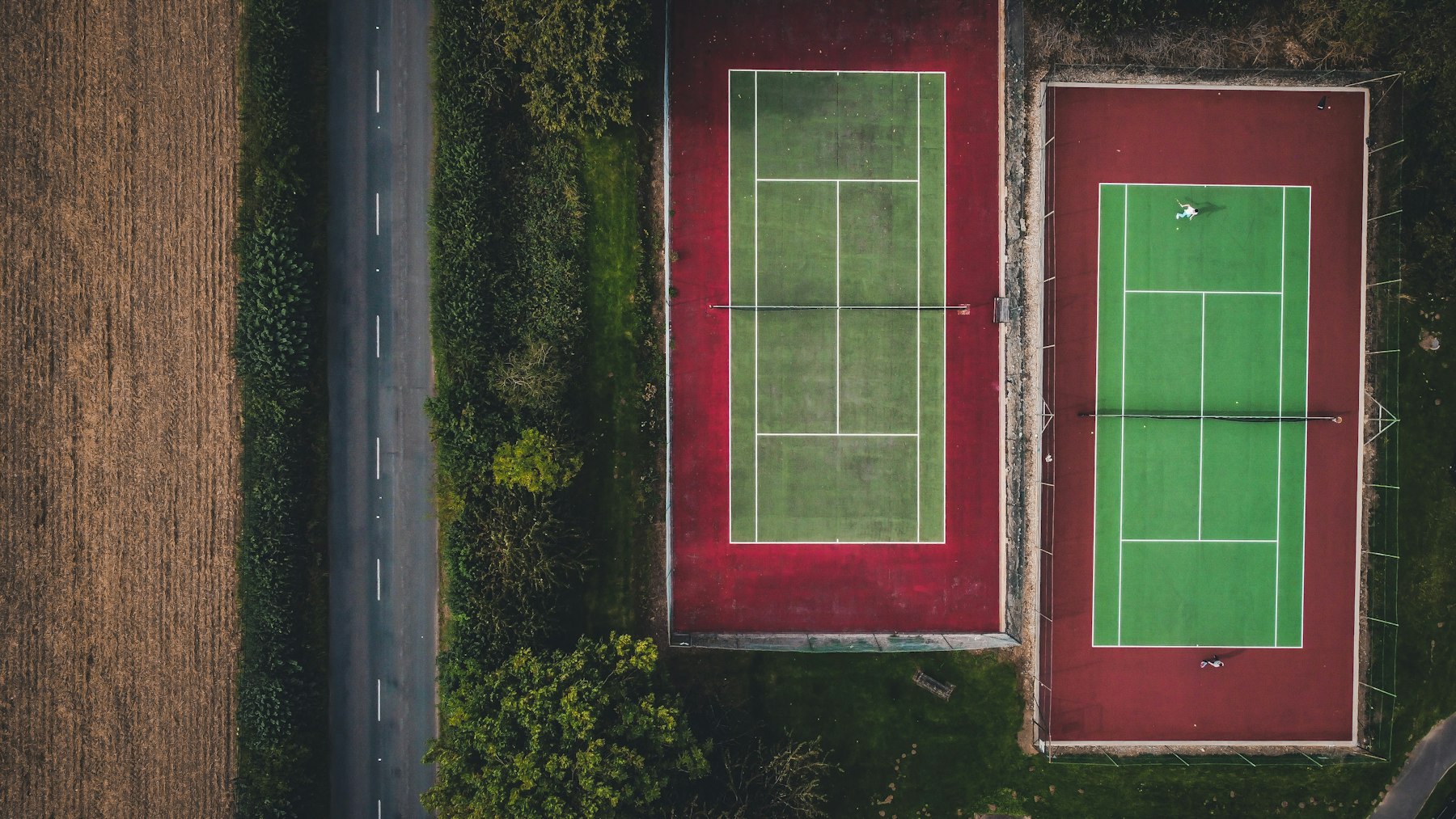
10 Feet, 9 or 11 Gauge, 1¾-Inch Mesh
Court fencing runs tighter and taller than a typical yard fence because a mis-hit ball travels harder and faster than the wind loads a standard privacy fence is built for.
- ✓ 10 ft is common on ball-side sections
- ✓ Lower fencing is possible on low-traffic sides if zoning and layout allow
- ✓ 9 or 11 gauge wire — lighter gauge sags under repeated impact
- ✓ 1¾-inch mesh keeps a pickleball or tennis ball from punching through
Why Height and Mesh Size Aren't Negotiable Details
Ten feet is a common height on tennis and pickleball courts for the fence sections that actually see ball traffic — behind the baselines on both. Some backyard layouts use a lower side fence where the lot allows it, since fewer balls travel that direction with much force. That is a real cost saver on a tight budget, but it is a design decision made section by section, not a blanket downgrade of the whole perimeter.
Mesh and gauge matter more than most owners expect going in. Court fabric is commonly specified as 9 or 11 gauge wire with a 1¾-inch mesh opening — noticeably tighter than the 2-inch or wider mesh common on a residential yard fence. That tighter weave keeps a ball from punching through or wedging in the diamond pattern on a hard hit. A lighter gauge or wider mesh costs less per linear foot up front, but it sags, stretches, and loses shape faster under the kind of repeated direct impact a court fence takes that a property-line fence never does. Baseline sections — the fence directly behind each end of the court — take the hardest and most frequent hits, so that is where cutting the gauge shows up first as visible sag.
Specs vary by manufacturer and project, so any quote you compare should list height, wire gauge, mesh size, and post spacing in writing. That is the only way to know two fence bids are pricing the same fence.
Lifespan and Finish: What You're Actually Paying For
| Material | Durability | Where it fits best |
|---|---|---|
| Galvanized chain link | Zinc coating only; shows rust and wear sooner once scratched | Budget builds, municipal courts, sites where appearance matters less than cost per foot. |
| Vinyl-coated chain link | Polymer layer over galvanized wire adds a second corrosion barrier | Backyard courts, courts near the house or a patio, HOA lots where a dark, low-glare finish reads better than bright galvanized wire. |
| Aluminum ornamental | Does not rust the way steel does; finish quality matters | Street-facing or decorative sections, paired with chain link on the sides that actually take play. |
The durability difference between galvanized and vinyl-coated comes down to what starts corrosion. Bare galvanized wire relies on its zinc coating alone; once that scratches or wears thin at a weld or a tie point, rust starts. The polymer layer on vinyl-coated fabric adds a second barrier over the same galvanized core, which is why it generally holds up longer even though the wire underneath is the same.
Get a Court Fencing Quote
Chain link, vinyl-coated, or an ornamental-plus-mesh combination — tell us your court and your HOA's rules and we'll price the fence that actually fits.
Request a Quote →When Aluminum Ornamental Fencing Makes Sense
Aluminum ornamental fencing is the vertical-picket, powder-coated rail system most homeowners already recognize from pool enclosures and upscale property lines — and it is often a style an HOA has already approved for pools and yards in the neighborhood. The tradeoff is containment: the open spacing between pickets, built for sightlines and a finished look, does not stop a mis-hit ball the way a tight chain-link mesh does. A hard baseline shot through an ornamental rail keeps going into a neighbor's yard or the street.
A common compromise is aluminum on the section facing the street or the house — where the look matters and stray balls are less likely — combined with vinyl-coated chain link on the baseline and side sections that actually take play. That hybrid costs more per linear foot than an all-chain-link perimeter because you are pricing two fence systems instead of one, but it solves the HOA-aesthetics-versus-ball-containment conflict without compromising either. If your community association has specific fencing standards, our HOA approval guide covers how that review typically works alongside the rest of your court application.
Wind screens are a separate add-on to whichever fence material you choose, not a substitute for picking the right one. A mesh wind screen mounted to chain link cuts wind interference and adds privacy, but it also adds wind load to the posts and fabric, which is one more reason post spacing and footing depth need to be sized for the finished system, not just the bare fence. Our net post and windscreen installation guide covers that hardware in detail, and if noise from neighbors is the real driver behind an upgrade, our pickleball court noise reduction guide covers sound-dampening fence panels as a distinct option from a standard wind screen.
Footings, Frost Line, and Permits
Whatever material ends up on the perimeter, every post footing has to sit below New Jersey's frost line, or the posts gradually heave and lean over successive winters as the ground freezes and thaws around a footing that is too shallow. That depth changes by region — North Jersey and the Highlands need deeper footings than the coastal south — and it is the same physics whether the post is holding galvanized chain link or an aluminum rail. Our frost line and footing depth guide has the specific depths by region.
Fence height is also a permit variable independent of the material. Many New Jersey towns cap residential fence height, so a taller court fence may need a variance or separate review, and some HOAs layer their own material and color restrictions on top of the town's zoning code. Confirm both before material is ordered — see our court permits and zoning guide for what that review typically covers, and our fencing and lighting installation guide for how fence cost fits into a full court budget alongside lighting.
Related Guides
Court Fencing & Lighting Installation Cost
How fence and lighting cost fit into a full installation budget.
Net Posts & Windscreens
Wind screen hardware, wind load, and post sizing for the fence you choose.
HOA Approval for Court Installation
How community association review typically treats fence material and color.
Pickleball Court Noise Reduction
Sound-dampening fence panels as an alternative to a standard wind screen.
Frost Line & Footing Depth for Court Posts
Regional footing depths so fence posts don't heave over the winter.
Court Permits & Zoning in New Jersey
What towns review on fence height, setbacks, and coverage.
Court Fence Material FAQs
What is the best fence material for a pickleball or tennis court in New Jersey?+
For most backyard and club courts, galvanized or vinyl-coated chain link at 10 feet high is the usual choice because it contains balls reliably and is generally the most economical option. Vinyl-coated chain link is often worth the upcharge on a residential lot because the coating cuts glare, blends into landscaping better than bare galvanized wire, and adds a second layer of corrosion protection over the steel. Aluminum ornamental fencing looks better from the street but is rarely used as the primary ball-containment fence on its own — it is usually paired with mesh panels or reserved for a decorative front section.
How tall does a court fence need to be?+
Ten feet is a common height for tennis and pickleball perimeter fencing on the ends and sides where balls travel hardest. Some backyard layouts use lower fencing on a side that sees little ball traffic, which can save money if containment still works for how the court is played. Local zoning can cap fence height independent of what the sport calls for, so confirm your town's rule before finalizing height — see our permits and zoning guide for what that review typically covers.
What gauge and mesh size should a court fence use?+
Court chain link is commonly specified as 9 or 11 gauge wire with a 1¾-inch mesh opening — tighter than a typical residential yard fence, which keeps a pickleball or tennis ball from punching through or getting wedged in the weave. Lighter gauges and wider mesh are cheaper but sag and stretch faster under repeated ball impact, especially on the baseline sections that take the most direct hits.
Is vinyl-coated chain link worth the extra cost over galvanized?+
Often, yes, for a residential court. Bare galvanized chain link relies on its zinc coating alone, and rust starts once that coating is scratched or worn thin. A vinyl-coated system adds a polymer layer over the same galvanized wire, which protects it from the scratches and moisture exposure that start rust, so it generally holds up longer. Coated fencing, usually black or dark green, also visually recedes against landscaping better than bright galvanized wire, which matters more on a backyard court than a fenced municipal park battery where budget usually wins.
Can I use an aluminum ornamental fence instead of chain link around my court?+
You can, but it changes the job. Aluminum ornamental fencing is a picket-style rail system — it reads as more upscale and is common on pool and property-line fencing, but its wider vertical spacing does not stop a mis-hit ball the way tight-mesh chain link does. Courts that want the ornamental look typically use aluminum on the street-facing or decorative side and keep chain link (often vinyl-coated) on the ball-side sections that actually need to contain play. That combination costs more than an all-chain-link perimeter, so it is a design choice, not a default.
Get a Fence Material Recommendation
Tell us your court, your budget, and whether your HOA has fencing rules on file — we'll recommend the material and set a site visit for a fixed quote.
Request a Quote →