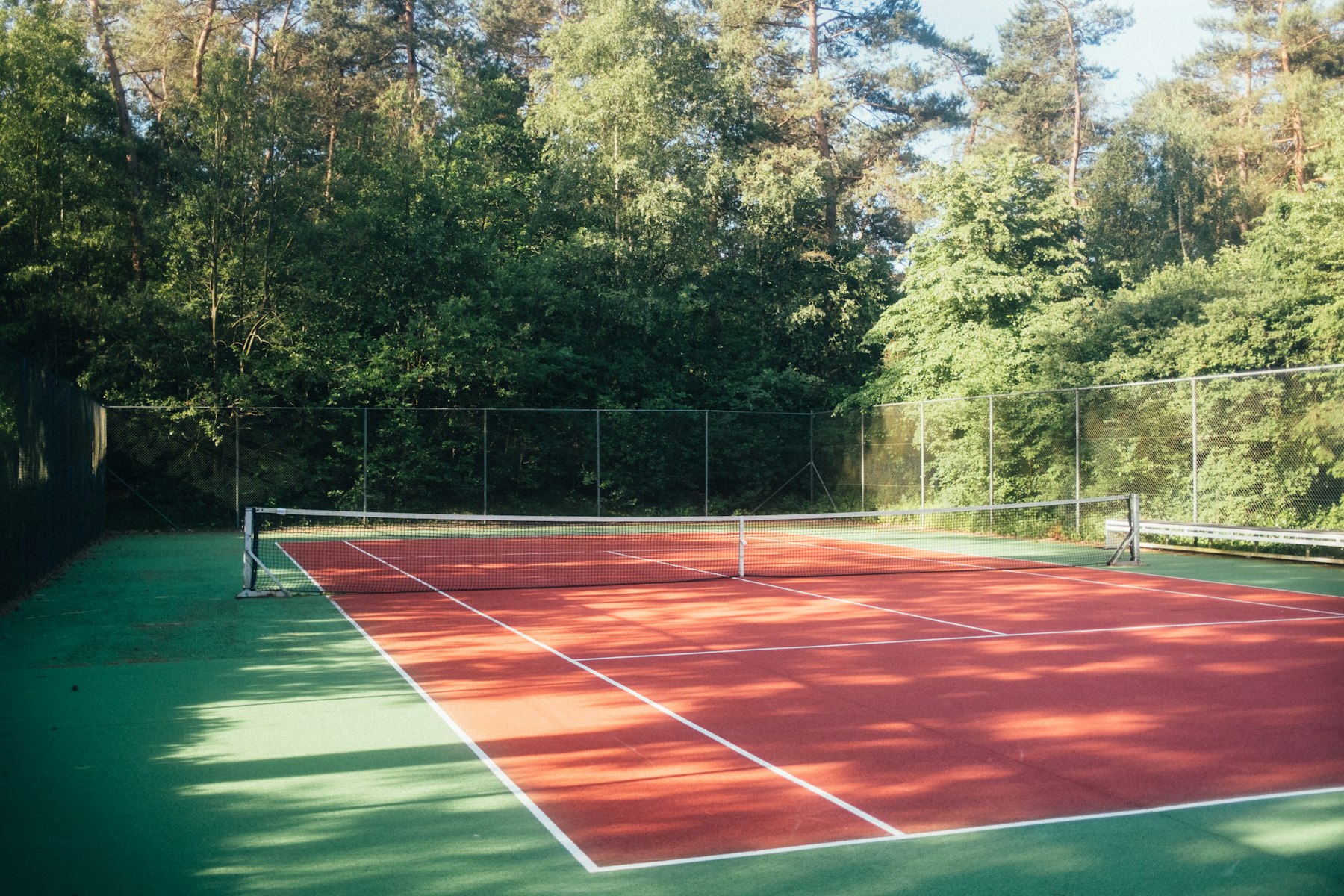
Pickleball & Tennis Court Installation in Colts Neck, NJ
Colts Neck's horse-country lots solve the setback problem most backyard court projects fight — the real design question here is where your well and septic system leave room to build.
Get a Colts Neck Site Visit →A backyard court in Colts Neck typically runs $25,000-$55,000 for pickleball or $60,000-$120,000 for tennis, in line with the broader Monmouth County market. Most properties here sit on 2, 5, or 10 acres, so a court fits as an accessory structure without the setback fight a half-acre suburban lot might require. The two things that actually shape a Colts Neck layout: where your well and septic system already sit, since most of the township has no public water or sewer, and how far a crew has to travel down a private driveway to reach the build site.
What Actually Constrains a Colts Neck Layout
| On a standard suburban half-acre lot | On a typical Colts Neck lot |
|---|---|
| Setback from the property line is the main design constraint | Setback is rarely the constraint — impervious coverage ratio and well/septic clearance are |
| Public water and sewer, so no well or septic to work around | No public water or sewer across most of the township — well and septic siting comes first |
| A short driveway means quick equipment access | Long private driveways can add real time and cost to site mobilization |
| Neighbor proximity makes pickleball noise a real design factor | Multi-acre lots often put enough distance between houses that noise rarely becomes a dispute |
None of this means Colts Neck construction is unregulated — it means the regulation that matters most here isn't the one most homeowners assume going in.

Zoning Built Around Farms, Not Subdivisions
Colts Neck's zoning code was written to preserve working farms and large estate parcels, not to pack in as many homes as the land allows — which is exactly why a backyard court rarely needs a variance here.
- ✓ Agricultural districts require a 10-acre minimum for farm use
- ✓ Most residential zones require roughly 2 acres or more
- ✓ A right-to-farm township, with active horse farms throughout
- ✓ Not a coastal/CAFRA town, despite sitting in Monmouth County
Before You Finalize a Layout
Confirm your well and septic footprint first
Most of Colts Neck has no public water or sewer service. Your well's isolation radius and your septic field and reserve area effectively decide where a court can go before zoning setbacks ever enter the conversation — get this mapped before you sketch a layout.
Check your zoning district's coverage ratio
A court counts as impervious surface against your zone's coverage ratio, the same as it would anywhere in New Jersey. On a multi-acre lot this is rarely the binding constraint, but it's still worth confirming, especially if the property already has a pool, barn, or other outbuildings eating into that allowance.
Plan for site access, not just site prep
A long gravel or gated driveway that's a non-issue for daily traffic can genuinely slow down excavation and concrete trucks. Walk your access route with your contractor before the schedule gets set, not after equipment shows up and can't get where it needs to go.
Land clearing is often pasture, not forest
Unlike a wooded ridge lot, a lot of Colts Neck court sites are open field or pasture rather than mature woods — which usually means a simpler clearing scope, but confirm whether the footprint crosses any fence lines, irrigation, or drainage swales serving the rest of the property.
Exact zoning district boundaries, coverage ratios, and well/septic clearance distances should always be confirmed with Colts Neck Township directly and with your septic designer — this is a planning reference, not a substitute for a site-specific review.
Find Out What Your Colts Neck Property Allows
We'll walk your zoning district, confirm the well and septic clearance, and price the site access before you commit to a design.
Request a Quote →Planning a Court on a Colts Neck Property
Colts Neck has a reputation, and it's earned honestly: this is horse country, one of the few places left in Monmouth County where working farms, riding rings, and multi-acre estate lots are still the norm rather than the exception. The township is a designated Right-to-Farm municipality, and its zoning code reflects that priority directly — agricultural districts require a 10-acre minimum for farm, horticultural, or dairy use, and most standard residential zones still call for roughly 2 acres (about 88,000 square feet) or more. A handful of areas allow a smaller-lot pattern where that development already exists, but the township as a whole is built around preserving open land, not maximizing lots per acre. For a backyard court, that's good news: a regulation-sized pickleball or tennis pad fits easily inside a setback envelope that was never designed around suburban density in the first place.
What actually shapes a Colts Neck court layout is almost never the zoning setback. It's the property's well and septic system. Most of the township has no public water or sewer service, which means every home relies on its own well and its own septic field, each with clearance requirements that have to be respected regardless of how much open land surrounds them. A court footprint has to clear the well's isolation radius and stay clear of the septic field and its reserve area — the space set aside for a future replacement field if the primary one ever fails. Our well and septic setback guide covers the clearance distances that apply statewide; on a Colts Neck property, confirming those distances against your specific well and septic survey is the first design step, well before anyone talks about court orientation or fencing.
Site access is the other variable that surprises owners moving from a denser town. A long private driveway that\'s perfectly fine for a sedan can be a genuine constraint for an excavator, a concrete truck, or a flatbed delivering fencing material. Gated entrances, gravel surfaces that weren\'t built for repeated heavy-truck traffic, and driveways that wind past a barn or paddock all add real planning time that a suburban half-acre lot with curbside parking never has to consider. We walk the access route as part of every Colts Neck site visit, not as an afterthought once equipment is already scheduled.
Because Colts Neck sits inland, it also skips a review layer that shore-corridor Monmouth towns carry. Our coastal court construction guide covers CAFRA permitting, salt-air hardware, and high water tables for towns like Rumson — none of that applies here. A Colts Neck project goes through standard municipal zoning and construction review rather than a state coastal permit process stacked on top of it, and the sandy, high-water-table soil that drives up cost near the shore isn't typically what you're excavating into on an inland horse farm. Pricing instead tracks the broader Monmouth County range without the coastal premium layered on.
Lot size also changes the conversation around noise, which is worth raising even though it rarely becomes a real problem here. Pickleball's paddle-on-ball sound is the single most common neighbor complaint statewide, and most of the fix is distance — putting real space between the court and the nearest bedroom window. On a 5- or 10-acre Colts Neck parcel, the natural gap between houses usually does that work without any extra design effort. It\'s still worth siting the court away from your own house and checking the distance to the nearest neighboring structure before pouring a pad, especially if your lot is on the smaller end of the township\'s range — our pickleball court noise reduction guide covers sound-dampening fencing and surface options for the cases where distance alone isn\'t enough.
Once the well/septic and access questions are settled, the build itself follows the same fundamentals as any New Jersey court: a properly graded and compacted base, a surface matched to how the household actually plays, and fencing sized to the sport. If the property already runs on a generator or has an existing electrical service built for a barn and outbuildings rather than a house-sized panel, it's worth confirming capacity early if court lighting is part of the plan — our court lighting cost guide covers what a lighting package actually draws.
Financing is also a more open question on a large agricultural or estate-zoned property than on a standard suburban lot, since some owners are already carrying a mortgage or farm-related loan structured around the land itself. That doesn't rule out standard home-improvement financing for the court — it just means it's worth having that conversation with a lender who understands how a multi-acre, partially agricultural-use property is underwritten, rather than assuming the same product a suburban homeowner would use applies cleanly here. Our court financing guide covers the common routes New Jersey owners use either way.
Base material choice is worth deciding early rather than defaulting to whatever a contractor built last. Post-tension concrete costs more upfront than asphalt but resists the freeze-thaw cracking that opens up over a New Jersey winter, and on a property this size the extra durability is often worth it simply because a full-scale mobilization to fix a failing asphalt base years later means driving equipment back down that same long driveway a second time. Our concrete vs. asphalt base comparison and post-tension vs. reinforced concrete guide both walk through that trade-off in more detail than a single site visit conversation usually covers.
Related Guides
Backyard Court Cost in Monmouth County, NJ
Full pricing ranges across the county, coastal and inland.
Well & Septic Setbacks for Court Construction
Clearance distances that decide where a court can go on an unsewered property.
Coastal Court Construction in New Jersey
CAFRA review and salt-air hardware for shore-corridor Monmouth towns — not Colts Neck.
Pickleball Court Noise Reduction in NJ
Sound-dampening options for the cases where lot size alone doesn't solve it.
Colts Neck Court Installation FAQs
Do I need a zoning variance to build a court on a Colts Neck property?+
Less often than you might expect for a township with this reputation for scrutiny. Most Colts Neck homes sit on lots well above the township's zoning minimums — agricultural districts require 10 acres for active farm use, and most residential zones require roughly 2 acres (88,000 square feet) or more, with plenty of parcels at 5 or 10 acres. A court sized to USTA or pickleball dimensions fits comfortably as an accessory structure on a lot that size without tripping a setback line the way it might on a standard suburban half-acre. The bigger constraint is usually the impervious coverage ratio for your specific zone, and where your well and septic field already sit — not the court's footprint against the property line.
How much does a backyard court cost in Colts Neck?+
Pricing tracks the broader Monmouth County range: roughly $25,000-$55,000 for a dedicated pickleball court, $60,000-$120,000 for a full tennis court, and $18,000-$85,000+ for basketball. Colts Neck sits inland, away from the sandy shore-corridor soil and high water table that pushes coastal Monmouth towns toward the top of that range, so you're not paying the salt-air hardware premium a Rumson or Sea Bright project carries. What does add cost here is site access — long private driveways and multi-acre grading before a crew ever reaches the building envelope.
Does well and septic change where a court can go on my property?+
Yes, and it's usually the real design constraint, more than the zoning setback is. Most of the township has no public water or sewer service, so a court footprint has to clear your well's isolation radius and your septic field and reserve area before anything else gets decided. On a large parcel this is rarely a dealbreaker, but it does mean the layout gets locked in around your septic design, not the other way around. Our well and septic setback guide covers the clearance distances in detail — get that confirmed before you pick a corner of the property and commit to it.
Is Colts Neck subject to the same coastal review as shore-area Monmouth towns?+
No. Despite being in Monmouth County, Colts Neck is inland and isn't subject to CAFRA coastal permitting the way Rumson, Sea Bright, or other shore-corridor towns are. Your project goes through standard municipal zoning and construction review, not a state coastal permit process layered on top of it. That's one less approval step than a comparable court build closer to the water.
Will a pickleball court's noise be a problem for neighbors in Colts Neck?+
Less likely than in a denser suburb, simply because of lot size. Pickleball's paddle-on-ball pop is the most common neighbor complaint statewide, and most mitigation advice centers on distance and buffering from the nearest window. On a 2-, 5-, or 10-acre Colts Neck lot, the natural setback from a neighboring house often does most of that work on its own. It's still worth siting the court away from your own bedroom windows and any shared property line that's closer than the rest — see our pickleball court noise reduction guide for sound-dampening options if your layout puts the court closer to a neighbor than the average lot here would suggest.
Build Your Colts Neck Court With a Local Team
Tell us your lot size and well/septic layout, and we'll confirm what fits before pricing your project.
Request a Quote →