Basketball Foot Care: Sweaty Feet, Blisters & Athlete's Foot
What keeps feet dry through a full run in high-tops, how to stop blisters on asphalt and gym floors, and how to treat athlete's foot without sitting out the season.
Browse Court Guides →By NJ Court Pros · Updated October 27, 2026
In partnership with Dryello. Disclosure.
To keep feet dry playing basketball, wear moisture-wicking socks and pack a spare pair, rotate two pairs of basketball shoes so each dries for a full day, pull the insoles out to air after every session, and dry between your toes after the shower. Replace shoes before the soles go smooth. On healthy, unbroken skin, a foot antiperspirant reduces sweat (our partner pick: Dryello Foot Antiperspirant For Him or For Her). If you already have itching, peeling or cracking between the toes, that is likely athlete's foot, a fungal infection that needs an over-the-counter antifungal, not an antiperspirant. Our partner pick there is Dryello's tolnaftate 1% Athlete's Foot Treatment Stick, applied twice daily as the label directs. You can usually keep playing while you treat it.
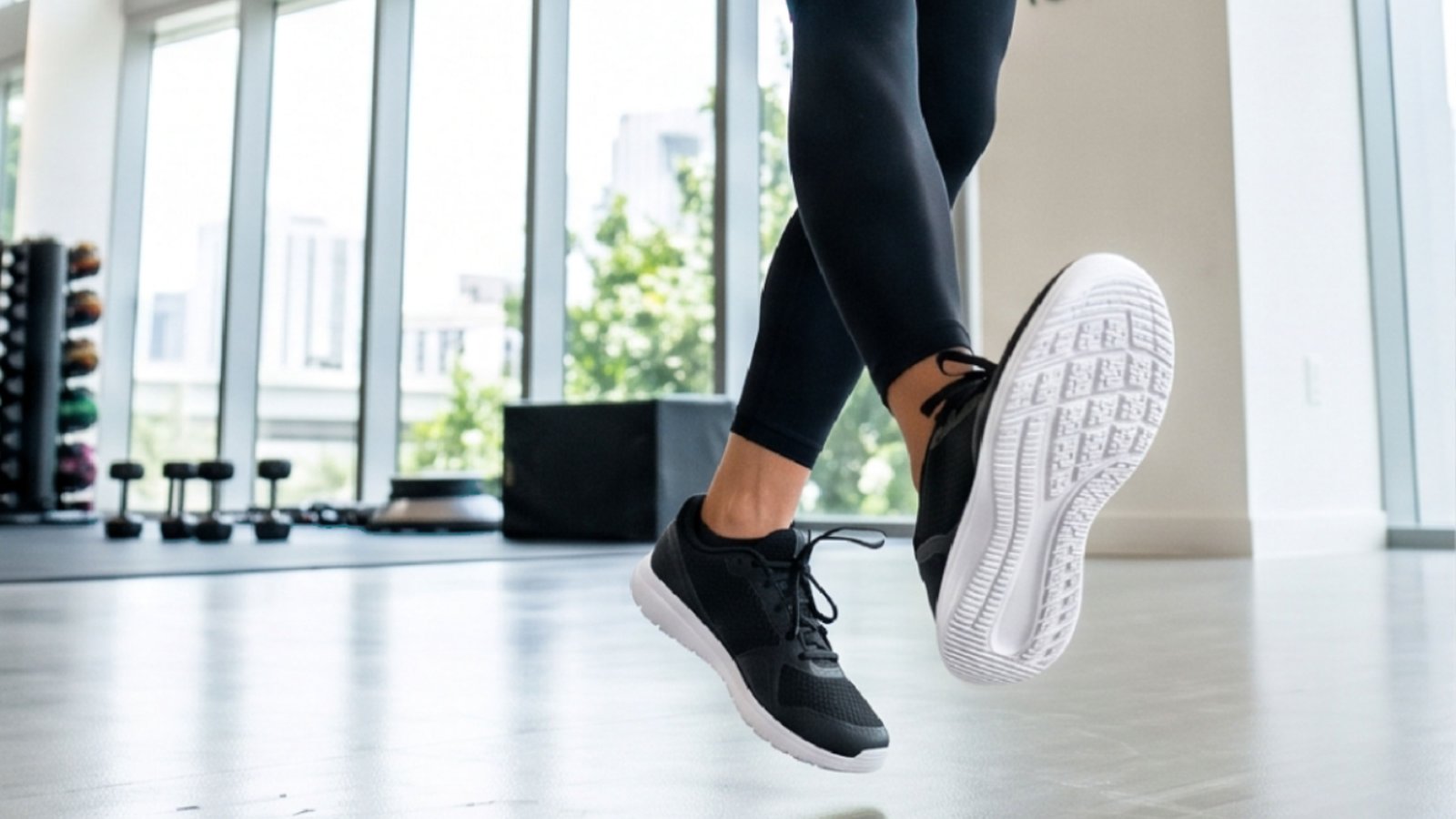
Hero photo: from Dryello's official product images, cropped.
Why Basketball Is Hard on Feet
We build and resurface basketball courts across New Jersey, from half-court driveway pads to full backyard courts with pickleball lines, so we think a lot about what happens where shoe meets surface. The American Academy of Podiatric Sports Medicine (AAPSM) sums up the game as running, jumping, cutting, stopping and shooting on a hard floor, and says it puts tremendous pressure on the foot and ankle. Most players focus on ankles. The skin of the foot takes a beating too.
Three things stack up in a typical run:
- Heat and padding. Podiatry groups recommend basketball-specific shoes with lots of ankle support and shock absorption, and the American Podiatric Medical Association (APMA) says they should have a thick, stiff sole and high ankle construction. That support is the point, but a padded high-top is also a warm, closed space that holds sweat.
- Friction. Hard cuts and sudden stops make the foot slide inside the shoe. A damp sock moves more than a dry one, and the AAPSM lists blisters among common basketball overuse problems alongside plantar fasciitis and tendinitis.
- Shared spaces. Rec leagues, school gyms and Y courts come with locker rooms and showers. That is where athlete's foot is usually picked up, not on the court itself.
None of this needs fancy gear to manage. It needs a routine you will actually keep, game after game.
Does the Court Surface Matter for Your Feet?
Yes, mostly for impact and wear rather than sweat. The AAPSM says indoor wood courts offer the most shock absorption and are considered the safest, outdoor asphalt courts are harder on the lower body, and concrete courts are the hardest. Most New Jersey backyard and park courts are asphalt or concrete with an acrylic color coating, so outdoor players should take shoe condition and cushioning seriously.
Outdoor surfaces also matter for heat. A dark asphalt court in full July sun gets hot, and so do the shoes on it. Your shoes are the barrier between your feet and the surface, so the practical response is the same as indoors: breathable shoes in good condition, wicking socks, a sock change on long days, and shoes that dry fully before the next session.
And outdoor courts wear outsoles faster than a gym floor. A sole that has gone smooth grips less, so the foot works harder and slides more inside the shoe. That is one more reason to retire basketball shoes on schedule, which we cover below.
If you are building a court, our guides to concrete vs. asphalt court bases, court surface slip resistance, and reducing court surface heat go deeper on the surface side.
The Dry-Feet Routine for Basketball Players
This routine is built from American Academy of Dermatology (AAD) advice on preventing athlete's foot and managing sweaty feet, NHS blister guidance, and podiatry guidance on basketball shoes. It works for a once-a-week pickup game and for a five-day-a-week high school or AAU schedule.
1. Socks that wick, plus a spare
The AAD recommends socks made of fabrics that wick moisture away from the skin, and notes that not all polyester or nylon does, so look for the words “moisture wicking.” The AAPSM recommends acrylic socks for basketball to avoid blisters. Avoid plain cotton athletic socks that stay wet. If you play two games or a long open run, change into a dry pair at halftime or between games.
2. Two pairs of shoes, rotated
The AAD advises avoiding the same shoes two days in a row so a day off lets them dry. For basketball, a padded high-top can take longer than a day to dry fully, so rotating two pairs on alternate days is the simple fix. Never start a session in shoes that are still damp from the last one.
3. Air everything out after play
Get your shoes out of the gym bag as soon as you get home. Loosen the laces, open the tongue, and pull the insoles out to dry separately. A shoe sealed in a bag overnight stays warm and damp, which the AAD notes is exactly where athlete's foot fungus thrives.
4. Dry between your toes
The AAD recommends washing your feet every day with soap and drying them completely. Most athlete's foot starts in the warm, damp spaces between the toes, especially the outer ones. Take an extra few seconds with the towel there, and use your own towel, not a shared one.
5. Shower shoes in the locker room
The AAD recommends shower shoes, flip-flops or sandals around pools, gyms, showers, locker areas and hotel rooms, because the fungus may be on the floor. That covers away tournaments, rec center showers and team hotels.
6. Slip shoes off when you can
The AAD says slipping off your shoes when you can helps prevent odor, irritation and skin infections. On the bench between games, at a long timeout in a tournament, or on the drive home, let your feet breathe.
Basketball Shoes: Fit, Replacement, and What They Do to Sweat
Wear basketball-specific shoes that fit, and replace them on schedule. The APMA says anyone who plays a sport two to three times a week or more should wear a sport-specific shoe, and recommends getting feet professionally measured. For basketball it calls for a thick, stiff sole for impact and high ankle construction for quick changes of direction.
On replacement, the AAPSM gives a concrete rule of thumb: a typical basketball shoe should be replaced every two to three months for someone playing five days a week, and before the soles become smooth or the uppers start to tear or come apart. If you play twice a week, your pair will last longer, but the same signs apply. Worn-out and ill-fitting shoes are on the AAPSM's list of causes of overuse injuries, and blisters are on its list of common basketball overuse problems.
Fit matters for skin too. A shoe that is too loose lets the foot slide on every cut. A shoe that is too tight presses on toes and the sides of the foot. The NHS advises comfortable, well-fitting shoes and wearing new shoes for short periods until they are comfortable, so break in a new pair with shootaround or practice before a full game.
Sweat and odor are a side effect of the closed, padded design, not a sign of a bad shoe. You manage them with socks, rotation and drying, plus an antiperspirant if you sweat heavily. If a pair already smells strongly even when dry, a fresh pair rotated properly is often the cleanest reset.
Blisters: Prevention and What to Do Mid-Season
Basketball blisters are mostly friction plus moisture. The NHS says friction blisters on the feet can be reduced with comfortable, well-fitting shoes, breaking new shoes in gradually, thick moisture-wicking sports socks during exercise, and changing socks frequently if your feet sweat.
Common basketball hot spots are the ball of the foot (where you push off and pivot), the big toe, and the back of the heel in a stiff new high-top. If you feel a hot spot during warmups, deal with it before tip-off: check that the sock isn't bunched, re-lace the shoe so the heel is locked in, and cover the spot with a padded plaster.
If you already have a blister, the NHS advises:
- Keep it clean and cover it with a soft plaster or padded dressing. A hydrocolloid dressing can protect it, reduce pain and speed healing.
- Don't burst it yourself, and don't peel the skin off a burst blister.
- Don't wear the shoes that caused it until it heals.
- Get help if it looks infected (hot, filled with green or yellow pus, red skin around it), is very painful, or keeps coming back.
A drier foot slides less inside a damp sock, so cutting sweat is one part of a blister plan. A foot antiperspirant does not treat a blister, and Dryello's antiperspirant label says not to use it on broken skin, so keep it off any open or torn blister.
Sweaty Feet: When a Foot Antiperspirant Helps
If your feet are soaked by the end of every game, an antiperspirant made for feet is the next step after socks and shoe rotation. The AAD is clear on the difference: antiperspirants help reduce sweating, deodorants don't; deodorants are made to mask or stop odor. A product that is both covers both jobs.
Practical tips for players:
- Apply to clean, completely dry feet. Many people find the night before a game, or the morning of, works better than right before warmups, when feet are already warm.
- Cover the soles and between the toes, where sweat collects.
- Skip any skin that is broken, cracked or blistered.
- If sweating is heavy enough to soak through socks and shoes even when you are not active, talk to a dermatologist. The AAD notes that excessive sweating (hyperhidrosis) is treatable, and prescription options exist.
Partner pick for sweat: Dryello Foot Antiperspirant (For Him / For Her)
- A glide-on foot stick with aluminum zirconium tetrachlorohydrex gly 6% as the active ingredient. Its Drug Facts label use: reduces sweat. It is also a deodorant.
- Label directions: wash and dry the area, then apply thoroughly with numerous broad strokes, including in crevices.
- Label warnings: for external use only; don't use on broken skin; stop if rash or irritation occurs; ask a doctor before use if you have kidney disease.
- The For Him and For Her versions share the same active ingredient and Drug Facts panel; they differ in scent and packaging.
- Each 36 g stick was listed at $14.50 and in stock on dryello.com on October 27, 2026.
Shop: For Him at dryello.com · For Her at dryello.com. Dryello also explains why it formulated a foot-specific antiperspirant.
Athlete's Foot: Spotting It and Treating It In Season
Itching, peeling, cracking or scaling between the toes or on the sole usually means athlete's foot, not just sweat. MedlinePlus describes it as a fungal infection of the feet, and lists closed shoes, sweating a lot, and keeping feet wet for long periods among the things that raise the risk. It spreads through damp floors, shared towels and shared shoes. Dryello's own guide on why athletes get athlete's foot covers the same locker-room and sweaty-shoe pattern.
The good news for players: you rarely need to sit out. The NHS says you don't need to stay off work or school with athlete's foot, and pharmacy treatments are used at home. The key is to treat it for the full time the label says, not just until the itching stops, because stopping early lets it come back.
- Treat both the skin and the habits. An antifungal clears the infection; dry socks, rotated shoes and shower shoes keep it from returning.
- Follow the label exactly, including how often to apply and for how long.
- Wash socks and towels after every use, and don't share towels or shoes with teammates.
- Don't scratch, which the NHS says can spread it to other parts of the body.
- Keep going with daily use once it clears if your product is labeled for preventing recurrence.
Partner pick for athlete's foot: Dryello Athlete's Foot Treatment Stick
- An OTC antifungal with tolnaftate 1% in a dry glide-on stick, so there is no cream on your hands before you grab a ball.
- Uses on its Drug Facts label: cures most athlete's foot (tinea pedis); relieves itching, burning, cracking and scaling; prevents recurrence of most athlete's foot with daily use.
- Label directions: wash feet and dry thoroughly, apply a thin layer to the affected area twice daily (morning and night), pay special attention to spaces between the toes, wear well-fitting ventilated shoes, and change shoes and socks at least once daily.
- Label warnings: don't use on children under 2 unless directed by a doctor; if irritation occurs, stop and consult a doctor; avoid contact with eyes; supervise children using it.
- Listed on dryello.com on October 27, 2026 at $16.95 for the 30 g size (the label describes this pack as two 15 g sticks), with 45 g and 60 g sizes at $22.95 and $30.95. A fragrance-free version was listed at $18.95 the same day.
Other over-the-counter actives for athlete's foot include clotrimazole, miconazole and terbinafine. The NHS notes that not every product suits everyone and some are adult-only, so check the packet or ask a pharmacist, especially for younger players. For in-season routines across fall sports, Dryello's fall sports foot care guide is a useful companion read.
A Game-Day Foot Checklist
Print it, screenshot it, or tape it inside the gym bag:
- Night before: feet washed and fully dried; antiperspirant on healthy skin if you use one; antifungal as directed if you are treating athlete's foot.
- Bag: the dry pair of shoes (not the pair you wore yesterday), two pairs of moisture-wicking socks, flip-flops, your own towel, padded or hydrocolloid blister plasters.
- Warmups: socks smooth, heel locked in, any hot spot covered before tip-off.
- Between games or at half: change into dry socks on long days; slip shoes off on the bench when you can.
- After: flip-flops in the shower, dry between toes, shoes out of the bag with insoles pulled, socks and towel straight into the wash.
- Monthly: check outsoles and uppers. Smooth soles or torn uppers mean it's time for a new pair.
When to See a Doctor
The NHS says to see a GP (in the U.S., your doctor or a podiatrist) if pharmacy treatments for athlete's foot don't work, if you're in a lot of pain, or if your foot or leg is hot, painful and red, which could be a more serious infection. Check with a doctor before self-treating if you have diabetes, poor circulation or a weakened immune system. Thickening or discolored toenails are a different problem: athlete's foot labels like Dryello's don't cover nails.
For injuries, the AAPSM advises that acute injuries need immediate attention (get off the court, then ice, rest, compression and elevation) and that nagging pain lasting more than three to five days should be seen by a podiatrist.
If You Own the Court: Small Things That Help Players' Feet
Foot care is mostly up to the player, but a homeowner, school, club or HOA can make dry, healthy feet easier:
- Keep the surface in shape. Cracks, raised seams and worn, slick coating change how shoes grip and add friction. See our basketball court resurfacing guide.
- Shade at the bench. A shaded spot to change socks and let shoes breathe makes a real difference in July. See our court shade structure guide.
- Drainage. Courts that hold puddles mean wet shoes before the first possession. See court drainage systems.
- Clean, dry changing areas. If there are showers, a daily cleaning schedule and a “shower shoes required” sign are cheap prevention.
Thinking about a court of your own? Start with our basketball court installation cost guide or converting a driveway to a court.
Basketball Foot Care FAQs
How do basketball players keep their feet dry?+
Basketball players keep feet dry with moisture-wicking socks (and a spare pair in the bag for a second game), two pairs of basketball shoes rotated so each pair dries for a full day, insoles pulled out to air after play, and careful drying between the toes after every shower. On clean, unbroken skin, a foot antiperspirant reduces how much the feet sweat. The American Academy of Dermatology advises changing shoes and socks often, avoiding the same shoes two days in a row, and choosing socks labeled moisture wicking.
Why do basketball shoes make my feet sweat so much?+
Basketball shoes are built for ankle support and impact protection, so many are high-cut and heavily padded, which keeps heat and moisture in. Add constant running, jumping and cutting in a warm gym or on a sunny asphalt court and feet sweat heavily. The fix is mostly about letting moisture out: wicking socks, a mid-session sock change on long days, slipping shoes off at breaks, and never putting on a pair that is still damp from yesterday.
Can you get athlete's foot from playing basketball?+
Basketball does not cause athlete's foot. It is a fungal infection picked up from damp floors, shared towels and shared shoes, often in gym locker rooms and showers. But MedlinePlus lists sweating a lot and keeping feet wet for long periods as risk factors, and the AAD says the fungus thrives inside hot, sweaty shoes. So players who sweat heavily and shower at the gym are a common fit for it.
Can I keep playing basketball with athlete's foot?+
Usually yes. The NHS says you do not need to stay off work or school with athlete's foot, and over-the-counter antifungals are used at home. Treat exactly as the label directs, wear flip-flops in the gym shower, don't share towels or shoes, and change into dry socks after play. See a doctor if it isn't improving, is very painful, or the foot becomes hot, red and swollen.
How do I stop blisters on the bottom of my feet from basketball?+
Most basketball blisters come from friction during cuts and stops, made worse by damp socks and worn or ill-fitting shoes. The NHS advises well-fitting shoes, breaking new shoes in gradually, thick moisture-wicking sports socks, and changing socks often if your feet sweat. The American Academy of Podiatric Sports Medicine lists blisters among common basketball overuse problems and recommends synthetic (acrylic) socks. Keep a hydrocolloid blister dressing in your bag and don't play in the shoes that caused a blister until it heals.
How often should I replace basketball shoes?+
The American Academy of Podiatric Sports Medicine says a typical basketball shoe should be replaced every two to three months for someone playing five days a week, and before the soles go smooth or the uppers start to tear. Play less and they last longer; outdoor asphalt wears outsoles faster than a gym floor. Worn-out shoes are linked to overuse injuries, and a shoe that has packed down or gone slick also fits and grips differently, which adds friction.
What is the best athlete's foot treatment for basketball players?+
Any over-the-counter antifungal that treats athlete's foot, used for the full labeled course, is a reasonable choice. Tolnaftate, clotrimazole, miconazole and terbinafine are common actives. What matters for a player is a format you will actually use twice a day, every day. Our partner pick is Dryello's Athlete's Foot Treatment Stick, a dry glide-on tolnaftate 1% stick. Its label says it cures most athlete's foot, relieves itching, burning, cracking and scaling, and prevents recurrence of most athlete's foot with daily use.
Should I use a foot antiperspirant or an antifungal?+
Use an antiperspirant for sweat and odor on healthy skin. Use an antifungal if you have itching, peeling, cracking or scaling between the toes or on the sole. An antiperspirant does not treat a fungal infection, and Dryello's antiperspirant label says not to use it on broken skin. Neither Dryello label addresses combining the two, so ask a pharmacist if you want to; a common approach is to clear the infection first, then add an antiperspirant to unbroken skin.
More guides: tennis foot care, backyard basketball courts in Montclair, and basketball court dimensions and layout.
Sources
- American Academy of Podiatric Sports Medicine — Basketball and your feet (accessed Oct 27, 2026)
- American Podiatric Medical Association — Choosing shoes for sports (accessed Oct 27, 2026)
- American Academy of Dermatology — How to prevent athlete's foot
- American Academy of Dermatology — Hyperhidrosis: tips dermatologists give their patients (accessed Oct 27, 2026)
- NHS — Athlete's foot
- NHS — Blisters (accessed Oct 27, 2026)
- MedlinePlus (U.S. National Library of Medicine) — Athlete's foot
- DailyMed — Dryello Athlete's Foot Treatment Stick (tolnaftate 1%) Drug Facts label
- DailyMed — Dryello Antiperspirant Deodorant Foot Glide-On Stick Drug Facts label
- Dryello product pages (prices, sizes and stock as listed on October 27, 2026)
Disclosure: This guide was written in partnership with Dryello, a foot-care brand made by ProPedix, Inc. That is why Dryello products are our picks on this page. Links to dryello.com include tracking parameters so Dryello can see visits from this page. NJ Court Pros builds and resurfaces courts; we did not test any product, we don't publish ratings or reviews we didn't collect, and no other brand mentioned here paid to appear. Product facts come from FDA-listed Drug Facts labels on DailyMed and from dryello.com.
This is general information, not medical advice. Read and follow the product label, and talk to a doctor, podiatrist or pharmacist about any foot problem that isn't improving.
Building or Resurfacing a Basketball Court in New Jersey?
Tell us about your court. We'll schedule a site visit and send an itemized quote covering base, surface, color coating, hoops, lighting and fencing.
Request a Quote →