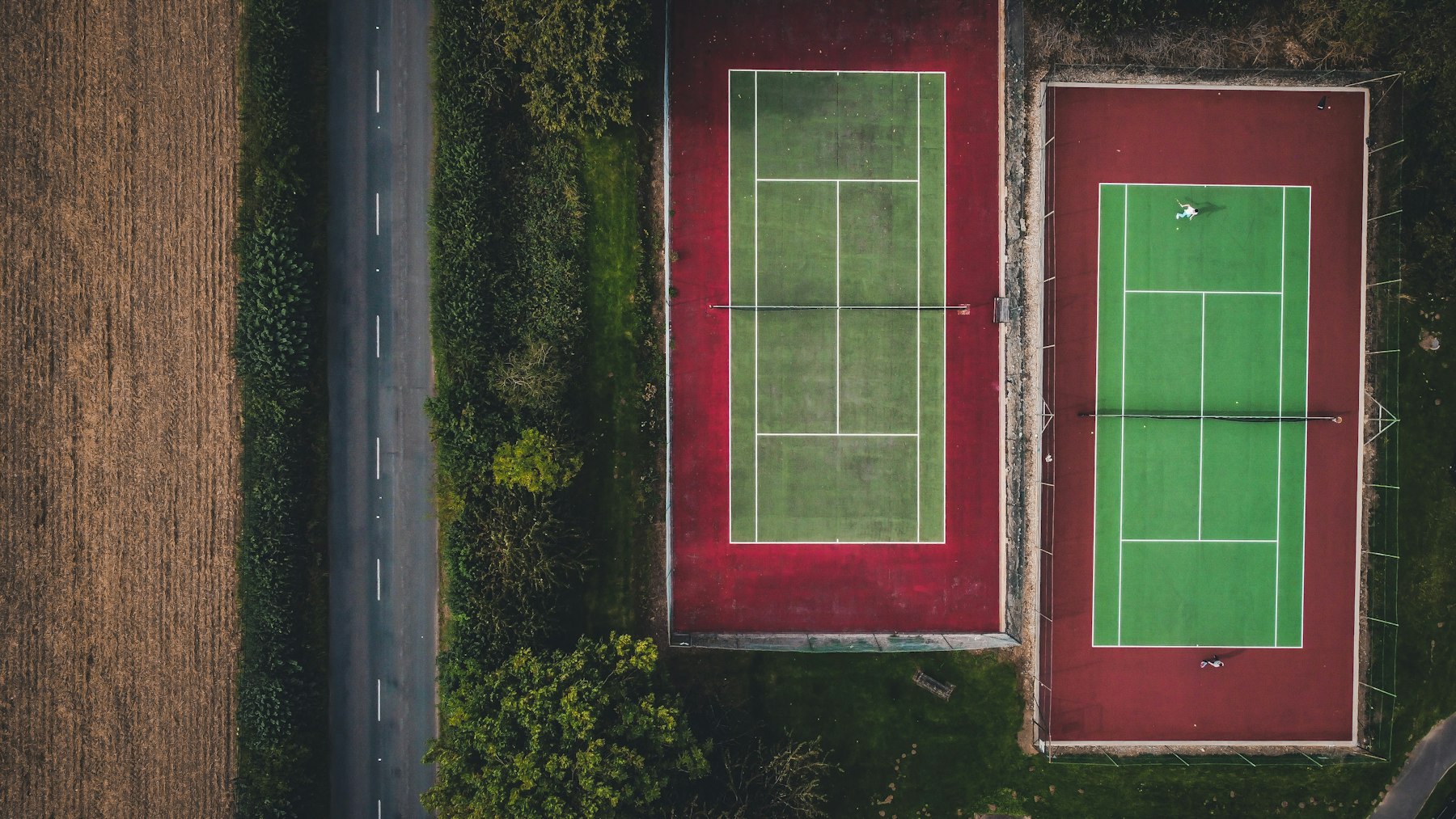
Keeping a Backyard Court Cool in New Jersey Summers
An acrylic court surface runs hotter than the air around it on a sunny day. Color and coating choice do more to change that than anything else you can pick.
Get a Surfacing Quote →A court surface in full New Jersey summer sun runs meaningfully hotter than the surrounding air, and dark colors absorb more of that heat than light ones. Switching to a lighter acrylic color, or a color formulated with infrared-reflective pigment, is the single most effective change you can make — more effective than choosing cushioned over standard acrylic. The catch is glare: go too light and the ball gets harder to see.
What Actually Changes Surface Temperature
Color Value
Light colors reflect more solar radiation; dark colors absorb it and hold it. This is the biggest single lever you have, and it costs nothing extra at resurfacing time.
Infrared-Reflective Pigment
Some manufacturers formulate "cool" versions of standard colors, including darker tones, using pigments that reflect infrared wavelengths instead of absorbing them as heat.
Cushioned vs. Standard Acrylic
The rubber underlayment in a cushioned system changes underfoot feel and joint impact more than it changes surface temperature. Don't choose it expecting a big heat difference — choose color for that.
Orientation & Shade
Existing trees or structures that shade the court in the morning or evening play window matter more than any coating. This is a site-planning decision, not a resurfacing one.
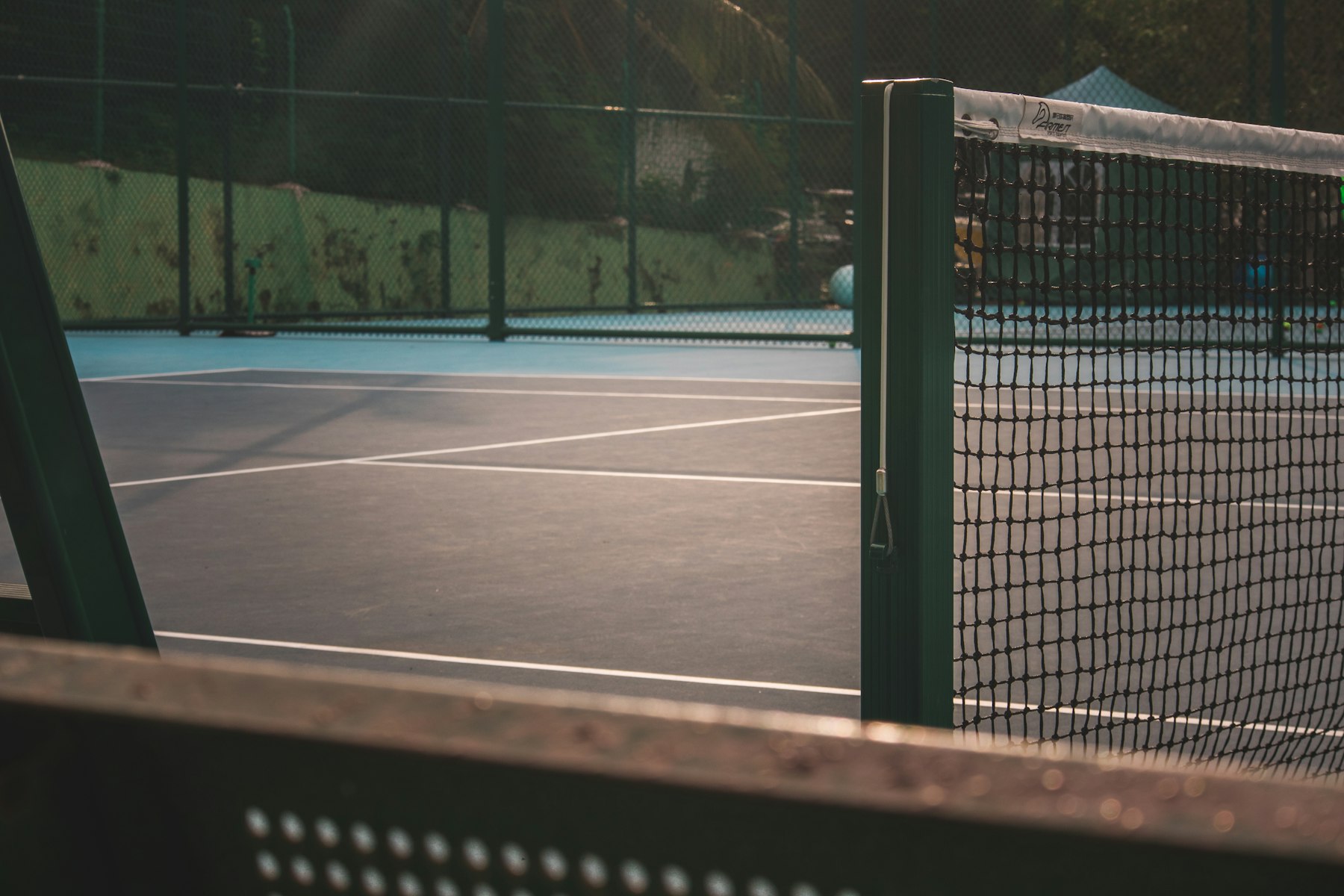
Cooler Isn't Always Better to Play On
A near-white court runs noticeably cooler underfoot, but bright glare off a very light surface makes tracking a fast-moving pickleball or tennis ball harder in direct sun — which is why most cool-surface systems pair a lighter (not white) background with darker, contrasting lines rather than going as light as possible.
- ✓ Light backgrounds with contrasting, ball-visible lines
- ✓ Infrared-reflective pigment on darker accent colors
- ✓ Two-tone layouts balance heat and glare better than one flat color
Getting It Right for a NJ Backyard
New Build
Pick color at the surfacing stage — it costs nothing extra to choose a lighter or cool-reflective color over a standard dark one on a new court.
Due for Resurfacing
If your court needs a recoat in the next season or two, that's the natural point to switch color schemes rather than repeating a dark original.
Not Due Yet
Shade, timing play for cooler hours, and a seating-area shade sail get you most of the benefit without an early, unnecessary recoat.
Resurfacing With Heat in Mind?
Tell us your current color and how the court sits relative to the sun — we'll walk you through color and coating options that actually change the summer feel underfoot.
Request a Quote →Why This Matters More in New Jersey Than It Sounds
New Jersey summers combine full-sun exposure with high humidity, which slows how quickly a hot surface sheds heat once the sun is directly overhead. A court that sits open to southern or western exposure — common on suburban lots where the house or fence line doesn't offer natural afternoon shade — holds that heat through the hottest part of the day, right when most weekend and after-work play happens. It's a different problem from winter durability, where freeze-thaw cracking is the concern rather than surface temperature; see our guide to the best court surfaces for New Jersey winters if you're weighing both ends of the season.
Color is decided as part of the broader coating choice, not separately from it — our court color coating options guide covers single, two-tone, and three-tone layouts and what each costs, which is the same conversation where heat-conscious color choices get made. And because resurfacing timing is really what triggers a real opportunity to change color without extra cost, our court maintenance schedule and cost guide lays out how to tell when your court is actually due.
None of this replaces good orientation planning at the design stage. A court laid out to catch afternoon shade from an existing tree line or the house itself needs less compensating from color and coatings than one built with no natural shade at all — worth thinking through before pouring the base, not after.
Related Guides
Court Color Coating Options in NJ
Single, two-tone, and three-tone acrylic layouts and what each adds to cost.
Best Court Surfaces for New Jersey Winters
The other end of the seasonal equation — freeze-thaw durability instead of summer heat.
Court Maintenance Schedule & Cost in NJ
How to tell when your court is actually due for a recoat.
Court Shade Structure & Pergola Cost
Real pricing for a shaded seating area versus covering the whole court.
Court Surface Heat FAQs
Why does my pickleball or tennis court get so hot in the summer?+
An acrylic surface sitting in direct sun absorbs solar radiation and re-radiates it as heat, so the court surface itself typically runs well above the air temperature on a sunny July or August day in New Jersey — often uncomfortable to stand on barefoot even when the air feels reasonable in the shade. Dark colors and hard, dense surfaces absorb more of that energy than light ones, so a navy or forest-green court runs noticeably hotter underfoot than a lighter blue or tan court in identical sun.
Does surface color actually make a measurable difference?+
Yes. Light colors reflect a larger share of incoming solar radiation while dark colors absorb it, and the difference shows up as real surface temperature, not just a feel. Infrared-reflective "cool" acrylic pigments, which several manufacturers now offer, are formulated specifically to keep a color you'd normally consider dark from absorbing as much heat. The tradeoff is glare: very light court colors are easier on bare feet but can make the ball harder to track in bright sun, which is why most cool-surface systems pair a lighter background with a contrasting, ball-visible line color rather than going all-white.
Does a cushioned acrylic system run cooler than standard acrylic?+
A cushioned system has an added rubber layer under the color coats, which changes how the surface handles heat and how it feels underfoot compared to standard acrylic poured directly over concrete or asphalt. It is chosen primarily for joint comfort, not as a heat-reduction product on its own — color choice still does more to change surface temperature than switching from standard to cushioned acrylic.
Can I retrofit an existing dark court to run cooler without a full rebuild?+
Yes — resurfacing with a lighter color coat is a standard part of a normal recoat cycle and doesn't require touching the base. If your court is due for resurfacing anyway (most NJ courts need it every 4–8 years), that's the natural point to switch to a lighter or infrared-reflective color rather than repeating the original dark scheme. See our pickleball court resurfacing and tennis court resurfacing guides for the full recoat process and pricing.
Besides color, what else keeps a NJ backyard court usable in summer heat?+
Orienting the court so play happens in morning or early-evening shade from existing trees or structures helps more than any surface change, and simply scheduling play before 10am or after 6pm avoids the hottest window entirely. A shade sail or pergola over a seating area (not the full court, which restricts airflow and often isn't worth the cost) gives players and spectators a place to cool off between points. See our court shade structure and pergola cost guide for real NJ pricing on that option.
Plan a Cooler Court From the Start
New build or resurfacing, we'll walk through color and orientation options that keep your court usable through a New Jersey summer.
Request a Quote →