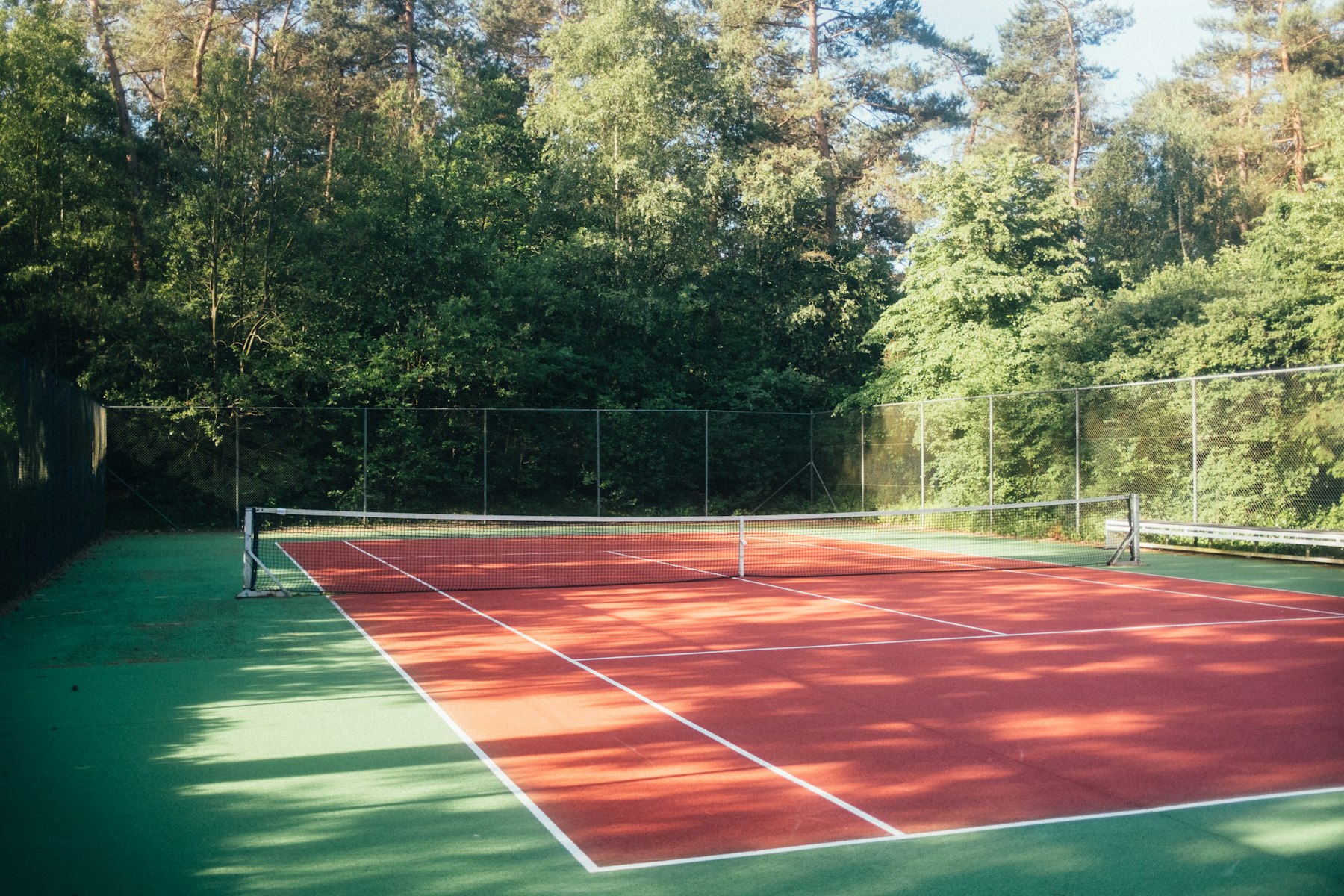
Pickleball & Tennis Court Installation in Rumson, NJ
Rumson's estate lots along the Navesink and Shrewsbury Rivers give a court project room to work with — but river-adjacent ground, salt air, and the borough's own large-lot zoning all shape the build differently than an inland Monmouth County property.
Get a Rumson Site Visit →A backyard court in Rumson typically runs $28,000–$55,000 for pickleball or $65,000–$130,000 for a full tennis court — at or above the Monmouth County average, mainly because of coastal-grade fencing and lighting hardware and drainage sized for a higher water table on river-adjacent lots. Space is rarely the limiting factor on Rumson's larger residential lots; flood-zone grading review and setback lines on the borough's estate-sized parcels are what typically drive the design.
Why a River-Adjacent Site Changes the Build
Rumson sits on a peninsula between the Navesink and Shrewsbury Rivers, and that geography does more to the construction plan than the town's zip code prestige might suggest. Low-lying stretches near either river flood during nor'easters and were hit hard during Superstorm Sandy in 2012 — not every property, and not every year, but enough of the borough's riverside ground that we treat flood exposure as a real design input, not a formality. That doesn't rule out a court. It changes how the base is graded, where water is routed once it hits the slab, and occasionally whether the borough engineer wants to see the drainage plan before signing off, even though the court itself isn't a habitable structure subject to flood-elevation rules.
Salt air is the other constant, and it's easy to underprice if a contractor is quoting from a standard inland spec sheet. Chain-link fencing, gate hardware, and light fixtures corrode noticeably faster within a mile or two of open water than they do forty minutes inland. We've replaced fencing on Rumson properties that was only six or seven years old because it was specced the same way it would be in a landlocked Monmouth County town. Upgrading to aluminum or vinyl-coated fencing and marine-rated hardware costs more on day one and is one of the few line items on a coastal build where paying for the better spec up front is unambiguously cheaper over ten years than replacing the cheap version twice.

Drainage and Materials, Not Just a Bigger Number
A Rumson build isn't more expensive because the town is Rumson. It's more expensive because a site next to two tidal rivers needs a base and drainage plan engineered for a higher water table, and hardware that won't rust out inside a decade.
- ✓ Grading and drainage sized for tidal-adjacent water tables
- ✓ Coastal-grade fencing, gates, and lighting hardware
- ✓ Flood-zone review on parcels near the Navesink or Shrewsbury
- ✓ R-1 large-lot zoning that generally accommodates a full-size footprint
A Realistic Rumson Project Timeline
- 1
Site visit & flood-zone check
We confirm where the property sits relative to mapped flood hazard areas and note the existing water table before pricing anything — this determines the drainage scope more than lot size does.
- 2
Zoning & (if applicable) grading review
Standard R-1 setback compliance for most lots; parcels within a flood hazard area may need the borough engineer to review the grading and drainage plan even though the court itself is exempt from elevation requirements.
- 3
Base, compaction & drainage
This step runs longer on river-adjacent lots — extra compaction passes and a perimeter drain sized for a higher water table take more time than a standard inland base.
- 4
Concrete cure window
Same structural cure time as any NJ court; weather delays are the main variable this close to the coast during shoulder-season storms.
- 5
Coastal-grade surfacing, fencing & lighting
Acrylic surfacing, aluminum or vinyl-coated fencing, and marine-rated fixtures go in last, specified for salt-air exposure rather than standard inland hardware.
See What Your Rumson Property Can Fit
We'll walk the site, check flood-zone exposure, and spec fencing and drainage for the coastal conditions your lot actually has — not a generic inland estimate.
Request a Quote →Planning a Court on a Rumson Property
Rumson's R-1 zone has long set one of the larger minimum lot standards in Monmouth County — historically around an acre and a half with 200 feet of required frontage — which is part of why the borough reads as spacious even close to its downtown. For a court project, that generally means the physical footprint is a non-issue: 30 × 60 ft for pickleball or 120 × 60 ft for tennis fits comfortably on most Rumson lots with plenty of yard left over. What actually shapes the design is where on that lot the court can go once setback lines, existing landscaping, a pool, and — on the borough's river-adjacent stretches — flood-hazard grading review are all accounted for.
That river-adjacent piece deserves more attention than it usually gets in a first conversation with a homeowner. Rumson sits between the Navesink and Shrewsbury, and low ground near either river has flooded during major storms, Sandy in 2012 being the clearest example. A court slab itself isn't a habitable structure, so it doesn't trigger the flood-elevation requirements a home addition would. But if a parcel falls inside a mapped flood hazard area, the grading and drainage plan for a large new impervious surface can still draw scrutiny from the borough engineer, because how that water moves across the lot afterward is a legitimate question independent of the structure-exemption issue. Our court drainage systems guide covers how a NJ court is engineered to shed water generally; a site visit is what tells us whether a specific Rumson lot needs anything beyond that standard approach. For the broader coastal-zone regulatory picture — including when NJDEP\'s Coastal Area Facility Review Act layer applies on top of municipal review — see our coastal court construction guide.
Salt air is the other Rumson-specific factor worth pricing correctly from the start. It doesn't affect the slab or the surfacing coating much, but it accelerates corrosion on anything metal — chain-link mesh, gate hinges, net posts, light fixture housings. We spec aluminum or vinyl-coated fencing and marine-rated hardware on Rumson builds by default, not as an upsell, because the alternative is a fencing replacement well before the rest of the court needs any attention. Our fencing and lighting installation guide breaks down the hardware options in more detail, including where the coastal-grade upgrade is worth it and where it isn't.
Large lots also raise a question that gets overlooked until after the court is built: sound. Pickleball's pop is louder and more repetitive than a tennis rally, and it carries surprisingly far across open, flat ground with water nearby — Rumson's river-adjacent yards don't have the tree lines or elevation changes that absorb sound the way a wooded Morris County lot might. If the court will sit within a few hundred feet of a neighbor's outdoor living space, it's worth reading our pickleball court noise reduction guide before finalizing placement — sound-dampening paddle and ball choices, screening, and court orientation are all easier to plan for up front than to retrofit after a neighbor complains.
Once the site-specific questions are settled, the underlying construction decisions track the rest of Monmouth County. See our Monmouth County cost guide for how Rumson compares to Red Bank, Fair Haven, and the county's inland towns, and our permits and zoning guide for how the statewide approval process typically runs before a Rumson-specific submission gets underway. If your property sits on higher, drier ground away from either river, most of the coastal-specific planning above simply doesn't apply — you're looking at a standard Monmouth County build with the same large-lot advantages Rumson is known for.
Wind is a related but separate issue from the flooding and corrosion questions, and it changes one specific decision: windscreen fabric. A solid, fully-covered windscreen looks cleaner and blocks more wind from neighboring yards, but on an exposed river-adjacent lot it also acts like a sail, putting far more lateral load on fence posts and footings than the same fence carries on a sheltered inland site. On open Rumson properties we often recommend a perforated or mesh windscreen instead — it cuts the same amount of visual distraction during play while letting enough wind through that the fence line isn't fighting gusts off the water every time a nor'easter comes through. Our net post and windscreen installation guide covers the fabric and post-spacing trade-offs in more detail.
There's also a scenario where we'll say the honest thing: hold off, or build differently than you first pictured. A parcel with repeated documented flooding right up to the back of the house, on the lowest ground closest to either riverbank, is not where we'd recommend a poured concrete or acrylic-surfaced court — that kind of surface doesn't tolerate periodic inundation well, and a slab damaged by storm surge is an expensive fix, not a maintenance item. On genuinely flood-prone ground, a modular interlocking tile surface is worth considering instead; it drains through the panels rather than holding water, and individual tiles can be replaced if a section is damaged, which a monolithic slab can't match. It's not the premium choice for play quality, but on the wrong lot it's the more honest one. If your property falls into that category, say so up front — it changes the surfacing recommendation more than anything else on this page.
Related Guides
Coastal Court Construction in New Jersey
CAFRA review, water table, and drainage for shore-corridor builds.
Backyard Court Cost in Monmouth County, NJ
How Rumson pricing compares to Red Bank and the rest of the county.
Court Drainage Systems in New Jersey
How NJ courts are engineered to shed water on any site.
Pickleball & Tennis Court Fencing and Lighting Installation
Hardware options, including coastal-grade upgrades.
Rumson Court Installation FAQs
How much does a backyard court cost in Rumson?+
A dedicated pickleball court typically runs $28,000–$55,000 installed, and a full tennis court $65,000–$130,000 — at or slightly above the Monmouth County average. The premium over an inland shore town isn't the base construction; it's fencing, gates, and lighting hardware upgraded to resist salt-air corrosion, plus a drainage plan sized for a higher water table on river-adjacent lots.
Does a court near the Navesink or Shrewsbury River need a flood elevation certificate?+
Usually no — a court slab isn't a habitable structure, so it doesn't trigger the same flood-elevation requirements a home addition would. But if the parcel falls within a mapped flood hazard area, the borough engineer or floodplain administrator may still want to see the grading and drainage plan before signing off, since a slab that changes how water moves across a flood-prone lot is a legitimate review question even when the structure itself is exempt.
What materials actually hold up to salt air in Rumson?+
Standard galvanized chain-link fencing and steel hardware will visibly rust within a few years this close to the water. Aluminum or vinyl-coated fencing, stainless or coated fasteners, and marine-rated light fixtures cost more up front but avoid a fencing replacement inside the first decade — ask any bid specifically what grade of hardware it specs, because "fencing included" can mean very different things. The same logic extends to windscreen fabric and net post caps, which are easy line items for a bid to gloss over but the first ones to show wear on an exposed lot.
How much land do you actually need for a court in Rumson?+
The footprint itself is modest — roughly 30 × 60 ft for pickleball or 120 × 60 ft for tennis including run-off room. Rumson's R-1 zone has long required substantially larger lots than that, historically around an acre and a half with 200 feet of frontage, so on most Rumson properties the physical footprint was never the constraint. Setback lines and, on river-adjacent parcels, flood-zone grading review are what actually shape where the court can sit.
How long does a Rumson court project take from quote to first game?+
Plan on 6–10 weeks once permits clear: site and flood-zone review, base and drainage work sized for the water table, a concrete cure window, then surfacing, coastal-grade fencing, and lighting. Properties near the rivers or with a documented high water table run toward the longer end, since the drainage design gets more scrutiny and sometimes more excavation than an inland Monmouth County lot.
Is a poured court ever the wrong choice in Rumson?+
On the lowest-lying parcels with a documented history of storm flooding, yes. Concrete and acrylic surfacing don't recover well from periodic inundation, and repairing a slab damaged by storm surge is a significant expense. On that specific kind of lot, a modular interlocking tile surface drains through the panels instead of holding water and lets a damaged section be replaced without redoing the whole court — a trade-off worth discussing before committing to a surface, not after a storm.
Build Your Rumson Court With a Local Crew
Tell us about your property and we'll set up a site visit, check flood-zone exposure, and quote a court built for coastal conditions.
Request a Quote →