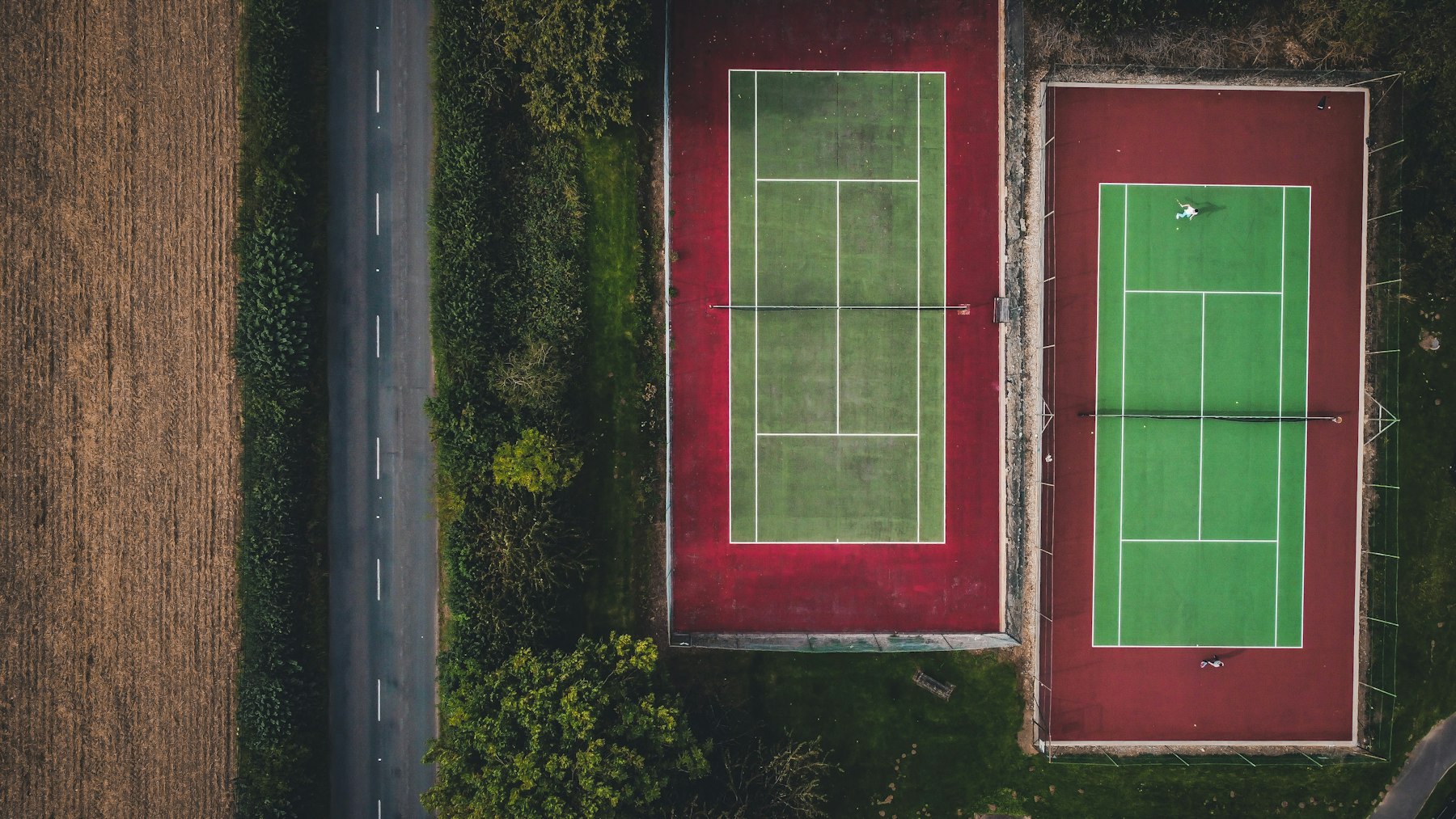
Multipurpose Sport Court Installation in New Jersey
One pad, several sports — how we size, build, stripe, and quote a multipurpose court in NJ. Cost factors only; fixed price after we see your lot.
Get a Multipurpose Court Quote →A multipurpose sport court is quoted per site after we see soil, slope, access, and which sports must share the pad. Size the footprint for the largest sport (often tennis or full basketball), then add contrasting lines for the others. The base and drainage decide longevity in New Jersey freeze-thaw; striping and net systems decide whether two sports can actually coexist. NJ Court Pros builds and resurfaces courts statewide and will not publish a fake statewide price list.
What "Multipurpose" Means on a Hard Court
Homeowners, HOAs, schools, and clubs ask for a multipurpose court when one lot has to support more than one game without building two separate slabs. The honest product is a properly drained hard court with an acrylic (or cushioned acrylic) system and clear, contrasting sport lines — not a gym floor poured in the backyard, and not a grass field with paint.
Typical New Jersey mixes: basketball + pickleball on a compact pad; tennis + pickleball on a tennis-sized pad; tennis + basketball when the lot can hold roughly a 94 × 60 ft planning envelope (or larger with runout and fence setbacks). Volleyball, badminton, and other lined games can share when the net system and clearance are planned up front. If you only need extra lines on a court that already exists and is structurally sound, that is usually a combo striping / combo court conversation — not a full installation.
Surface choice still matters. Our sport court surface types guide covers acrylic systems used across tennis, pickleball, and basketball. Multipurpose builds use the same family of coatings; the difference is layout discipline and equipment that can change between sessions.
Sizing Rules That Drive the Build
Basketball envelope
A full basketball court is commonly 94 × 50 ft inside the lines, with extra perimeter for safety. Half-court layouts shrink the pad when full-court basketball is not required.
Tennis envelope
Playing lines 78 × 36 ft; overall playing area often planned near 60 × 120 ft including runout. USTA planning guidance emphasizes generous baseline and sideline clearance for safe play.
Pickleball inside the pad
Court 20 × 44 ft; minimum playing area often discussed around 30 × 60 ft. Multiple pickleball courts can fit on one tennis pad when conversion — not multipurpose coexistence — is the goal.
Largest sport wins
You do not average footprints. Build for the biggest geometry you need, then nest smaller layouts with contrasting line colors so players can read the court at a glance.
Dimension references above are industry planning figures used by architects and sports builders (including multi-sport court sizing discussions and ASBA / USTA construction manuals). Your survey, setbacks, and fence line decide what actually fits — not a blog diagram alone.
Base First, Lines Last
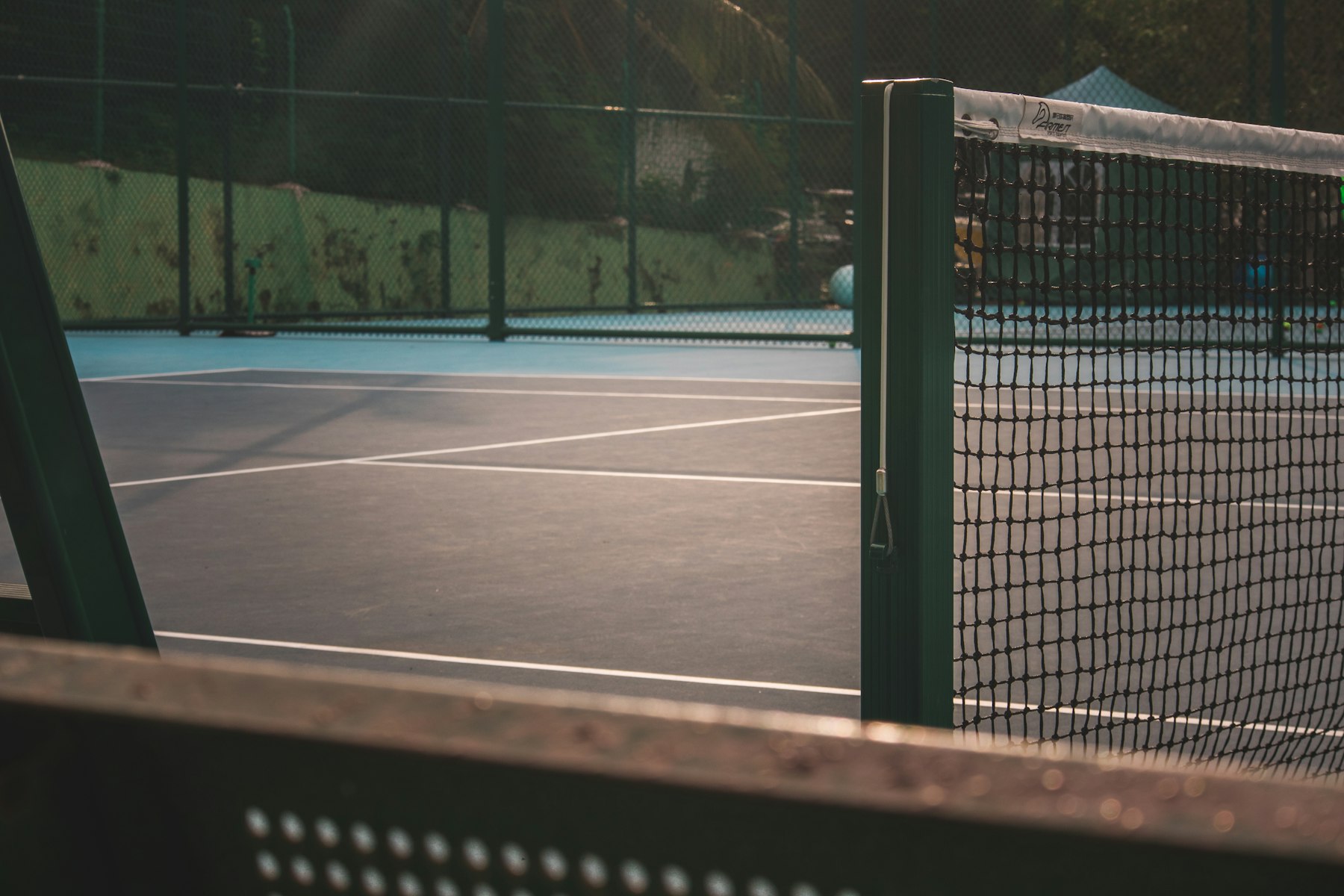
A multipurpose court fails the same way a single-sport court fails: when drainage and slab quality are compromised. Striping is the last coat of clarity, not a substitute for a true plane.
- ✓ Excavation, grading, and drainage to a designed slope
- ✓ Asphalt or post-tension concrete base built for coatings
- ✓ Acrylic or cushioned system, then contrasting multi-sport lines
Installation Phases
1. Site & permits
Survey, soil/slope check, HOA or zoning gates, and a layout that fits the largest sport plus fence setbacks. Municipal rules vary by town — we design to what your lot can legally hold.
2. Base & surface
Sub-base, asphalt or post-tension concrete, cure as required, then acrylic or cushioned acrylic color coats. ASBA athletic-asphalt guidance stresses fine surface mix, compacted thickness, density, and smoothness before coatings.
3. Lines, nets, fence, lights
Contrasting sport lines, net posts or sleeves, basketball hoop placement clear of racquet baselines, perimeter fencing, optional LED lighting. Portable pickleball nets cover the height mismatch with tennis.
Get a Multipurpose Court Installation Quote
Tell us which sports must share the pad and where the lot is — we will set up a free site visit and a fixed quote. No online price list.
Request a Quote →What Drives the Quote (No Price Ranges)
Searchers who type multipurpose sport court installation NJ usually want a number. We will not invent one. These are the levers we price on the site visit:
- Pad size and sports mix — tennis-sized vs basketball-forward vs compact pickleball + half-court.
- Excavation, retaining, and drainage — sloped North Jersey lots and wet soils move cost faster than paint colors.
- Base type — asphalt vs post-tension concrete; see our concrete vs asphalt court base guide.
- Surfacing system — standard acrylic vs cushioned systems (cushioned court surfacing).
- Line complexity — two vs three sport layouts, color contrast, and whether basketball keys/arcs are included.
- Fencing, windscreen, and lighting — often the difference between a daytime pad and an evening facility.
- Access and mobilization — tight side yards, HOA work hours, and shore or Highlands constraints.
If you already have a sound slab and only need new layouts, do not budget a full rebuild from this page — start with combo striping or resurfacing instead. Dedicated single-sport installs (for comparison) are covered in our pickleball court installation and basketball court installation guides.
Who Multipurpose Courts Serve Best
Families with mixed sports
One pad that hosts basketball after school and pickleball on weekends without a second construction project.
HOAs and amenity upgrades
Limited common area that must serve more than one resident group — with architectural and noise/light rules considered early.
Schools and camps
Program flexibility when the schedule rotates sports; contrasting lines and durable acrylic systems matter.
Clubs maximizing court count
When land is scarce, a tennis-sized pad with nested pickleball layouts can raise utilization — design carefully so neither sport feels spoiled.
Design Trade-Offs to Decide Before Breaking Ground
Busy lines vs dedicated play. Some players dislike reading through three colors of paint. Visit a finished multipurpose court before you commit if aesthetics matter as much as flexibility.
Net and hoop hardware. Removable tennis nets, portable pickleball nets, and hoop placement that does not block baselines are part of the installation scope — not afterthoughts.
Noise and neighbors. Hard courts reflect sound. Lighting spill and evening hours belong in the planning conversation with neighbors and, where applicable, the township — see our notes on court noise and work-hour ordinances in related guides when your site is close to property lines.
Future conversion. If pickleball-only is the five-year plan, building a tennis-sized multipurpose pad can be smarter than a tiny dedicated pad you outgrow — or the reverse, if land and budget only support one compact sport. Say the real program on the quote form.
Related Guides
Multi-Sport Combo Court Cost in NJ
When you already have a pad and need contrasting lines — not a full new build.
Concrete vs Asphalt Court Base in NJ
The base decision that drives durability in freeze-thaw winters.
Basketball Court Installation Cost in NJ
Dedicated basketball builds when multipurpose is not the right fit.
Pickleball Court Installation Cost in NJ
Single-sport pickleball construction and what drives that quote.
Multipurpose Court FAQs
What is a multipurpose sport court?+
A multipurpose (or multi-sport) court is a single hard-surface pad built and striped so more than one sport can play on it — commonly basketball plus tennis and/or pickleball, sometimes volleyball or other lined games. The footprint is sized for the largest sport you intend to support, then additional layouts are painted in contrasting colors.
How much does multipurpose sport court installation cost in New Jersey?+
We do not publish a catalog price. Installed cost moves with excavation and drainage, asphalt vs post-tension concrete base, acrylic or cushioned surfacing, how many sport layouts are striped, fencing, lighting, access, and municipal permitting. NJ Court Pros provides a fixed quote after a site visit — we will not invent a statewide dollar band.
What size pad do I need for basketball and tennis together?+
Industry planning references commonly cite about 94 ft × 60 ft as a practical minimum when you want a full basketball court with room for tennis lines and a removable tennis net. A regulation tennis playing area is 78 × 36 ft inside the lines (about 60 × 120 ft including runout). Pickleball lines (20 × 44 ft court; often planned with roughly 30 × 60 ft minimum playing area) fit inside a tennis-sized pad with room to spare. Exact fit depends on your lot setbacks and fence line — we verify on the survey.
Is a multipurpose court the same as adding combo lines to a tennis court?+
Related, but not identical. Adding contrasting pickleball or basketball lines to an existing sound tennis pad is a striping (or resurface-plus-stripe) job — see our multi-sport combo court guide. A new multipurpose installation means building the base and surface from the ground up for the sports you named, with drainage, slope, and fence planned for multi-use from day one.
Concrete or asphalt for a multipurpose court in New Jersey?+
Both can receive acrylic multipurpose systems when built correctly. Post-tension concrete is the premium, crack-resistant choice for many NJ residential and club builds. Asphalt can be appropriate when specified and compacted to athletic-surface standards — ASBA asphalt guidance for athletic uses emphasizes fine surface mixes, adequate compacted thickness, density, and smoothness before coatings. Freeze-thaw and drainage drive the lifetime conversation more than a brochure preference.
Can one net work for tennis and pickleball on a multipurpose court?+
A fixed tennis net height is not correct for pickleball. Most multipurpose pads keep tennis posts (or sleeves) and use a portable or strap-adjustable pickleball net for those sessions. Basketball needs a hoop clear of both racquet sports’ baselines — often a portable or carefully placed in-ground unit rather than a full gym layout.
Do I need a permit to install a multipurpose court in New Jersey?+
Construction and zoning are municipal. Many towns treat a new outdoor court as a structure or impervious coverage item that needs a building or zoning review; HOA architectural approval can be a separate gate. We help you ask the right questions of your town — we will not invent a statewide permit fee or a one-page rule that fits every county.
How long does multipurpose court construction take?+
Active construction commonly runs several weeks once permits clear, with post-tension concrete adding cure time before coatings. Weather, access, and whether fencing/lighting are in the same contract all move the calendar. The quote visit is when we sequence the phases for your site.
Sources
Ready to Install a Multipurpose Court in New Jersey?
Share your town, lot constraints, and which sports must share the pad. We will confirm fit, sequence the build, and send a fixed installation quote after the site visit.
Request a Quote →