Converting A Clay Tennis Court To A Hard Court
Tired of watering, brushing and spring top-dressing? Here is how a Har-Tru or fast-dry court becomes an asphalt or concrete hard court, and the slope, fence and drainage decisions that decide the price.
Get a Conversion Assessment →By NJ Court Pros · Updated November 12, 2026
A clay court can be converted to a hard court, but it is closer to a rebuild than a resurface. Clay courts are graded almost flat (about 1 inch in 24 to 30 feet); a hard court needs about 1 inch in 10 feet to shed water. So the fast-dry surface is either blended into the base or removed, the base is regraded to hard-court slope, and asphalt or concrete goes on top, followed by acrylic color coats. The American Sports Builders Association guidelines describe three ways to do it, and the choice mostly comes down to what lies under the clay and whether the fence stays. Irrigation, net post footings and stormwater rules all come into it.
Disclosure: NJ Court Pros builds, converts and resurfaces courts and earns money when you hire us. Quote-only; no prices on this page.
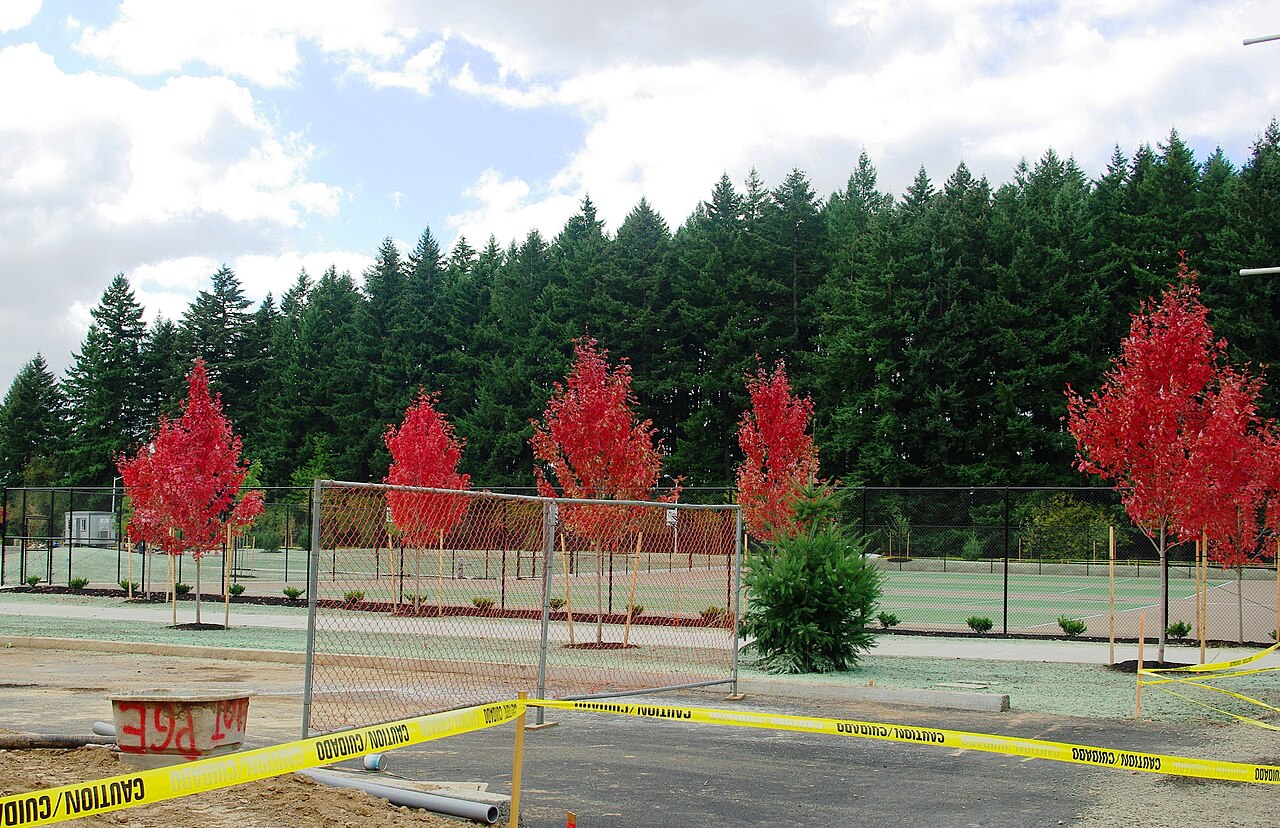
Photo: tennis courts under construction at 53rd Avenue Park, Hillsboro, Oregon (M.O. Stevens, CC BY 3.0, Wikimedia Commons). Shows a court at the base stage, not a New Jersey project.
Why Owners Convert
Clay plays beautifully and is easy on the legs. It also asks for daily work: watering, brushing, rolling and line sweeping in season, and a full rebuild of the surface every spring after a New Jersey winter. Our clay court spring reconditioning guide walks through what that involves. When a private owner, swim club or HOA no longer has someone to do that work, the court slides, and a neglected clay court plays worse than a modest hard court.
The other common reason is use. Most pickleball is played on hard courts, and a hard surface can carry blended tennis and pickleball lines. A hard court also needs no water source, which matters where irrigation lines or well capacity are a problem. Owners usually give up some comfort underfoot; a cushioned acrylic system can win some of that back.
The Slope Problem
Everything about a conversion follows from one number. Clay courts drain partly through the surface and are built nearly flat. Armor Courts lists the range for a clay or fast-dry court as 1 inch in 30 feet (0.28%) to 1 inch in 24 feet (0.35%). A hard court sheds water across the surface, so the recommended slope is 1 inch in 10 feet (0.83%), with 1% as the maximum. Steeper than that and players notice it.
Either way the court should slope as one true plane: side to side, end to end or corner to corner, never crowned like a road and never draining toward or away from the net. On a standard 60-by-120-foot court, going from clay slope to hard-court slope moves the high side up by inches. That extra height is where the method, the fence and the edging questions come from.
Pave over a clay-court grade without regrading and the new court will hold water in low spots, which shows up as birdbaths, slick patches and coating failure after a few New Jersey winters.
Three Ways To Do It
The fast-dry-to-hard-court conversion section of the ASBA tennis court construction guidelines (from the 2004 edition published as the USTC&TBA guidelines) lays out three alternatives. It also says none should be chosen until a thorough site assessment, including soil analysis, is done.
| Method | What happens | Advantage | Trade-off |
|---|---|---|---|
| A. Blend into the existing base | Scarify the fast-dry surface, mix it into the existing stone base, add new stone to reach hard-court slope, then pave. | Less excavation and hauling, because some of the old surface stays on site as base. | Only suits a conventional aggregate stone base. Compaction limits how much fast-dry can be blended in, so some is hauled anyway. Finished grade rises, so perimeter edging is needed. |
| B. Strip to the stone base | Excavate and remove the fast-dry surface (and a modified base course if there is one), add new stone base to hard-court slope, then pave. | Less excavation and grading cost than a full strip-out. | Finished grade still rises above the old one, so perimeter edging is needed and the court looks built up inside the fence. |
| C. Back to subgrade | Remove all court materials, take the fence down, regrade the subgrade to hard-court slope, reuse and add stone base, pave, reinstall the fence. | New surface and fence sit at the original grade, so no extra edging and no shortened fence. | Highest cost: full removal, subgrade excavation and fence work. |
Once the base is ready, the hard court itself is built to the guideline for the chosen system: hot-mix asphalt, or reinforced or post-tensioned concrete. That choice matters more in New Jersey than in milder states because of freeze-thaw cracking. Our concrete vs. asphalt court base guide covers the trade-offs.
What The Clay Is Hiding
The surface you see is the easy part. The conversion bid depends on what lies under it: the type of stone base, whether irrigation runs through it, and how the net posts and center strap are anchored.
- ✓ Conventional aggregate base vs. a modified base course
- ✓ Above-surface sprinklers vs. subsurface irrigation
- ✓ Net post foundations and center strap anchors at the new grade
- ✓ Where water goes now that it can’t soak through the surface
Fence, Gates, Posts And Irrigation
Fence. With methods A and B, the new finished grade sits higher than the old one. If the fence stays, the guideline warns it will end up less than 10 feet above the new surface in most places, and an edging has to be installed just inside the fence line to contain the new grade. It also flags players' foot safety at that edge. Method C takes the fence down and puts it back at the original grade.
Gates and net posts. Gates may need to be reset to clear the new surface. Net posts may need to be raised or reset to keep the correct net height, and the existing net post foundations and center strap anchors may have to come out entirely, depending on the new grade.
Irrigation. The guideline says to remove the irrigation system if it will affect excavation and grading; for a conventional above-surface system, shutting off the water and capping the lines may be acceptable. Subsurface systems need to be located and dealt with before any excavation.
Drainage. A hard court sends water off the surface in one direction. That water needs somewhere to go: a swale, a trench drain along the low side, or a connection to existing drainage. Plan it before the paving date, not after the first storm.
Thinking About Converting Your Clay Court?
We'll look at the base, the slope, the fence and where the water goes, then send an itemized quote that names the conversion method, the hard-court system and the finished slope.
Request a Quote →Permits And Stormwater In New Jersey
A clay court that already exists is usually not a zoning question by itself. Paving it can be. Many New Jersey towns regulate lot coverage and impervious surface, and replacing a surface that drains partly through itself with one that sheds every drop can raise stormwater questions. Start with the zoning officer and, if needed, an engineer. Our court permits and zoning guide covers what most towns ask for.
At the state level, N.J.A.C. 7:8 treats a project as major development if, among other triggers, it disturbs one acre or more or creates a quarter acre or more of regulated impervious surface. A single backyard court is well under a quarter acre; a battery of club courts converted at once may not be. Whether a converted clay area counts as new impervious surface is a judgment for your engineer and the reviewing agency, so ask before you sign a contract.
Clubs, schools and HOAs should also check whether board or member approval is needed, and whether a public entity is bound by bidding rules for the work.
Going The Other Way: Hard To Clay
Some owners want the opposite. Conversion contractors such as Sport Surfaces describe mapping the existing slope, setting a curb inside the fence to hold the new material, laser-grading crushed stone or screenings over the old pavement down to clay-court slope, then installing the clay surface and an irrigation system. Because the old pavement stays as a base, the work is less invasive than going clay to hard, but the court gains height and needs a water supply.
There are also systems that give a clay-like surface on an existing hard court without a full conversion. Our clay court systems guide compares sprinkler Har-Tru, subsurface systems and hybrid options.
What To Put In The Bid
- The conversion method (blend, strip to base, or strip to subgrade) and why the site suits it.
- The results of the site assessment and any soil testing.
- The finished slope and direction, stated as a number.
- Base depth and stone spec, and the hard-court system: asphalt or concrete, thickness, reinforcement.
- What happens to the fence, gates, net posts, center strap anchor and irrigation.
- Perimeter edging, if the grade rises, and how foot safety at the edge is handled.
- Drainage: where the surface water goes and what is built to take it.
- Cure time before color coats, the acrylic or cushioned system, and line layout (tennis only, or blended pickleball).
- Who obtains permits and any engineering, and the written warranty.
FAQ
Can you turn a clay tennis court into a hard court?
Yes. It is a recognized conversion, and the American Sports Builders Association guidelines include a section on converting fast-dry courts to hard courts. The clay surface comes off or is blended into the base, the base is regraded to hard-court slope, and an asphalt or concrete court is built and color-coated on top. The guidelines say not to choose a method until a site assessment, including a soil analysis, has been done.
Why does the slope have to change?
Clay courts drain partly through the surface and are built nearly flat; Armor Courts lists a clay or fast-dry slope of 1 inch in 30 feet to 1 inch in 24 feet. Hard courts shed water across the surface, so the recommended slope is steeper: 1 inch in 10 feet (0.83%), with 1% as the maximum. Paving over a clay-court grade without regrading leaves water standing on the new court.
Do I need a new fence when converting a clay court?
Not always. If the new court is built up on top of the old base, the fence can stay, but the guidelines warn the fence will end up shorter than 10 feet above the new surface in most places, gates may need adjusting, and edging is needed inside the fence line to hold the new grade. Taking the fence down and rebuilding at the original grade avoids that, at extra cost.
What happens to the clay court irrigation system?
The ASBA guideline says the existing irrigation should be removed if it will interfere with excavation and grading. On a conventional above-surface sprinkler system, shutting off the water source and capping the lines may be acceptable. Subsurface irrigated courts need a closer look, because the piping sits in the base.
Do I need a permit to convert a clay court to a hard court in NJ?
Expect to check with your municipality. Paving a court changes how water leaves the site, and many towns count new impervious surface toward lot coverage and stormwater review. Under N.J.A.C. 7:8, a project that creates a quarter acre or more of regulated impervious surface, or disturbs an acre or more, is major development. Whether a converted clay area counts as new impervious surface is a question for your engineer and the town.
Can a hard court be converted to clay instead?
Yes. Conversion contractors describe building a curb inside the fence, laser-grading a stone or screenings layer over the old pavement to clay-court slope, then installing the clay surface and, usually, irrigation. Overlay systems that give a clay-like feel on an existing hard court also exist. Our clay court systems guide compares the options.
How much does it cost to convert a clay court to a hard court in New Jersey?
We quote after a site visit and do not publish price ranges. The big variables are which conversion method the site allows, how much material leaves the site, whether the fence comes down, asphalt versus post-tensioned concrete, drainage work, and the color coating system. Ask every bidder to name the method and the slope in writing.
Sources
- American Sports Builders Association / USTC&TBA, Tennis Court Construction Guidelines (2004 edition): Section II.T, Conversion of Fast Dry Courts to Hard Courts; Section II.E, Clay Tennis Courts.
- Armor Courts FAQ: tennis court slope by court type
- N.J.A.C. 7:8-1.2, definition of major development
- Sport Surfaces: tennis court conversions
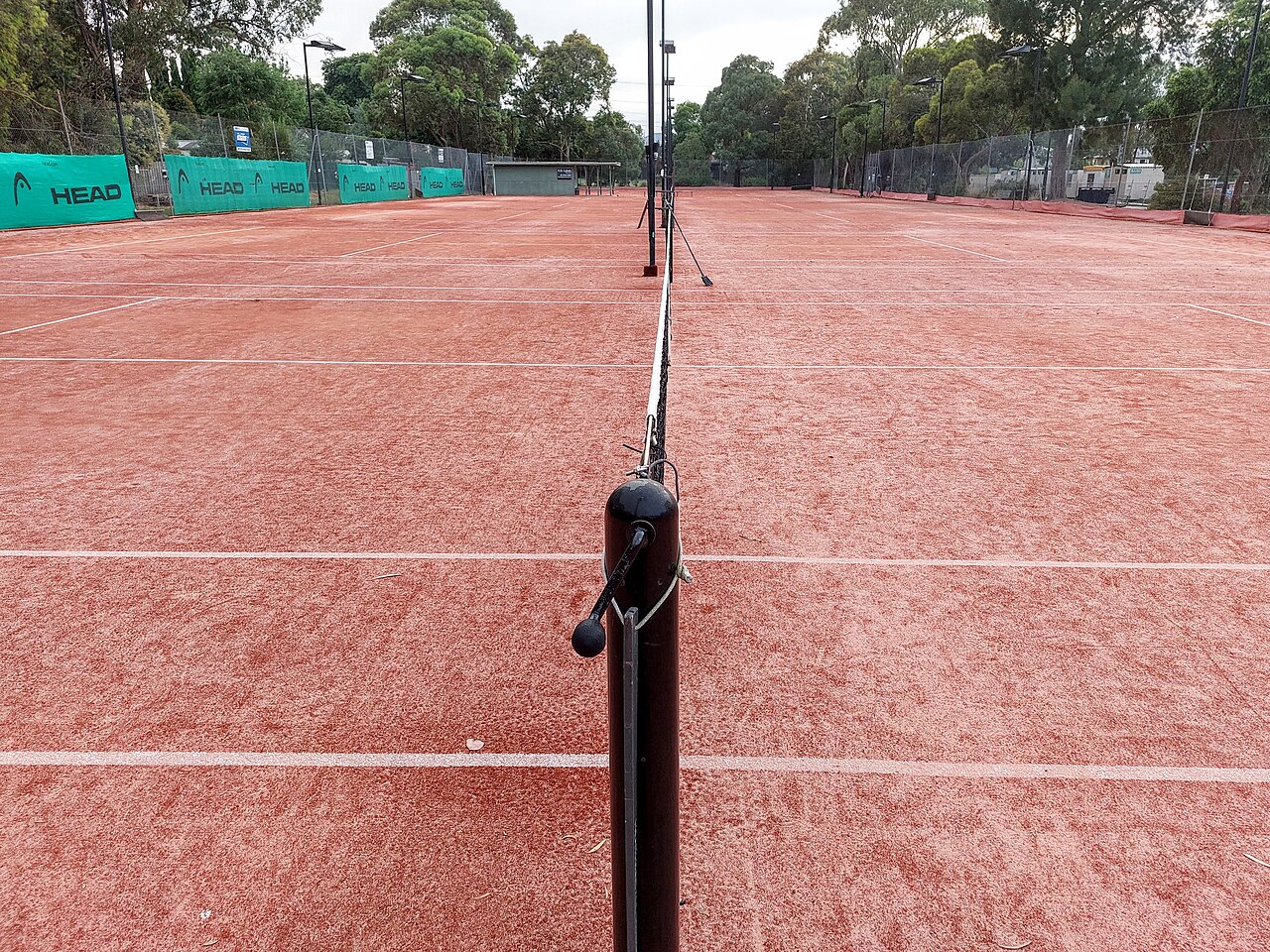
Accessed November 12, 2026. Band photo: empty clay courts in Melbourne (KeepActive Australia, CC BY-SA 4.0, Wikimedia Commons), illustrative. Quote-only; no prices.
Converting A Clay Court In New Jersey?
Tell us the court's age, what's under the clay if you know, and whether the fence should stay. We'll assess the base and drainage and send an itemized conversion quote that names the method, the system and the finished slope.
Request a Quote →