Converting a Basketball Court to Pickleball in New Jersey
An underused basketball slab is one of the cheapest ways to get pickleball courts on a property. Here's how many fit, what the hoop means for the layout, and what it actually costs in NJ.
Get a Conversion Quote →A full-size basketball court (94 ft × 50 ft for NBA/college, 84 ft × 50 ft for high school) fits two to three regulation pickleball courts. In New Jersey, converting a sound existing slab into a two-to-three-court layout — crack repair, resurfacing, striping, and net posts — costs far less than building new courts from scratch, because you reuse the base. Blended lines with portable nets on a court still used for basketball are the lowest-cost option. NJ Court Pros converts and resurfaces courts across New Jersey with a fixed quote after a site visit.
Why an Old Basketball Court Is a Good Conversion Candidate
We get this call a lot from HOAs, towns, and homeowners with a full-size court nobody uses much anymore: a half-court of teenagers a few times a summer, otherwise empty. The court is still there — asphalt, graded, drained, probably fenced or at least backstopped — and pickleball demand in New Jersey has outpaced the number of dedicated courts almost everywhere. Converting the basketball slab is usually the fastest and cheapest way to add courts, because the base is already built and paid for.
That matters more than it sounds like. On a from-scratch pickleball build, the excavation, grading, and post-tension or asphalt base is the single largest line item — it's the biggest share of a new-build quote. A basketball court that's still structurally sound and draining correctly has already done that work. What's left is resurfacing, layout, and net posts, which is why a conversion lands at a fraction of what a new build costs.
How Many Pickleball Courts Actually Fit
The math starts with the basketball court itself. A full NBA/college court is 94 ft × 50 ft; a high school court is 84 ft × 50 ft. A pickleball court needs 20 ft × 44 ft of play area, with a recommended total footprint of about 30 ft × 60 ft once you add out-of-bounds run-off. Lay pickleball courts side by side across the basketball pad and you can generally get two courts in comfortably, or three if you tighten the buffer between courts to around 10 ft — workable for casual and club play, tight if you want tournament-grade spacing.
The 50-ft width of a basketball court is the real constraint. It's enough for one full 30-ft-wide pickleball footprint with room to spare, or two tighter 20-ft play areas without much buffer. Most conversions end up running the pickleball courts along the 84–94-ft length instead, stacking two or three courts end to end rather than side by side, which is where the buffer trade-off actually happens.
Two Courts
Comfortable spacing, room for a bench and shade, minimal cross-court ball traffic. The layout we recommend for HOA and residential conversions.
Three Courts
Fits on a full 94-ft NBA/college-length court with roughly 10-ft buffers. Maximizes throughput for a club or municipal court, at the cost of tighter run-off.
Half-Court / Driveway Pad
Usually too small for a full regulation footprint. Works as a single blended-line court with portable nets rather than a dedicated conversion.
The Base Is Already Built
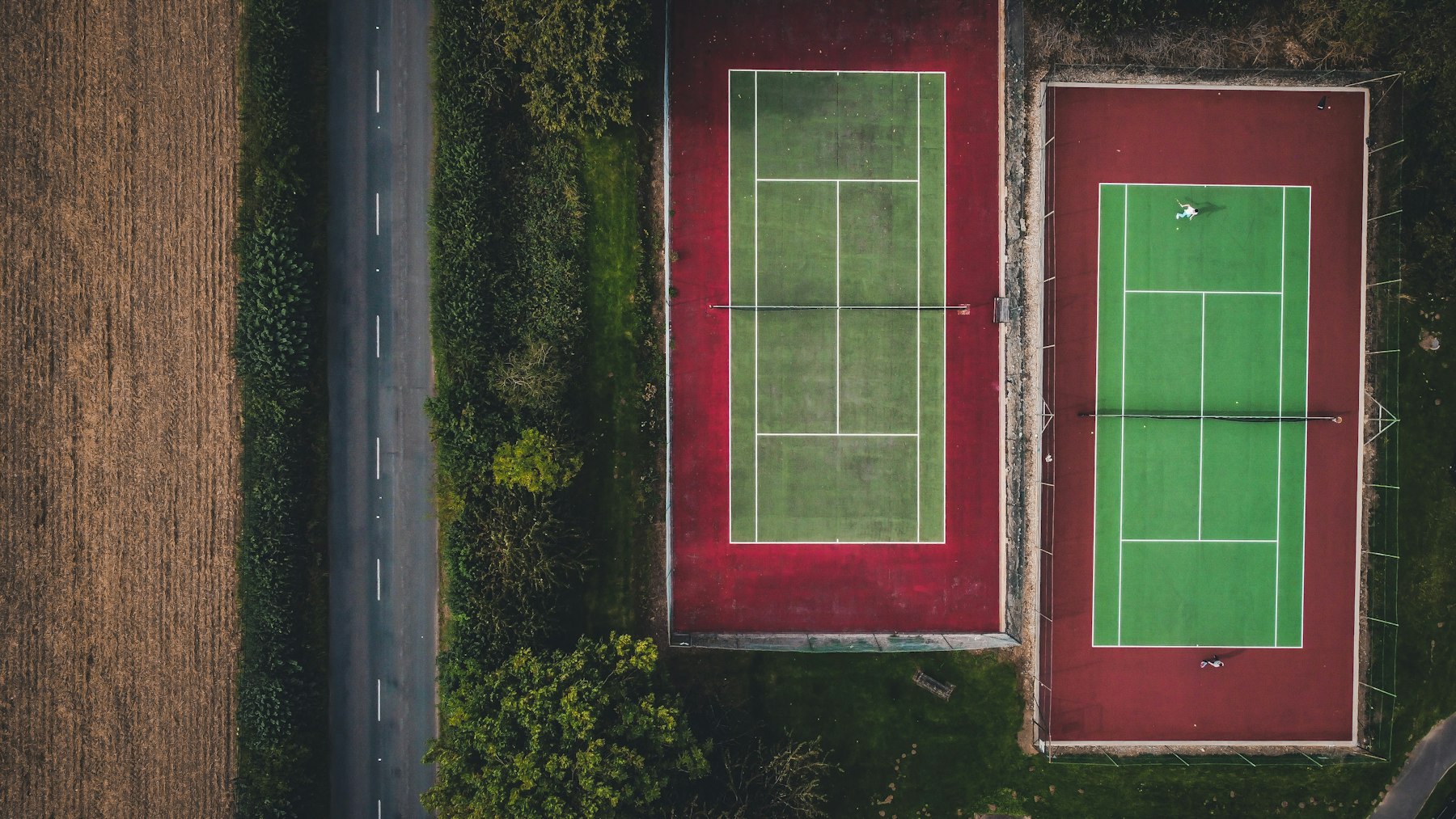
A basketball court is graded, compacted, and drained just like a pickleball court needs to be. If it's still sound, converting skips the most expensive step in a new build and puts your budget into surfacing, layout, and net posts instead.
- ✓ Two to three regulation courts on a full-size slab
- ✓ Reuses the existing base — the priciest part of any build
- ✓ Hoop can often stay if it clears the new layout
What the Conversion Actually Involves
Assess the Slab and the Hoop
We check the asphalt for structural cracking, settling, and standing water, and we check where the hoop footing sits relative to the proposed pickleball layout. A pole that clears the courts can usually stay; one that lands inside a court gets cut down and the sleeve capped.
Check the Crown and Drainage
Basketball courts are graded to shed water, but not always in a direction that lines up with a clean pickleball layout. We confirm the existing slope still drains the new court orientation before committing to a layout — reorienting courts is far cheaper than fighting a birdbath later.
Crack Repair & Patching
Cracks get filled and, where they're wider, backed with crack fabric so they don't telegraph straight through the new surface. Any low spots from years of ball traffic and hoop-post settling get leveled before coating.
Lay Out the Courts
We chalk the actual court lines on the existing slab before any coating goes down, checking sun orientation and confirming spacing against the hoop, fence line, and any adjacent parking or walkway. This is when two courts vs. three stops being a drawing and becomes a real decision.
Resurface, Stripe, Set Net Posts
Multiple acrylic color coats across the full pad, then regulation lines and permanent net posts cored into the slab and set in footings — 36 in at the sidelines, 34 in at center. A dedicated conversion uses one clean color scheme rather than striping over ghosted basketball lines.
Thinking About Converting Your Basketball Court?
Send us the court's location and a couple of photos. We'll check the slab, work out how many pickleball courts actually fit, and send a fixed quote.
Request a Quote →What Does It Cost to Convert in New Jersey?
Blended Lines Only
Lowest cost — stripe pickleball lines in a contrasting color on a sound existing court and play with portable nets. The court still functions as basketball. No resurfacing or base work.
Two-to-Three-Court Conversion
Priced like a resurface plus posts — crack repair, full resurface, dedicated pickleball color scheme, striping, and set net posts across the converted footprint. Cost scales with how many courts you lay out.
Hoop Removal or Relocation
Priced by footing size and access — cutting down and capping an in-ground hoop footing that lands inside the new layout, or relocating the hoop to the edge of the property instead.
Cost depends on slab condition, how many courts you lay out, and whether the hoop needs work. Compare against building a new pickleball court and basketball court resurfacing if you want to keep the court multi-sport instead of converting outright. The only way to get an accurate number is a site visit.
When Conversion Isn't the Right Call
Convert when the base is sound. A basketball slab that still drains, hasn't settled unevenly, and shows only minor surface cracking is a legitimate conversion candidate — you keep the most expensive part of the project for free. The honest test is the same one we use for tennis-to-pickleball conversions: would you resurface this court if it were staying basketball? If yes, it's a good candidate.
Build new — or at least budget for it — when the slab has real structural problems. New Jersey freeze-thaw cycles are hard on any aging asphalt pad: water gets under a tired slab, freezes, expands, and lifts sections of it. Wide cracking, uneven settling around the hoop footing, or standing water after rain are signs the base itself is failing, not just the surface coating. Resurfacing over that buys a couple of seasons at best, and the cracks usually telegraph straight back through the new acrylic.
Also worth a straight answer before you commit to a layout: if the court sits on HOA or municipal property, get board or town sign-off on repurposing a shared amenity before you spend on design work. A basketball court that's lightly used by a handful of residents can still be someone's only nearby court, and that conversation is cheaper to have up front than after the paint is down.
Related Guides
Basketball Court Installation Cost
What it costs to build a basketball court from scratch, for comparison against converting an existing one.
Basketball Court Resurfacing in NJ
Keeping the court multi-sport instead of converting outright — clean, patch, recoat, and re-stripe.
Convert a Tennis Court to Pickleball
The same reuse-the-base logic, applied to an existing tennis court instead of a basketball court.
Multi-Sport Combo Court Cost in New Jersey
What it costs to keep permanent lines for more than one sport on the same slab instead of converting fully.
Court Striping & Line Painting Cost
Standalone pricing for line work if you only need blended lines rather than a full conversion.
Basketball-to-Pickleball Conversion FAQs
How many pickleball courts fit on a basketball court?+
A full-size basketball court — 94 ft × 50 ft for NBA/college, 84 ft × 50 ft for high school — has enough room for two to three regulation pickleball courts (20 ft × 44 ft play area, 30 ft × 60 ft recommended footprint), depending on how much buffer you leave between courts. Three is achievable if you tighten the spacing between courts to roughly 10 ft, which is workable for casual play but tight for tournament use. Two courts with generous run-off is the more comfortable residential and HOA layout. A half-court or driveway-scale pad is usually too small for a full regulation footprint and works better as a single blended-line court.
How much does it cost to convert a basketball court to pickleball in NJ?+
On a sound existing slab, a two-to-three-court conversion — crack repair, resurfacing, dedicated color scheme, striping, and set net posts — costs roughly what resurfacing that many pickleball courts would, plus layout and net post work, and the slab's condition moves it most. Blended lines only, played with portable nets on a court that still functions as basketball, is the low-cost option. Removing or relocating an in-ground hoop adds to either number. NJ Court Pros gives a fixed quote after a site visit.
Do you have to remove the basketball hoop to convert the court?+
Not always. If the new pickleball court layout keeps enough clearance from the hoop and its footing, the pole can often stay in place — it just sits outside the fenced or striped play area. If the hoop footing lands inside where a court needs to go, it gets cut down and the in-ground sleeve gets capped or filled, which is a modest add to the project rather than a major one. We check hoop placement against the proposed layout during the site visit.
Is an old basketball slab a good base for a pickleball court?+
Usually, yes. Outdoor basketball courts are built on the same kind of asphalt-over-compacted-base construction as tennis and pickleball courts, so a slab that is still structurally sound and draining correctly is a legitimate conversion candidate — you are reusing the most expensive part of any court build. The exceptions are slabs with wide structural cracking, uneven settling, or standing water after rain; resurfacing over those problems just delays a rebuild by a couple of seasons instead of solving anything.
Do you need a permit to convert a basketball court to pickleball in NJ?+
Restriping and resurfacing an existing slab in place usually does not trigger zoning review, since you are not changing the footprint or adding impervious coverage. Removing a hoop footing, adding fencing where there was none, or adding lighting for evening play typically does require a permit. Many conversions happen on HOA or municipal courts, which usually means board or town sign-off is needed regardless of whether the town itself requires a permit — check both before you commit to a layout.
Get a Basketball-to-Pickleball Conversion Quote
Tell us where your court is and how it's being used now — we'll assess the slab, lay out your court options, and send a fixed quote after a site visit.
Request a Quote →