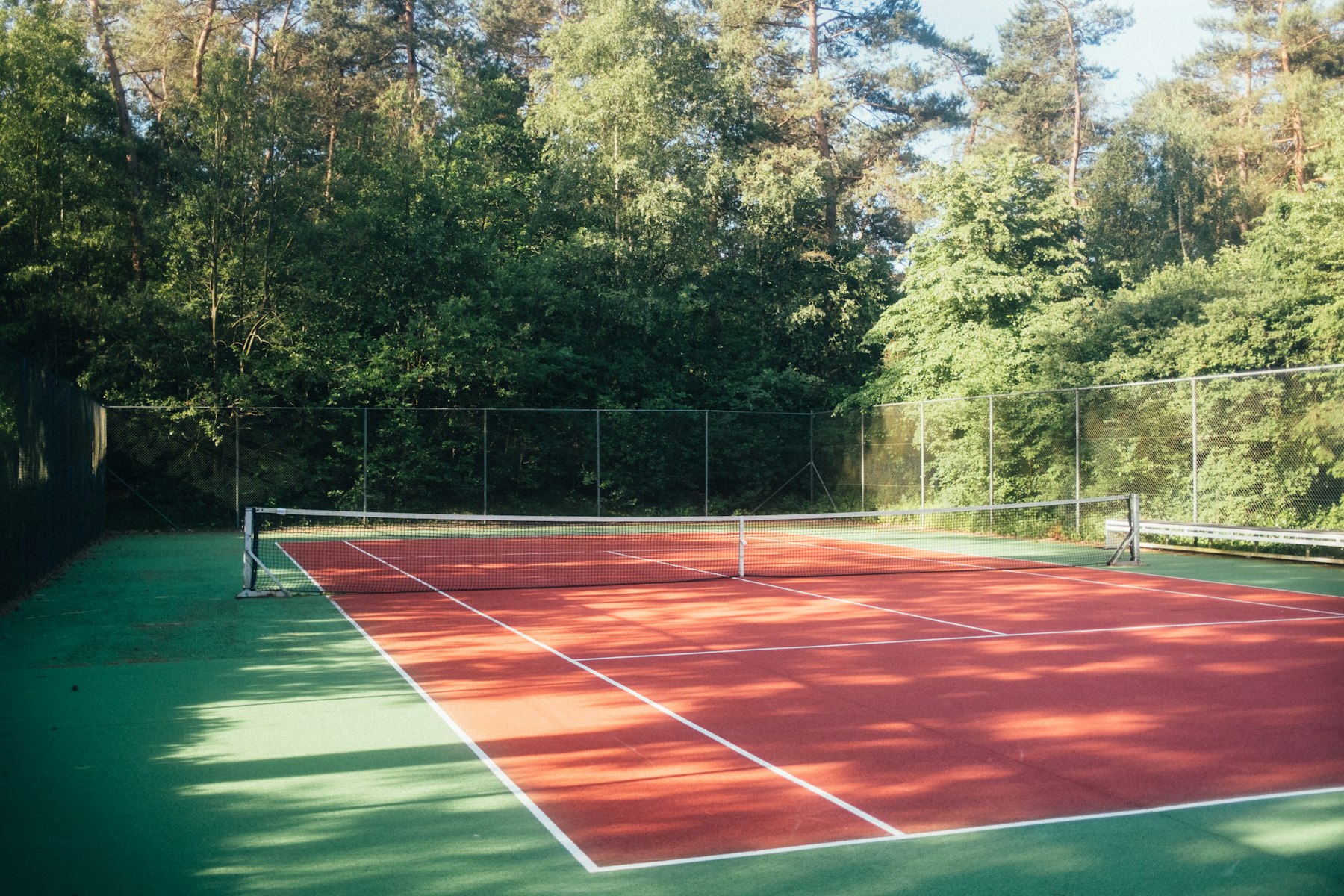
Pickleball & Tennis Court Installation in Westfield, NJ
Westfield's zoning ordinance names private tennis and paddle courts as a permitted accessory use — the design question isn't whether you're allowed to build one, it's whether your rear yard has coverage room left for it.
Get a Westfield Site Visit →A backyard court in Westfield typically runs $25,000–$55,000 for pickleball or $60,000–$120,000 for a full tennis court, in line with the rest of Union County. Westfield's zoning code lists private tennis, paddleball, and racquetball courts as a permitted accessory structure, so the use itself doesn't need special approval. What actually decides the footprint is the town's 15-foot accessory-structure setback and its cap on rear-yard coverage — 25% baseline, up to 40% for above-grade accessory structures — which matters most on lots that already carry a pool, shed, or patio.
What Actually Decides Whether a Court Fits
| Rule | What it says | Why it matters for a court |
|---|---|---|
| Permitted accessory use | Private tennis, racquetball, platform tennis, paddleball, and handball courts are listed accessory structures in residential zones | The use is allowed as-of-right — you're not asking permission to build a court, only confirming it fits |
| Principal-structure setback | Accessory structures generally need at least 15 ft of separation from the house | Sets the minimum distance a court can sit from your home's foundation |
| Rear/side lot-line setback | Larger accessory structures carry additional setback from the rear lot line under the bulk table, and it varies by zone | Confirmed lot-specific — not a single townwide number |
| Rear-yard coverage cap | 25% baseline coverage by accessory buildings and above-grade structures, up to 40% for above-grade structures | This is usually the binding constraint, especially on lots with an existing pool or shed |
| General lot coverage | Most single-family (RS) zones cap total building coverage at 20% | A separate, wider check that a large court and house together don't exceed |
Zone-specific numbers vary across Westfield's residential districts — we pull the exact setback and coverage figures for your block before finalizing a design rather than quoting a townwide average.
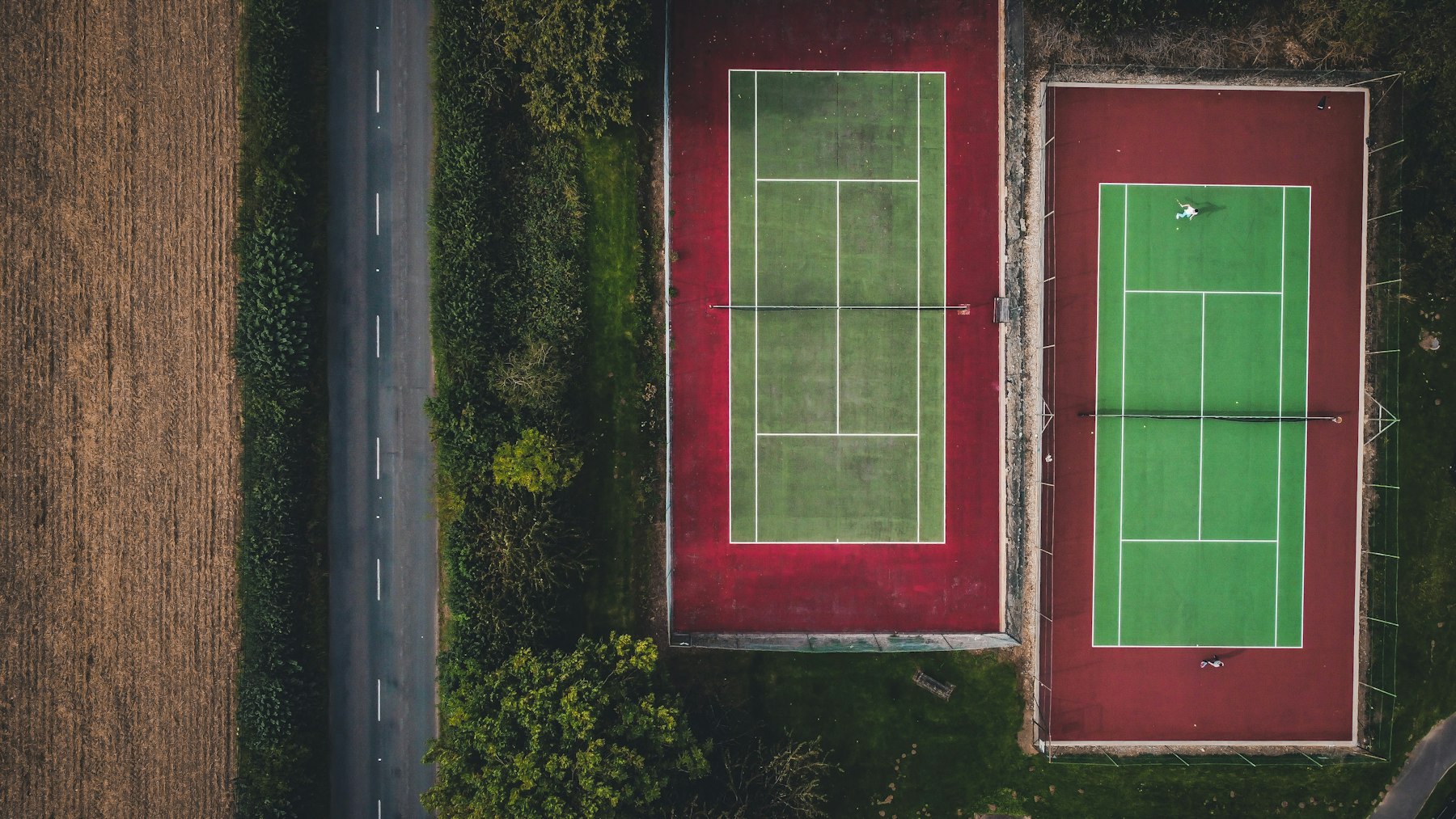
Coverage Room, Not Lot Size, Is the Real Question
Westfield lots are generally large enough that fit is rarely in question on paper — until you add up what's already sitting in the rear yard. A pool, a shed, and a patio can use up coverage allowance a full tennis footprint needs.
- ✓ Court use is permitted as-of-right in residential zones
- ✓ 15 ft minimum setback from the principal structure
- ✓ Rear-yard coverage capped at 25%, up to 40% for above-grade accessory structures
- ✓ Existing pools, sheds, and patios count against that cap
Before You Design a Layout
Add up what's already in the rear yard
A shed, an in-ground pool, a patio, and a detached garage all count against Westfield's rear-yard coverage cap. Measure what's already there before sketching a court footprint on top of it.
Confirm your zone's exact setback numbers
The 15-foot principal-structure setback is a floor, not the only number that applies — rear and side lot-line setbacks for larger accessory structures vary by residential zone. We pull your zone's bulk table before quoting a layout.
Decide pickleball vs. tennis early
A dedicated pickleball court needs roughly a third of the footprint a full tennis court does. On a lot where the coverage cap is tight, that difference is often what decides whether a project needs a variance at all.
Site the court before you commit to base type
Once the footprint and orientation clear zoning, base and surface decisions — post-tension concrete vs. asphalt, drainage slope — follow. Locking the site plan first avoids re-engineering the base after a layout shift.
Find Out What Fits on Your Westfield Lot
We'll pull your zone's setback and rear-yard coverage numbers, measure what's already built, and tell you honestly whether a full tennis court fits or pickleball is the better play — before you commit to a design.
Request a Quote →Planning a Court on a Westfield Property
Westfield is one of the more straightforward Union County towns to build a court in, and it's worth saying that plainly before getting into the ordinance detail: the zoning code explicitly names private tennis, racquetball, platform tennis, paddleball, and handball courts as permitted accessory structures in residential zones. That means the use itself is not the sticking point the way it can be in towns where a court has to be argued for as a special exception. The conversation in Westfield is almost entirely about fit — setback and coverage — not about whether the town allows the project at all.
The first number that matters is the accessory-structure setback from the principal structure, generally at least 15 feet under the town's bulk standards. That's a floor, not the whole picture — larger accessory structures also carry an additional setback from the rear lot line, and that figure shifts by residential zone. A court sited near the edge of a smaller RS-zoned lot can run into that rear setback well before it runs into the neighbor's fence line, so we pull the specific bulk table for your block before sketching a layout rather than assuming one number applies townwide.
The rule that ends up mattering most in practice is rear-yard coverage. Westfield caps the portion of a rear yard that accessory buildings and above-grade structures can occupy — 25% as a baseline, with above-grade accessory structures able to reach up to 40% of the rear yard under the ordinance. On paper that sounds generous, and on a clean, empty rear yard it usually is. The catch is that everything already sitting back there counts against it: a shed, a detached garage, an in-ground pool and its surrounding patio, even a large deck extension. A property that looks like it has plenty of open lawn can still be tight on coverage allowance once the existing structures are added up, and that's the calculation that decides whether a full tennis footprint fits or the project needs to scale down to pickleball. Our pickleball vs. tennis comparison covers the footprint difference in more detail if you're weighing the two.
Westfield also caps overall building coverage at 20% in most single-family (RS) zones, which is a separate, broader check than the rear-yard-specific number — it looks at the house and every accessory structure together against total lot area. On most Westfield lots that general cap isn't the binding constraint (the rear-yard coverage cap usually is), but it's worth confirming on a smaller parcel or one that's already added significant square footage to the house itself.
Union County as a whole runs a fairly consistent construction price regardless of town — what actually shifts across the county is whether a given lot has room for the footprint, not the cost per square foot. Westfield sits toward the more buildable end of that range compared with denser urban-core towns elsewhere in the county, but "more buildable" isn't the same as "no coverage math." See our Union County cost guide for how Westfield compares to Elizabeth, Linden, and the county's other towns.
If your lot is going to end up tight on coverage no matter how the layout is arranged, it's worth deciding early whether that means scaling down to pickleball, converting an existing driveway or patio slab instead of building new impervious area, or removing a lower-priority structure like an old shed to free up allowance. Our driveway-to-court conversion guide covers when an existing slab actually qualifies, which can sidestep the coverage question entirely if the base underneath is sound.
One more practical note for Westfield specifically: downtown-adjacent streets and older neighborhoods near the historic business district can have tighter side-yard access for construction equipment than the town's newer, wider-lot sections closer to Mountainside and Scotch Plains. That's not a zoning issue, but it does affect how a concrete truck or excavator stages on the property, and it's worth walking the actual access route with your contractor rather than assuming standard suburban driveway access applies everywhere in town.
Related Guides
Backyard Court Cost in Union County, NJ
How Westfield pricing and fit compare to Elizabeth, Linden, and Summit.
Pickleball vs. Tennis: Which Fits Your Yard
The footprint and cost difference between the two sports, side by side.
Converting a Driveway or Slab Into a Court
When an existing slab qualifies and skips the coverage-cap question.
Pickleball & Tennis Court Permits and Zoning in NJ
How setback and coverage review typically works statewide.
Westfield Court Installation FAQs
Is a backyard tennis or pickleball court legal to build in Westfield?+
Yes. Westfield's zoning ordinance names private tennis courts, along with private racquetball, platform tennis, paddleball, and handball courts, as permitted accessory structures in residential zones — it's a listed as-of-right use, not something you need a variance just to propose. What decides the actual footprint is setback and rear-yard coverage math, not whether the use itself is allowed.
What setback does a court need from the house in Westfield?+
Westfield's accessory-structure standard generally requires at least 15 feet of separation from the principal structure, with additional distance from the rear lot line for larger accessory structures under the town's bulk table. The exact rear and side lot-line numbers vary by residential zone, so we confirm the number for your specific lot before finalizing a layout rather than quoting a townwide figure that might not apply to your block.
Does Westfield limit how much of my rear yard a court can cover?+
Yes, and this is usually the real constraint, not the sport. Westfield caps total coverage of the rear yard by accessory buildings and above-grade structures — the baseline is 25%, with above-grade accessory structures able to reach up to 40% of the rear yard under the ordinance. On a lot that already carries a shed, a patio, and an in-ground pool, that cap can eat into the space available for a court well before the property line does.
How much does a backyard court cost in Westfield?+
In line with the rest of Union County: $25,000–$55,000 for a dedicated pickleball court, $60,000–$120,000 for a full tennis court, and $18,000–$85,000+ for a backyard basketball court depending on size. Westfield lots are generally large enough that construction cost tracks the county average — the coverage-cap math is what changes the design, not the base price per square foot.
How long does a Westfield court project take from quote to first game?+
Plan on roughly 5–9 weeks of active work once permits clear, similar to the rest of Union County. Projects on lots that already have existing accessory structures competing for rear-yard coverage sometimes need an extra design pass before permitting to confirm the layout fits, which can add a couple of weeks up front.
Build Your Westfield Court With a Local Team
Tell us your lot and we'll confirm the setback and rear-yard coverage numbers for your zone before quoting your project.
Request a Quote →