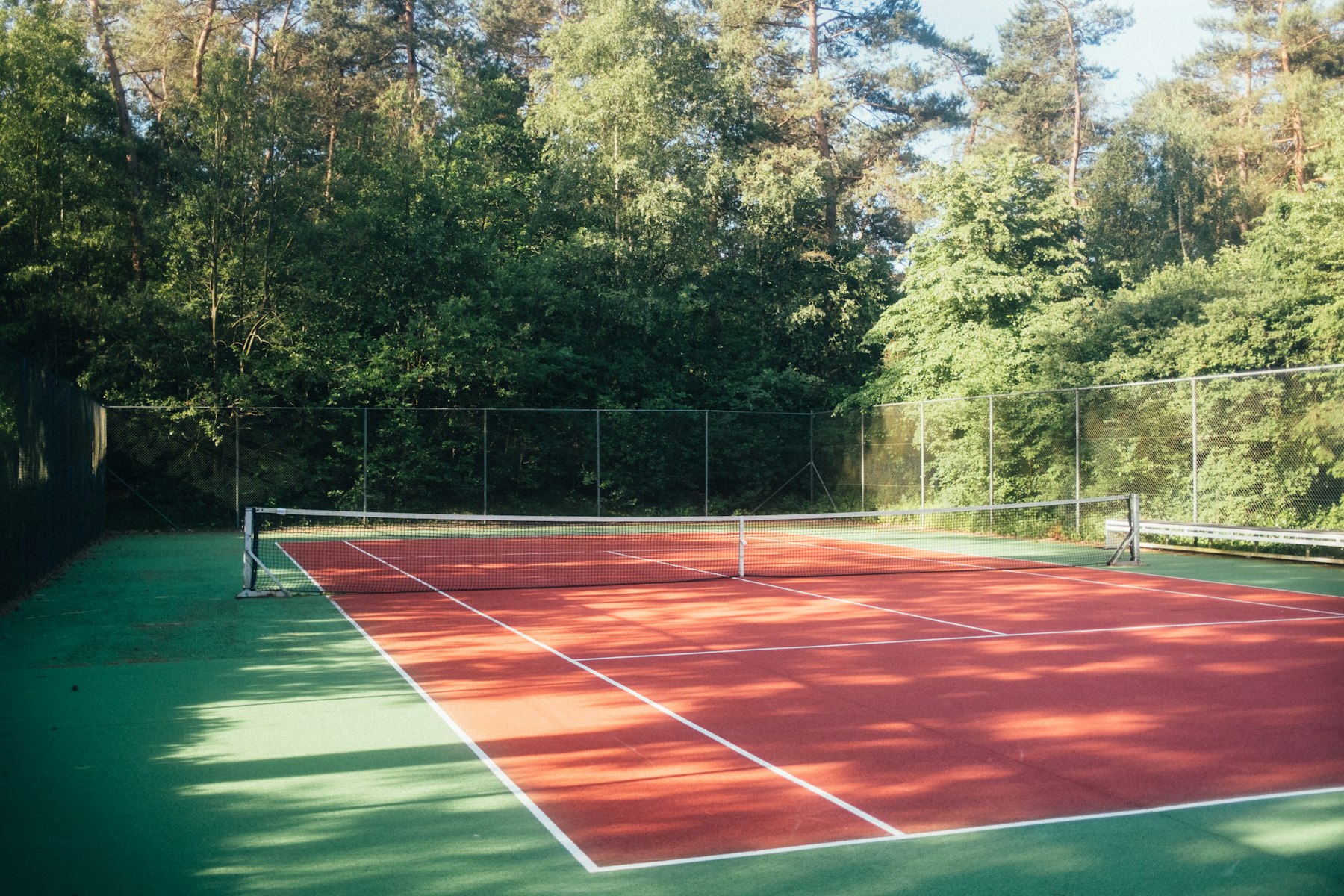
Pickleball & Tennis Court Installation in Chatham, NJ
Chatham Borough and Chatham Township are two separate municipalities with two different zoning codes — and for a backyard court, which one your property sits in changes the lot-size math, the tree removal process, and whether Historic Preservation Commission review applies.
Get a Chatham Site Visit →A backyard court in Chatham typically runs $25,000–$50,000 for pickleball or $60,000–$120,000 for a full tennis court, in line with the rest of Morris County. The bigger variable isn't the construction — it's which Chatham you're in. Township lots tend to run larger and clear setbacks more easily; Borough lots are smaller and denser, and a Main Street Historic District address adds a review step the Township doesn't have. Both towns require a permit to remove trees over 6 inches in diameter.
Chatham Borough vs. Chatham Township: Two Different Projects
| Factor | Chatham Borough | Chatham Township |
|---|---|---|
| Typical lot size | Smaller, in-town lots — setback math is tighter | Larger lots — several districts call for 20,000+ sq ft |
| Historic district review | Applies inside the Main Street Historic District | No equivalent historic district review |
| Tree removal permit | Required over 6" diameter, limited exceptions | Separate permit program, comparable rules |
| Most common court fit | Pickleball or half-court, footprint-dependent | Full tennis footprint more often fits without a variance |
| Permitting office | Borough zoning/engineer; building permits issued via Madison | Township zoning and construction office |
The two Chathams share a border, a school district, and a train station — but they're legally separate municipalities with separate zoning codes, and a court bid should reflect whichever one your property is actually in.

Mature Canopy, Not Open Lawn
Chatham's tree cover is part of what the town looks like from the street — and part of why a court layout here is usually a conversation about which trees stay, not just how big a footprint fits.
- ✓ Tree removal permit required over 6" diameter in both towns
- ✓ Historic Preservation Commission review inside the Borough's Main Street district
- ✓ Township districts generally allow a larger buildable footprint
- ✓ Root systems from removed trees still need to be accounted for in base prep
If Your Property Is in the Main Street Historic District
Historic Preservation Commission review applies
Formed in 1989, the Commission reviews applications affecting a property's exterior appearance and makes a recommendation to the Planning Board before a building permit is issued.
Visibility from the street is the real question
A court sited behind the house, screened by existing landscaping, is a lower-visibility case than anything facing Main Street — but review still applies if the property sits inside the mapped district, regardless of where on the lot the court goes.
Tree removal permit is a separate step
Historic district review doesn't replace the borough-wide tree removal permit — if the court footprint requires taking down anything over 6 inches in diameter, that application runs alongside, not instead of, historic review.
Build the timeline in, don't discover it mid-project
Commission review adds a meeting cycle to the permitting timeline. Submitting a clear site plan showing the court's distance from the house and street view up front is what keeps that from turning into a second round of questions.
Find Out Which Chatham Rules Apply to Your Lot
We'll confirm whether you're in the Borough or Township, check the historic district map, and price the tree removal permit if your footprint needs it — before you commit to a design.
Request a Quote →Planning a Court on a Chatham Property
Chatham Borough and Chatham Township share a name, a downtown, and a train line, but for zoning purposes they might as well be different towns entirely — because they are. Each runs its own land use ordinance, its own zoning office, and in the Borough's case, a Main Street Historic District with a Historic Preservation Commission the Township simply doesn't have. The first question on any Chatham court project isn't what you want to build — it's which Chatham the property is actually in, since that answer changes almost everything downstream.
Chatham Township generally offers more room to work with. Several of its residential districts call for lots of 20,000 square feet or larger, which is enough that a full tennis footprint — roughly 120 × 60 ft including run-off room — more often clears setback lines without needing a variance. Chatham Borough's in-town lots run smaller and denser, closer to what you'd expect from a walkable historic downtown than a suburban estate. That doesn't rule out a court on a Borough lot, but it does mean the footprint math gets tighter, and a pickleball court or half-court basketball layout is a more realistic starting point for the conversation than a full tennis court on a standard in-town parcel.
The Historic Preservation Commission adds a layer that's specific to the Borough's Main Street Historic District. Formed in 1989, it reviews applications that affect a property's exterior appearance and forwards a recommendation to the Planning Board — the kind of review most homeowners associate with a visible addition or a new fence facing the street, not a court set behind the house. A backyard court screened by existing landscaping is a lower-visibility case in practice, but the review step still applies if the address falls inside the mapped district, and it's worth confirming before finalizing a design rather than after a permit application stalls. Our permits and zoning guide covers how locally designated historic districts factor into court approvals elsewhere in New Jersey, including how the process tends to run.
Tree removal is the other item both towns treat the same way. Chatham's tree cover is a real part of what the community looks like from the street, and both the Borough and the Township require a permit before cutting down anything over 6 inches in diameter, with exceptions mainly for dead, dying, or hazardous trees. If a proposed court footprint sits anywhere near mature trees, that permit — and what happens to the root system left behind, not just the visible trunk — belongs in the pre-construction plan. Our land clearing and tree removal guide covers why leftover roots under a slab cause problems years later even when the stump itself is ground down flush.
Close neighbors are a bigger factor in the Borough than the Township, and it's worth planning for before pouring a slab rather than after the first complaint. On a standard in-town lot, a pickleball court can sit within throwing distance of two or three neighboring yards at once, and the sport's sharp, repetitive pop carries much further than most homeowners expect — especially with the leaf cover down for half the year. Our pickleball court noise reduction guide covers paddle and ball choices, surface underlayment, and orientation options that meaningfully cut down on sound before it becomes a dispute with the house next door — a bigger consideration on a tight Borough lot than on a Township property with more buffer to spare.
Once the municipality-specific questions are answered, the rest of a Chatham build tracks the broader Morris County market. See our Morris County cost guide for how Chatham compares to Madison, Morristown, and the county's other larger-lot towns, including what a rock allowance and well-and-septic site planning can add on top of a base bid.
Chatham's housing stock is old enough that we get almost as many calls about a court that already exists as one that doesn't. A number of Township properties still carry a cracked, decades-old tennis court poured back when the home was built, and the tree canopy that's grown up around it since then has usually done more damage than age alone — root intrusion cracks a slab in ways that look similar to ordinary freeze-thaw wear but need a different fix. Before assuming a full teardown and rebuild is the only option, it's worth reading our resurfacing vs. new build guide — a sound base under root-damaged surfacing is sometimes salvageable, and confirming that before pricing a full rebuild can save a meaningful amount of the budget.
Access is a smaller but real difference between the two towns that rarely comes up until equipment shows up. Borough streets near the historic core are narrow, tree-lined, and often tight on parking, which affects where a concrete truck or excavator can stage and how a delivery gets timed around the school and commuter schedule. Township properties, generally set on larger lots with longer driveways, don't face the same staging constraints. It's not a reason to avoid a Borough project, but it is a reason a Borough bid should walk the actual access route with you rather than assume standard suburban driveway access.
One more thing worth saying plainly: on a tight Chatham Borough in-town lot, we sometimes talk a homeowner out of forcing a full tennis footprint. Chasing a setback variance to squeeze in a 120-foot court on a lot that wasn't laid out for one means a public hearing, notified neighbors, and a timeline that can run months longer than the construction itself — and there's no guarantee it clears. A dedicated pickleball court or a half-court basketball layout that fits within standard setbacks, with no variance at all, is often the faster and more realistic project, even if it wasn't the original ask. The same logic applies to fencing inside the historic district: an 8-foot chain-link enclosure facing a Main Street-adjacent yard is a harder sell to the Historic Preservation Commission than a lower, less visually dominant fence line paired with interior hedge screening. Neither is a downgrade so much as a design that clears review on the first pass instead of the second.
Related Guides
Backyard Court Cost in Morris County, NJ
How Chatham pricing compares to Madison, Morristown, and Mendham.
Pickleball & Tennis Court Permits and Zoning in NJ
How historic district review and variances typically work statewide.
Land Clearing & Tree Removal Cost for Court Installation
Why leftover roots under a slab cause problems years later.
Backyard Court Installation Mistakes in NJ
Common planning errors on wooded, close-lot properties.
Chatham Court Installation FAQs
How much does a backyard court cost in Chatham?+
A dedicated pickleball court typically runs $25,000–$50,000 installed, and a full tennis court $60,000–$120,000 — in line with the broader Morris County range. Chatham Township lots, generally larger, more often support a full tennis footprint without a variance; Chatham Borough's smaller in-town lots more often land in pickleball or half-court territory once setbacks are applied.
Do I need Historic Preservation Commission approval to build a court in Chatham?+
Only if your property sits within Chatham Borough's Main Street Historic District. The Commission, formed in 1989, reviews applications that affect a property's exterior appearance and makes a recommendation to the Planning Board — a backyard court set behind the house with modest fencing is a lower-visibility case than a street-facing addition, but it still goes through the review step if the property is inside the district. Chatham Township has no equivalent historic district review.
Do I need a permit to remove trees for a court in Chatham?+
Yes, in both towns. Chatham Borough requires a tree removal permit for any tree over 6 inches in diameter, with limited exceptions for dead, dying, hazardous, or invasive trees; Chatham Township runs a comparable tree removal permit program. If your lot has mature trees anywhere near the proposed footprint, plan on that application before excavation, not after.
What's the real difference between Chatham Borough and Chatham Township for a court project?+
Lot size and review layers. Township zoning generally calls for larger residential lots — 20,000 square feet or more in several districts — which usually leaves more room to site a court without a setback variance. The Borough's smaller, denser in-town lots make the footprint math tighter, and a Main Street Historic District property adds the Historic Preservation Commission step the Township doesn't have.
How long does a Chatham court project take from quote to first game?+
Plan on 5–9 weeks once permits clear. Township projects on open, tree-light lots tend to run toward the shorter end; Borough projects with a tree removal permit, tighter access for equipment, or Historic Preservation Commission review typically add a few weeks before groundbreaking even starts.
Should I fight for a full tennis court on a tight Chatham Borough lot?+
Sometimes it's not worth it. Forcing a full tennis footprint onto a lot that needs a setback variance means a public hearing, notified neighbors, and a timeline that can stretch months longer than construction itself, with no guarantee it's approved. A pickleball court or half-court basketball layout that clears standard setbacks without a variance is often the faster, more reliable project — worth weighing before you fall in love with a specific design.
Build Your Chatham Court With a Local Team
Tell us which Chatham you're in and we'll confirm the zoning, historic district status, and tree permit needs before quoting your project.
Request a Quote →