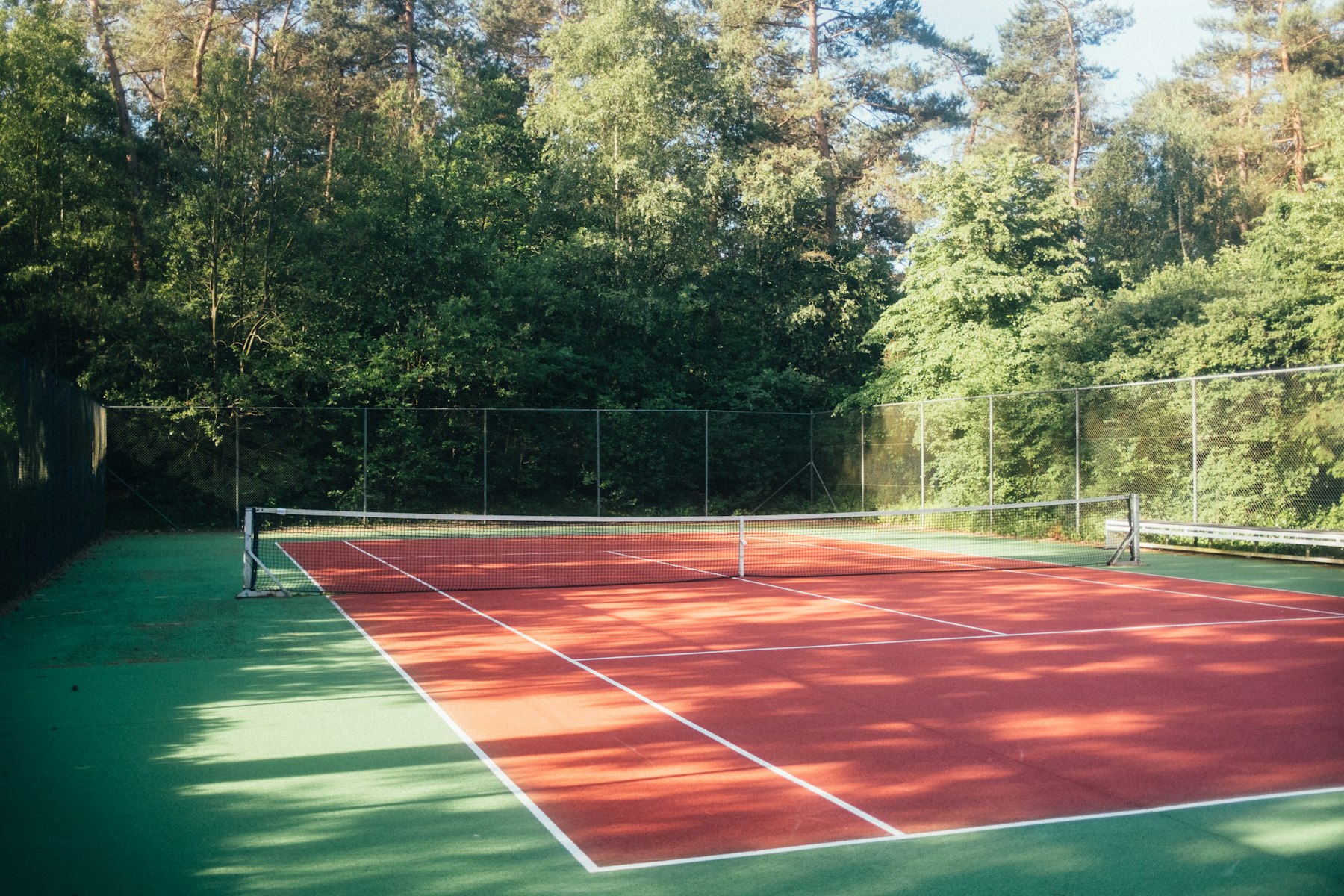
Pickleball & Tennis Court Installation in Basking Ridge, NJ
Bernards Township's lots have room for a full tennis footprint more often than not — the approval that actually shapes a Basking Ridge project is the tree removal permit, and a recent ordinance change closed the exemption that used to let large lots skip it.
Get a Basking Ridge Site Visit →A backyard court in Basking Ridge typically costs $25,000–$55,000 for pickleball or $60,000–$120,000 for a full tennis court, matching the rest of Somerset County. Bernards Township generally has larger lots than the county's denser eastern towns, so footprint usually isn't the first obstacle. What is: any non-street tree 6 inches or more in trunk diameter (DBH) needs a tree removal permit, and the township's updated ordinance eliminated the exemption that used to let 3-acre-plus lots skip that step — so even a large, wooded property now needs the permit before a crew can clear a court footprint.
What Actually Shapes a Basking Ridge Court Project
| Factor | What applies | Why it matters for a court |
|---|---|---|
| Tree removal permit | Required for any non-street tree 6"+ DBH; the 3-acre exemption was eliminated in the updated ordinance | Most wooded footprints need this permit before clearing starts, regardless of lot size |
| Street setback | Minimum 25 ft from the curbline of a public or private street in certain zones | Mostly relevant on corner lots or footprints near road frontage |
| Front/rear/side yard review | Reviewed case-by-case by the zoning office alongside impervious surface and height | Confirms the specific footprint and materials for your zone |
| Lot size | Generally larger, more suburban-to-exurban than eastern Somerset County towns | Usually gives more room for a full tennis footprint without a variance |
| Well & septic clearance | Common in unsewered Somerset Hills sections of the township | A leach field or well radius can limit where a court can sit even on a large lot |
We confirm the tree removal permit requirement, well/septic clearance, and zone-specific setbacks for your parcel before finalizing a layout.

The Canopy, Not the Acreage, Sets the Timeline
A three-acre Basking Ridge lot sounds like plenty of room — and it usually is, for footprint. What determines the schedule is how much of that lot is under mature tree cover the township now requires a permit to clear.
- ✓ Tree removal permit required over 6" DBH on non-street trees
- ✓ 3-acre exemption from the permit was eliminated in the updated ordinance
- ✓ Root systems left behind after removal still affect base prep
- ✓ Well/septic clearance can limit siting on unsewered lots
Before You Clear a Footprint
Assume the tree removal permit applies
If any tree in the proposed footprint is 6 inches or more in diameter and isn't a street tree, plan on the permit application — the old large-lot exemption no longer applies under the updated ordinance.
Count root systems, not just trunks
A stump ground flush doesn't remove the root mass underneath. Leftover roots under a slab cause settlement and cracking years later, even when the visible tree is long gone.
Check well and septic clearance early
Unsewered sections of the township common in the Somerset Hills area need a leach field and well radius survey before a court footprint is finalized — this can shift the buildable area more than the coverage rules do.
Sequence the permit ahead of construction
A tree removal permit and any well/septic survey should clear before a crew mobilizes, not alongside groundbreaking — sequencing them up front is what keeps a 5–9 week build from stalling mid-project.
Get the Tree Removal Permit Question Answered First
We'll confirm which trees in your footprint need a permit under the updated township ordinance, check well/septic clearance, and price the site prep before you commit to a layout.
Request a Quote →Planning a Court on a Basking Ridge Property
Basking Ridge, the main population center of Bernards Township, generally offers more room to work with than Somerset County's denser eastern towns — lots here tend to run larger, and a full tennis footprint more often clears setback lines without a variance being part of the conversation. That's the good news, and it's worth saying up front so the rest of this page doesn't read as a list of obstacles. The real planning question in Basking Ridge isn't usually whether the lot is big enough. It's how much of that lot is under mature tree canopy the township now requires a permit to clear.
Bernards Township's tree ordinance requires a permit before removing any non-street tree with a trunk diameter of 6 inches or more, measured at breast height. That threshold alone wouldn't be unusual — plenty of New Jersey towns run something similar. What matters for Basking Ridge specifically is that the township's updated ordinance eliminated the exemption that previously let owners of lots 3 acres or larger skip the permit entirely. Large, wooded properties that homeowners may remember as exempt from tree review are not exempt anymore. If your proposed court footprint runs through anything beyond a sapling, plan on the permit application as a standard step, not a surprise a contractor discovers mid-project. Limited exemptions still exist for hazard trees and for owners removing a small number of qualifying trees within a five-year window, but a court-sized clearing rarely fits inside those carve-outs.
Root systems are the part of tree removal that homeowners consistently underestimate. Grinding a stump flush with the ground removes the visible trunk, but the root mass underneath can extend well beyond the canopy's drip line and take years to fully decompose. A slab poured over that root zone without proper excavation and backfill can settle unevenly as the roots break down, producing cracking that looks like ordinary freeze-thaw wear but traces back to what was left in the ground. Our land clearing and tree removal guide covers what proper root removal actually involves and why skipping it is a common cause of premature court failure.
Zoning setbacks in Bernards Township are reviewed case by case by the zoning office, but the general standard calls for at least 25 feet of setback from the curbline of a public or private street in certain zones, alongside front, rear, and side yard requirements specific to each district. For a typical backyard court sited behind the house, the street setback rarely ends up being the binding number — it matters more on corner lots or properties where the proposed footprint sits close to road frontage. We pull the specific bulk requirements for your zone before finalizing a design.
Well and septic clearance is the other factor that shows up more often in Basking Ridge than in sewered towns closer to the county's eastern edge. Unsewered sections of the township, particularly in the broader Somerset Hills area, require a leach field and well-radius survey before a court footprint is finalized, and that clearance zone can shift the buildable area on a lot more than the tree canopy does in some cases. Our Somerset County cost guide covers how well-and-septic siting compares across the county's different towns, including which areas are more likely to need the survey at all.
Once tree removal and any well/septic clearance are confirmed, a Basking Ridge project tracks the rest of Somerset County closely on both price and timeline. Construction itself — base prep, surfacing, fencing, lighting — doesn't change town to town; what changes is how much site prep has to happen before a crew can break ground. If your lot has an existing, structurally sound driveway or patio slab that could serve as a base, it's also worth checking whether resurfacing that footprint sidesteps the tree removal and coverage questions entirely — our driveway-to-court conversion guide covers how we evaluate whether a given slab actually qualifies.
Related Guides
Backyard Court Cost in Somerset County, NJ
How Basking Ridge pricing and siting compare across the county.
Land Clearing & Tree Removal Cost for Court Installation
Why leftover roots under a slab cause problems years after the trunk is gone.
Converting a Driveway or Slab Into a Court
When an existing slab qualifies and skips tree removal and coverage questions.
Pickleball & Tennis Court Permits and Zoning in NJ
How setback and tree ordinance review typically works statewide.
Basking Ridge Court Installation FAQs
Do I need a permit to clear trees for a court in Basking Ridge?+
In most cases, yes. Bernards Township requires a tree removal permit for any non-street tree with a trunk diameter (DBH) of 6 inches or more. The township's updated tree ordinance also eliminated the old exemption that let owners of lots 3 acres or larger skip the permit — so even large, wooded Basking Ridge properties that were previously exempt now need to apply before clearing a court footprint. Hazard trees and limited annual removal volumes still qualify for exemptions.
How large a property do I need for a tennis or pickleball court in Basking Ridge?+
Basking Ridge and the rest of Bernards Township generally run larger, more suburban-to-exurban lots than towns closer to Somerset County's eastern edge, which usually gives more room to site a full tennis footprint without a setback variance. The bigger constraint in practice is often the tree canopy and well/septic clearance rather than raw acreage — a large lot can still be tightly wooded or have a leach field limiting where a court can sit.
What setback applies to a court from the street in Basking Ridge?+
Bernards Township's general standard calls for a minimum building setback of 25 feet from the curbline of any public or private street in certain zones, with front, rear, and side yard setbacks reviewed by the zoning office for each application. A backyard court sited behind the house typically isn't the street-setback question — it's more relevant on corner lots or properties where the proposed footprint sits closer to a road frontage.
How much does a backyard court cost in Basking Ridge?+
In line with the rest of Somerset County: $25,000–$55,000 for a dedicated pickleball court, $60,000–$120,000 for a full tennis court, and $18,000–$85,000+ for a backyard basketball court. Tree clearing, root removal, and a well/septic clearance survey are the line items that most often push a Basking Ridge quote toward the higher end of those ranges.
How long does a Basking Ridge court project take once permits clear?+
Plan on roughly 5–9 weeks of active construction, similar to the rest of Somerset County. Properties needing a tree removal permit or a well/septic clearance survey typically add several weeks to the front end of the timeline before excavation can start, since those approvals run ahead of the construction schedule rather than alongside it.
Build Your Basking Ridge Court With a Local Team
Tell us about your lot and we'll confirm the tree removal permit, well/septic clearance, and setback questions before quoting your project.
Request a Quote →