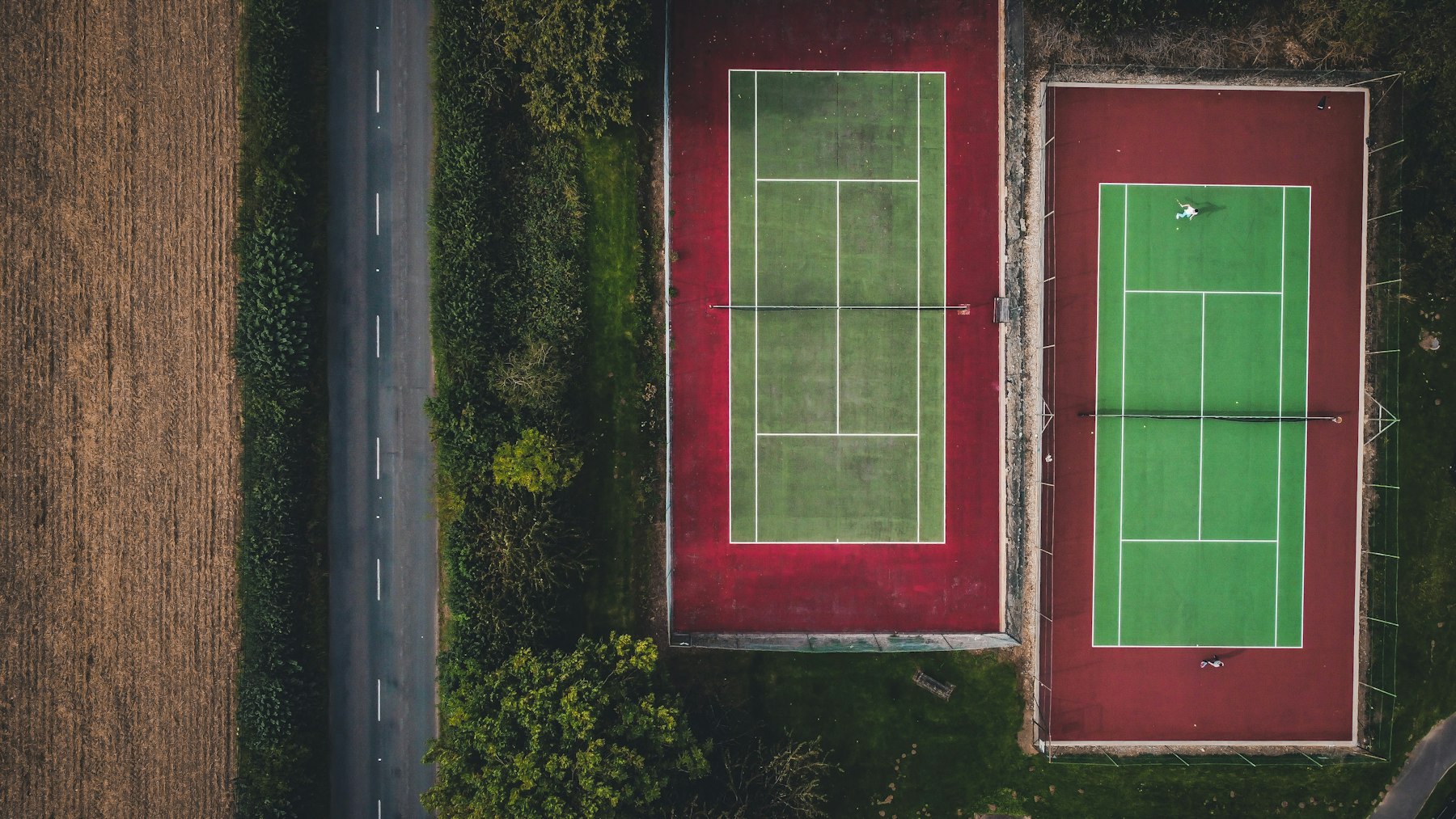
Multi-Court Complex Installation for HOAs & Towns
Building 2, 4, or more courts at once is a different project than a single backyard build — here's what changes in New Jersey.
Request a Complex Estimate →A 4-court pickleball complex in New Jersey and a 2-court build are both quoted per project, and both cost less per court than standalone builds because base work and mobilization are shared. HOAs and towns also have to plan for spacing, noise, parking, and (for municipalities) a formal bid process that a single backyard court never touches. NJ Court Pros builds complexes for HOAs, clubs, and municipalities across New Jersey.
Why a Complex Costs Less Per Court
Shared Mobilization
Bringing in excavation and paving equipment, setting up site access, and staging materials has a fixed cost whether you build one court or six — spreading it across more courts is where most of the savings come from.
One Continuous Base Pour
Grading, drainage, and pouring the base for adjacent courts in one continuous run is faster per square foot than mobilizing separately for each court later.
Crew Efficiency
A crew that's already on-site and in rhythm moves faster on court two, three, and four than it did on court one — the learning curve and setup time only happen once.
Bulk Material Pricing
Surfacing, fencing, and lighting materials ordered in complex-sized quantities cost less per unit than the same materials ordered for a single court.
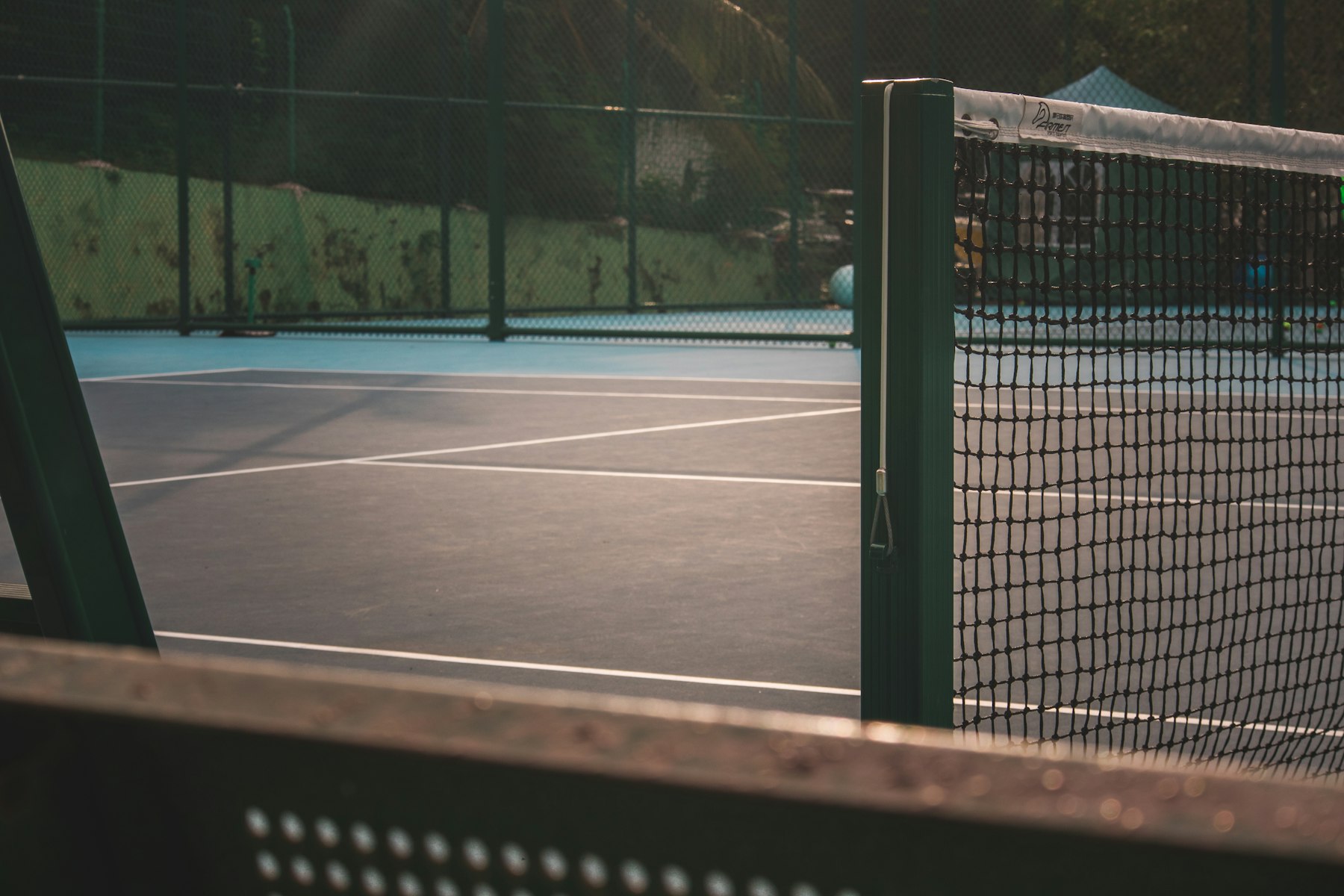
More Courts, Less Per Court
Excavation, base pour, and crew mobilization carry a fixed cost whether you build one court or four — spreading it across a complex is what makes each court 10–20% cheaper than a standalone build.
- ✓ Shared base pour and site prep
- ✓ Bulk pricing on surfacing and fencing
- ✓ Phased builds keep some courts open during work
Typical NJ Complex Price Ranges (2026)
2-Court Pickleball Complex
Quoted per project — shared excavation and base for two adjacent courts, standard acrylic surfacing, and basic fencing.
4-Court Pickleball Complex
Quoted per project — the most common HOA and club configuration; per-court cost runs below four separate single-court builds.
6+ Court / Municipal Facility
Quoted per project — larger municipal facilities often mix pickleball and tennis, add spectator areas, and may be built in phases across budget cycles.
Ranges assume clean, level site conditions with reasonable equipment access. Sites needing significant grading, retaining, or drainage rerouting cost more — a site visit gives you the real number.
Planning a Complex for Your HOA or Town?
Tell us the number of courts, the site, and your timeline — we'll put together a complex-level estimate and walk your board or facilities committee through it.
Request a Quote →What's Different About Site Planning for a Complex
Court spacing is the first thing to get right. USA Pickleball recommends a minimum of 10 feet between adjacent courts and from sideline to fencing — more if you want windscreens or any spectator seating between courts. Tennis needs even more, typically 12–15 feet between courts. Cramming an extra court into a tight footprint to hit a number looks fine on a site plan but plays badly and is the most common regret we hear about after the fact.
Noise and orientation matter more at complex scale than for a single backyard court. Pickleball's pop is louder and more repetitive than tennis, and several courts running at once compounds it — orienting courts away from the nearest homes, and leaving buffer landscaping or a sound-dampening fence line, heads off HOA noise complaints before they start.
Drainage design for a multi-court footprint needs to move water off the whole complex, not just each court individually — done wrong, water from one court's overflow becomes the next court's puddle. See our court drainage systems guide for how this is engineered. Parking, ADA-accessible paths from the lot to each court, and shared lighting circuits round out what a complex needs that a single court doesn't.
Phased construction lets you keep part of the complex open during the build — build and stripe two courts, open them, then move the crew to the next phase. It costs a bit more in mobilization than building everything at once, but for an HOA or club that can't go dark on all its courts for two months, it's usually worth it.
A growing number of the complexes we scope now ask about adding a padel court alongside the pickleball and tennis courts. Budget for it separately rather than folding it into per-court complex math — the glass-and-mesh enclosure is priced and built nothing like an open pickleball or tennis court, and mixing sports on one site usually means it goes in as its own line item rather than sharing the per-court savings the rest of the complex gets. A bocce lane is a cheaper way to add variety for HOAs — it needs no fencing or hard base, so it tucks into leftover space along a complex's edge rather than competing for prime court footprint.
This is also the model a growing number of Ocean County active-adult communities are choosing over approving individual backyard courts lot by lot — one or two association-funded shared courts instead of dozens of separate homeowner projects, each needing its own architectural review. It centralizes both the approval process and the maintenance budget, which is often the deciding factor for a board weighing the two approaches.
If the complex is being built partly to host club or sanctioned play, spacing and lighting aren\'t the only specs that change — surface flatness and net tolerance tighten up too. See our guide to tournament-grade pickleball court construction for what separates a certified-ready facility from a standard multi-court build.
Multifamily developers and landlords weighing the same complex math for a rental property should run the numbers differently than an HOA does — the return shows up as reduced vacancy and a wider applicant pool rather than a reserve-funded resident amenity. See our guide to adding a court to a rental property in New Jersey for how that ROI case is actually built.
HOA Boards vs. Municipal Procurement
HOA & Private Communities
No formal bidding requirement, but get 2–3 quotes built to the same written spec — same base type, same surface system, same warranty terms — so the board is comparing like for like, not just chasing the lowest total. Reserve studies and special assessment timing usually drive when the project can start. Boards should also confirm liability coverage for the finished complex is scoped for shared, member-facing use — see our court construction insurance guide for what that should include. A multi-court complex still needs to clear the board's own architectural review before it goes to a vote — our HOA approval guide covers what that submission typically requires.
Towns & Municipalities
Projects above the local public works bid threshold require a formal RFP, prevailing wage, and contractor bonding — plan for several extra weeks of lead time versus a private build. See our public court construction bidding guide for the actual thresholds and what belongs in the spec. We work with facilities departments to scope specs that hold up through the bid process.
Related Guides
Pickleball Court Installation Cost in NJ
Single-court pricing and what drives the base cost up or down.
Tennis Court Installation Cost in NJ
What a single tennis court build runs before scaling to a complex.
Pickleball & Tennis Court Permits and Zoning in NJ
Zoning and permitting steps that apply before a shovel goes in the ground.
How to Finance a Court Installation in NJ
Financing options for HOAs and clubs funding a larger multi-court project.
Multi-Court Complex FAQs
How much does it cost to build a multi-court pickleball complex in New Jersey?+
A multi-court pickleball complex in NJ is quoted per project, and it costs less per court than building the same number of standalone courts, because excavation, base pour, and crew mobilization are shared across the project. Court count, layout, and site conditions drive the number. Fencing, lighting, and any spectator or parking work are additional and quoted after a site visit.
Do multiple courts actually cost less per court than building one at a time?+
Yes, within reason. The base and site prep — grading, drainage, forming, the concrete or asphalt pour — carry a fixed mobilization cost whether you're building one court or four, so spreading that cost across more courts lowers the per-court number. The savings level off past about 6 courts on a single site, since you start needing a second phase of equipment or crew anyway.
How much space should be planned between courts in a complex?+
USA Pickleball's recommended spacing is a minimum of 10 feet between adjacent pickleball courts and at least 10 feet from sidelines to fencing, more where windscreens or spectator areas are planned. Tennis courts need more separation — typically 12–15 feet between courts — to keep balls in play and give room for backstops. Cramming courts too close together to fit more in a site is the single most common design mistake we see corrected after the fact.
How does the bidding process work for a municipal or HOA multi-court project?+
Municipal projects above a town's public works bid threshold require a formal RFP with prevailing-wage and bonding requirements, which adds weeks to the timeline versus a private build. HOAs typically don't need formal bidding but should still get 2–3 written quotes with identical specs (base type, surface system, warranty) so the board is comparing apples to apples — not just a bottom-line number. We work directly with HOA boards and municipal facilities departments on both paths.
How long does it take to build a multi-court complex?+
A 4-court complex generally runs 8–14 weeks from groundbreaking to final striping, weather and permitting depending. Phased construction — building and opening 2 courts while the next 2 are under excavation — is common for HOAs and clubs that need to keep some courts playable throughout the project, though it adds a few weeks to the overall schedule versus building everything at once.
Get a Multi-Court Complex Estimate
HOA reserve project or town facility, tell us the scope and we'll walk you through site planning, budget, and timeline.
Request a Quote →